
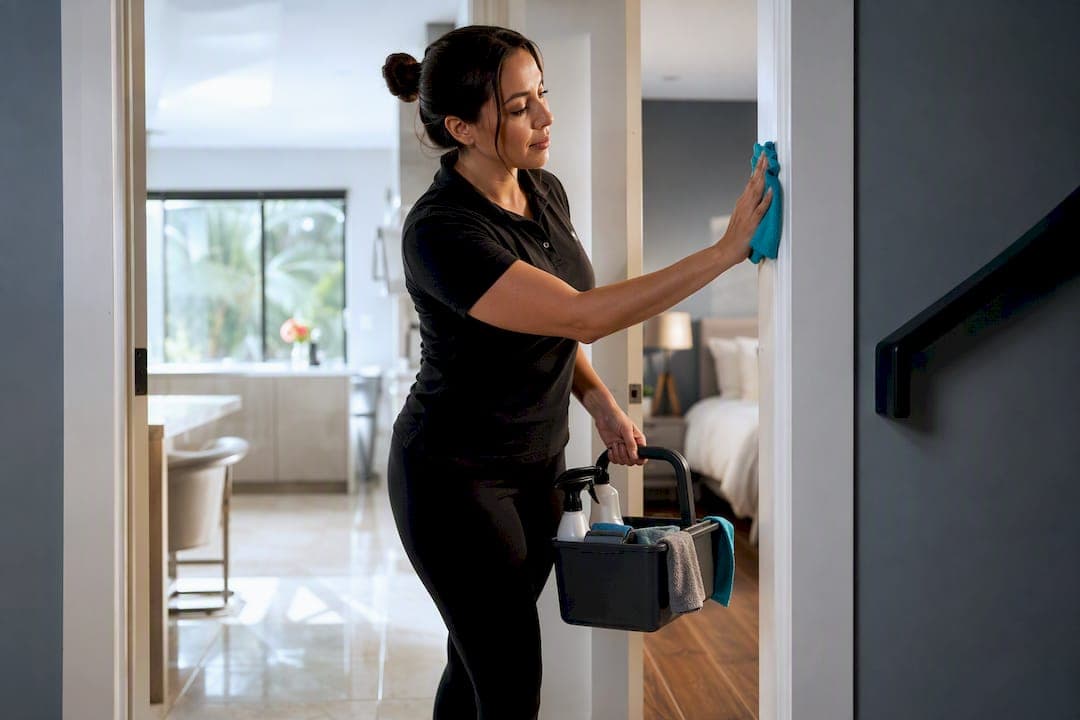
A standard house cleaning checklist covers the recurring tasks that keep a home livable between deeper cleans: decluttering, dusting, wiping down surfaces, sanitizing the bathroom, vacuuming or mopping floors, and emptying trash. Run through it consistently and a home stays presentable week to week without ever needing a full reset.
TL;DR:
- A standard home cleaning focuses on routine tasks like dusting, surface wiping, vacuuming, and trash removal, with a top-to-bottom cleaning sequence to prevent re-soiling.
- Professionals typically take two to four hours for a full cleanup of a three-bedroom, two-bath home, while DIY cleaning should aim for 60 to 90 minutes for a quick, focused pass.
- Regular cleaning tasks should be layered: daily quick resets, weekly deep cleaning of floors and bathrooms, with monthly and seasonal maintenance, especially for homes with pets or high traffic.
- Microfiber cloths, HEPA vacuums, and surface-specific cleaners optimize efficiency and reduce rework, with techniques like working from the highest point downward enhancing speed.
- Deep cleaning, including inside appliances and grout scrubbing, is rare in standard visits and best scheduled periodically or after renovations or move-in/out situations.
Table of Contents
- What Belongs on a Standard House Cleaning Checklist?
- Room-by-Room Checklist: Kitchen, Bathroom, Bedroom, and Beyond
- Building a Cleaning Schedule: Daily, Weekly, Monthly, and Seasonal Tasks
- Tools and Techniques That Make Cleaning Faster
- Standard Cleaning vs. Deep Cleaning: What's Included?
- How Long Does a Standard Clean Actually Take?
- Why Consistency Beats Intensity in Home Cleaning
- When It's Time to Hand the Checklist to a Pro
- Where to Find More Cleaning Guidance
- Sources
- FAQ
What Belongs on a Standard House Cleaning Checklist?
A workable checklist is really just a short list of universal tasks repeated in a smart order, not a room-by-room encyclopedia. Every home, whether a studio apartment or a five-bedroom house, needs the same core actions applied to different spaces.
The master list looks like this:
- Pick up clutter and put stray items back where they belong
- Dust surfaces, shelves, and light fixtures from top to bottom
- Wipe down counters, tables, and other high-touch surfaces
- Sanitize bathroom fixtures and kitchen contact points
- Vacuum carpets and rugs, then mop hard floors
- Empty trash and replace liners
- Spot-clean glass, mirrors, and visible smudges
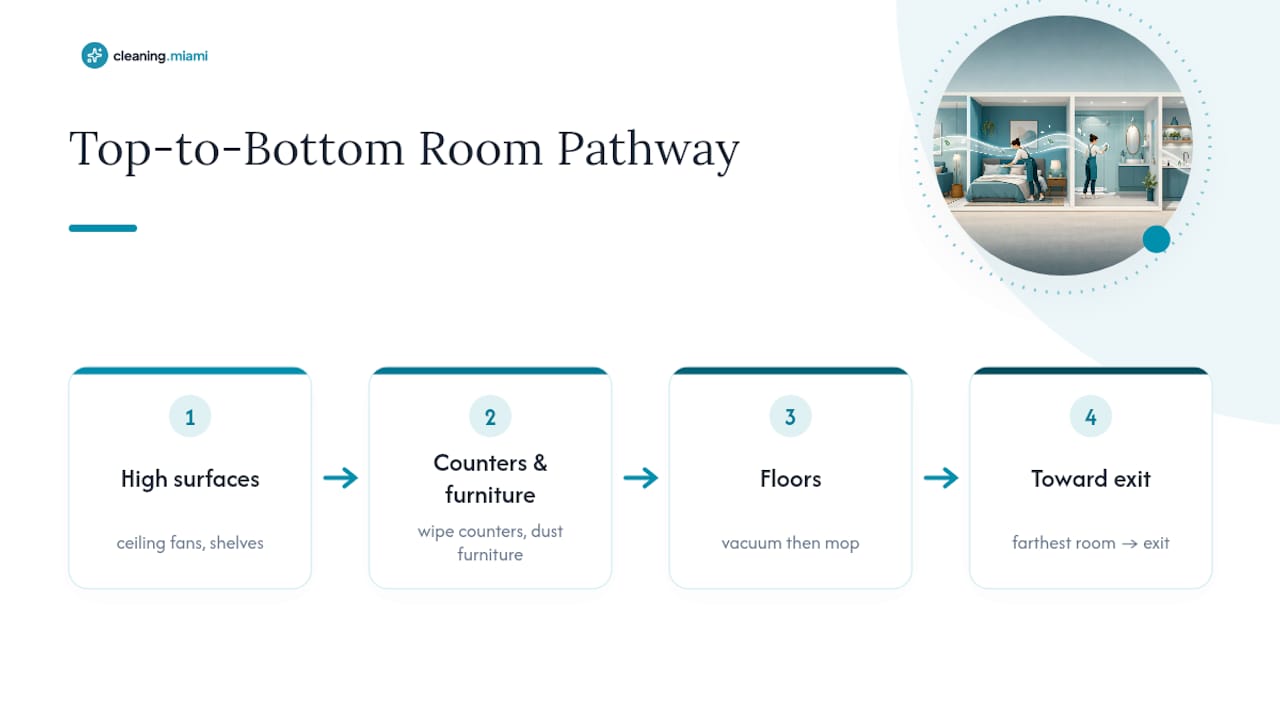
The smartest sequence for any single room is top to bottom: dust ceiling fans and shelves first, work down to counters and furniture, and finish with the floor so falling dust never lands on a surface you already cleaned. Professional teams work this way because it prevents redoing work, and it maps directly onto how you should structure a cleaning schedule around daily, weekly, and monthly layers, which the next section breaks down.
Room-by-Room Checklist: Kitchen, Bathroom, Bedroom, and Beyond
Professional cleaning crews often work from printable templates listing around 40 individual tasks, organized room by room so nothing gets missed and every cleaner on a team knows exactly what "clean" means. Here's how that breaks down by space.
Kitchen
- Wipe counters, backslash, and table surfaces
- Clean the sink and polish the faucet
- Wipe down appliance exteriors (fridge, dishwasher, oven)
- Clean the stovetop and wipe the microwave inside and out
- Sweep and mop the floor
- Empty the trash and reline the can
The stovetop and microwave tend to get skipped because they look fine from a distance. They're rarely fine up close, and grease buildup is exactly what makes a "quick wipe" turn into a scrubbing project a month later.
Bathroom
- Scrub the toilet, inside and out
- Clean the tub or shower and rinse away soap residue
- Wipe the sink, counter, and fixtures
- Clean mirrors until streak-free
- Spot-clean grout where mildew or soap scum is visible
- Sweep and mop the floor
Bedrooms
- Make the bed and straighten linens
- Dust dressers, nightstands, and accessible surfaces
- Vacuum carpet or mop hard flooring
Living and dining areas
- Dust shelves, tabletops, and picture frames
- Vacuum upholstered furniture and under cushions
- Wipe down electronics, remotes, and light switches
- Wipe visible surfaces, including window sills
Entry, closets, and laundry
- Quick tidy of shoes, coats, and mail clutter near the door
- Sweep the entryway floor
- Wipe down the washer and dryer exterior
- Clean the lint trap
Not every task applies to every home. A studio apartment cleaning checklist skips half the categories a four-bedroom house needs, and that's fine. Apartment-focused cleaning guides generally recommend decluttering before you touch a single surface, since clutter is what makes a clean room look messy again within a day. Customize the list to the rooms you actually have, and skip the rest without guilt.
Building a Cleaning Schedule: Daily, Weekly, Monthly, and Seasonal Tasks
A checklist without a rhythm turns into a marathon cleaning day every few weeks. The fix is layering tasks by how often they actually need attention, an approach the American Cleaning Institute recommends specifically to keep any single session manageable.
- Daily tasks (5 to 20 minutes): make the bed, wipe kitchen counters, do a quick dish reset, and manage clutter before it piles up. The Clean Mama method treats daily resets as the foundation everything else builds on.
- Weekly tasks: vacuum and mop floors, clean bathrooms, dust surfaces, and change bed linens. Assign one focus area per day rather than trying to do it all on Saturday.
- Monthly or rotating tasks: wipe appliance interiors, dust blinds and baseboards, clean light fixtures, and vacuum upholstery.
- Seasonal and annual tasks: wash windows, deep-clean carpets, and rotate mattresses.
A sample weekly plan might assign Monday to bathrooms, Wednesday to floors, and Friday to dusting and surfaces, with daily resets happening every day regardless. Homes with pets or heavy foot traffic should bump floor care and lint or hair removal up to every other day. Starting with just the daily layer for a week or two before adding weekly tasks keeps the habit from collapsing under its own ambition.
Tools and Techniques That Make Cleaning Faster
The right supplies cut cleaning time roughly in half compared with improvising. Stock microfiber cloths, a good vacuum with a HEPA filter, a microfiber mop, an all-purpose cleaner, a bathroom-specific disinfectant, and glass cleaner. Microfiber captures dust and bacteria far more effectively than cotton rags and often needs only water, which means fewer chemicals and less rework on streaky glass or greasy stovetops.
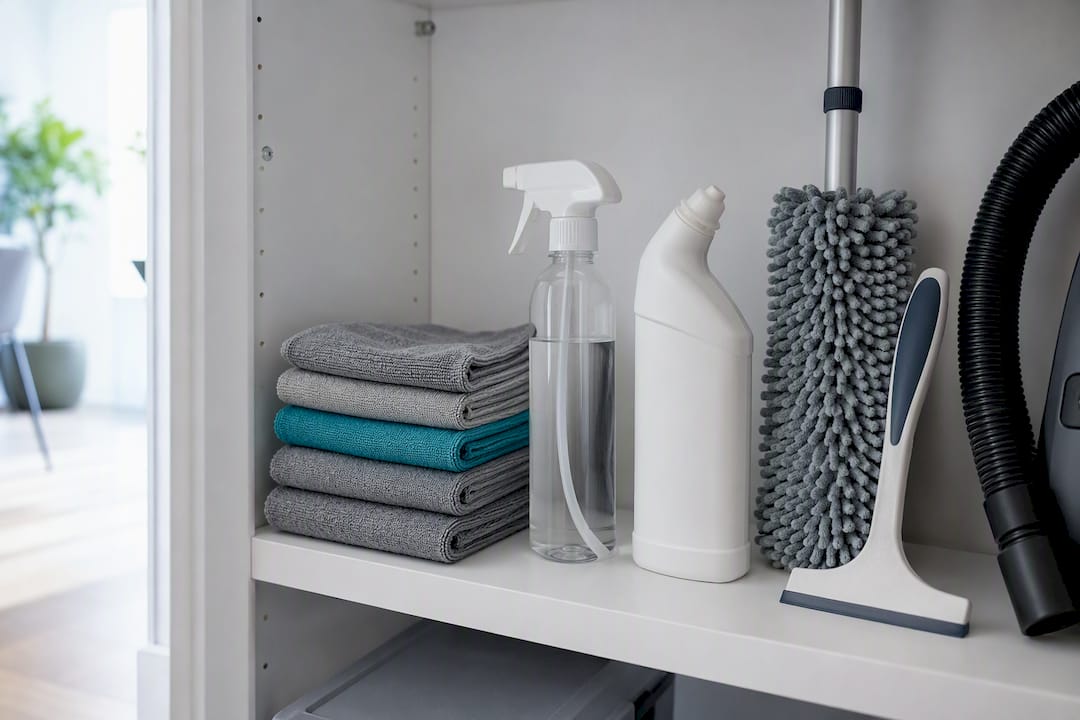
Match the cleaner to the surface: a mild soap for sealed wood, a tile-safe cleaner for grout, and a non-abrasive stainless cleaner for appliances (steel wool will scratch it permanently).
Pro Tip: Work from the highest point in a room down to the floor, and finish every task in that room before moving to the next one. Cleaning experts call this the top-to-bottom, farthest-to-exit method, and it exists for a simple reason: dust you knock loose from a ceiling fan lands on the counter you'll wipe next, not on a floor you already mopped an hour ago.
Standard Cleaning vs. Deep Cleaning: What's Included?
A standard clean covers the recurring maintenance list above: surface wiping, bathroom sanitizing, floor care, dusting, and trash removal. It assumes the home is already in reasonably good shape.
A deep clean or add-on service usually covers what a standard visit skips:
- Inside oven and refrigerator cleaning
- Baseboard and window trim detailing
- Grout scrubbing beyond a quick spot-clean
- Inside-cabinet cleaning and wall spot treatment
Book a deep clean for a first-time service visit, after a renovation, or for move-in and move-out situations where the home needs a full reset before regular maintenance can take over.
How Long Does a Standard Clean Actually Take?
A professional team typically finishes a 3-bedroom, 2-bathroom home in two to four hours; a first visit runs longer since there's no established baseline yet. On your own, budget 60 to 90 minutes for a focused single-pass clean, prioritizing kitchen and bathroom first since they matter most for hygiene, then split remaining rooms across household members if time is tight.
Why Consistency Beats Intensity in Home Cleaning
Most people fail at cleaning routines not from laziness but from setting an unsustainable standard, then abandoning it after two weeks. A shorter list you actually repeat beats an ambitious one you quit. That's also why eco-friendly products matter here: they're gentler for the frequent, close-contact cleaning a good routine demands. Professional cleaning teams are typically background-checked and insured, and many provide satisfaction guarantees.
— Erik
When It's Time to Hand the Checklist to a Pro
Some weeks, the checklist just doesn't fit into the hours you actually have. That's especially true for renters juggling move-out deadlines, Airbnb hosts turning over a unit between guests, or anyone dealing with mobility limits that make scrubbing tubs and vacuuming stairs a genuine strain. Professional cleaning services exist for exactly those moments, often with background-checked and insured teams trained on eco-friendly products suited to local climate conditions, and visits frequently come backed by satisfaction guarantees.

Many cleaning services offer online booking with flexible scheduling for one-time or recurring visits. If you've read this far and realized your own checklist keeps sliding, skip the guilt and book a standard house cleaning instead. Not sure it's worth it yet? Here's an honest breakdown of what hiring a cleaning service actually gets you.
Where to Find More Cleaning Guidance
The American Cleaning Institute's home cleaning routine breaks down frequency layers in more depth. The Clean Mama schedule offers a printable daily and weekly template worth adapting to your own home.
Sources
- Ultimate cleaning schedule | HGTV
- Home cleaning routine | American Cleaning Institute
- Complete Clean Mama cleaning schedule | Clean Mama
- Microfiber cleaning cloths | Ecolab
- The Room-by-Room House Cleaning Checklist (Free PDF) | Gem City Cleaning Tools
FAQ
How Often Should I Deep Clean vs. Standard Clean?
Standard cleaning happens weekly or biweekly for maintenance; deep cleaning is typically an occasional reset done a few times a year or before major transitions like move-in.
What's Not Included in a Standard House Cleaning?
Standard cleans generally skip inside-oven and inside-fridge cleaning, full grout restoration, and wall or baseboard detailing. Check what house cleaners typically don't do for a fuller breakdown.
How Long Should a Standard House Clean Take?
Professional teams finish an average 3-bed, 2-bath home in a few hours, while a focused DIY pass usually takes around an hour or somewhat longer.
What Should I Clean First When Short on Time?
Start with the kitchen and bathroom since they carry the most bacteria and visible grime, then move to floors and surface dusting if time allows.
Should I Tidy Up Before a Cleaning Service Arrives?
A light declutter helps the team focus on actual cleaning rather than organizing; see what to do before the cleaner comes for specifics.