
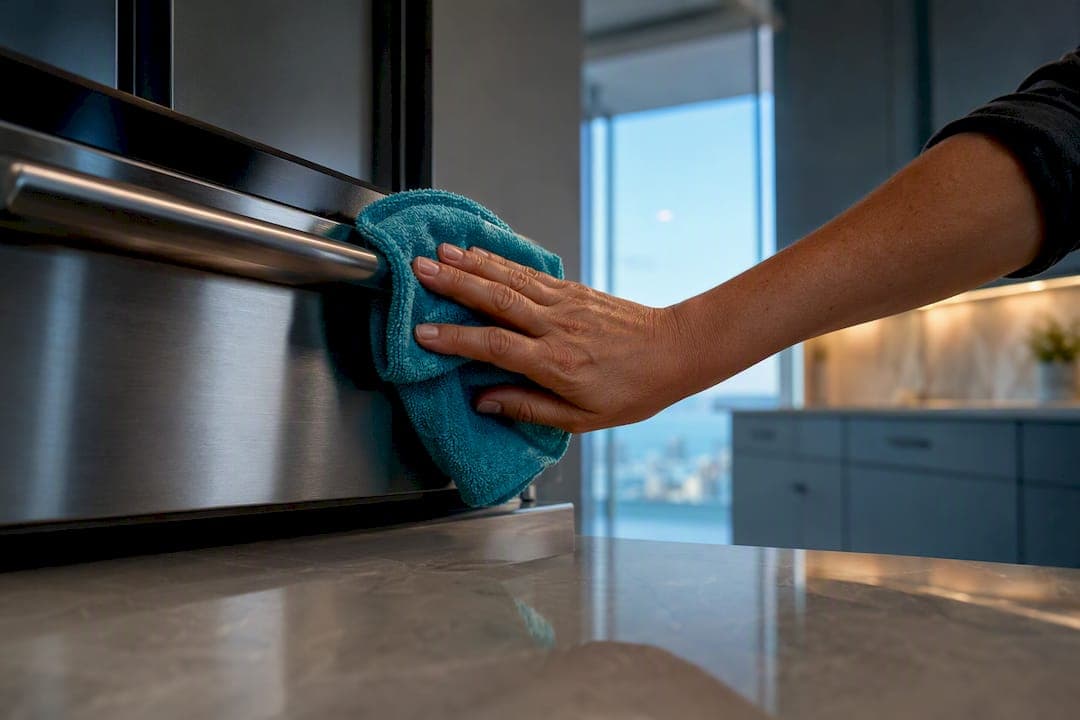
The fastest safe routine: warm water, a few drops of mild dish soap, and a microfiber cloth wiped with the grain, then rinsed and dried immediately. Skip steel wool, abrasive powders, bleach, and anything with ammonia or chlorides. For extra shine and fingerprint resistance, follow up with a dedicated stainless cleaner or a light mineral-oil buff.
TL;DR:
- Using a microfiber cloth with warm water and mild dish soap along the grain effectively cleans daily smudges without damaging the surface.
- Avoid abrasive cleaners, steel wool, bleach, and ammonia, as they can cause permanent scratches, pitting, or stripping of the oxide layer.
- For tough stains like rust or baked-on grease, use safe products such as oxalic-acid cleansers or baking soda paste, but always test first.
- Regularly dry surfaces after cleaning and avoid spraying liquids directly onto electronics to prevent damage to controls and digital components.
- Eco-friendly cleaning options like vinegar, baking soda, and mineral oil are effective, inexpensive, and minimize environmental impact.
Table of Contents
- Stainless Steel Cleaning: The Daily Method for Fingerprints and Grease
- How Do You Remove Rust, Baked-On Grease, and Water Spots?
- Which Tools and Materials Actually Belong in Your Cleaning Kit?
- Does Your Finish Change How You Should Clean It?
- What Habits Keep Stainless Steel Looking New?
- How Do You Clean Appliances Without Damaging the Electronics?
- Eco-Friendly Ways to Clean Stainless Steel
- How Should You Clean Stainless Cookware Differently From Appliances?
- What's the Best Way to Deal With Hard Water Stains and Scale?
- When Does Stainless Steel Care Need a Professional?
- Book a Cleaning That Actually Protects Your Appliances
- Sources
Stainless Steel Cleaning: The Daily Method for Fingerprints and Grease
You don't need a cabinet full of products to keep an appliance looking new. Microfiber avoids the tiny scratches that paper towels and cotton rags leave behind, and mild dish soap breaks down finger oils without stripping the metal's protective finish.
Here's the routine that works for daily smudges and light grease:
- Mix a few drops of mild dish soap, such as Dawn, into a bowl of warm water.
- Dip the microfiber cloth, wring it out, and wipe in the direction of the brushed grain, never against it or in circles.
- Rinse a second cloth with plain water and go over the same area to lift soap residue.
- Dry immediately with a clean towel to prevent water spots.
- For extra shine, buff with a dry microfiber cloth in one final pass along the grain.
If you're dealing with heavier grease near the stove, a dish soap made for cutting oil, like Dawn Powerwash, can help, but always follow it with a rinse and dry so it doesn't leave a film. Mirror-polished surfaces, like some refrigerator panels or range hoods, respond well to a standard glass cleaner sprayed onto the cloth (not directly onto the appliance) to avoid streaking.
A daily wipe on high-touch spots like handles and door fronts is quick and easy. A light all-over polish once a week keeps grease from building up in seams and around control panels.
Pro Tip: Spray cleaner onto your cloth instead of the appliance. Direct spray tends to pool in seams and around edges, where it can seep behind trim and cause streaking later.
How Do You Remove Rust, Baked-On Grease, and Water Spots?
Tougher stains call for tougher, but still safe, methods. Stainless steel resists corrosion because of a thin, invisible oxide layer on its surface, and the wrong cleaner can strip that layer permanently, according to the American Cleaning Institute. Here's how to handle the worst offenders without crossing that line.
For burnt-on cookware residue, soak the pot or pan in hot water with a drop of dish soap for about 15 minutes before scrubbing. If food is still stuck, a sprinkle of washing soda (sodium carbonate) in the soak water helps loosen it further.
- Grease buildup: Make a paste of baking soda and a little water, apply with a soft nylon scrub pad, work gently along the grain, then rinse and dry.
- Rust spots or tarnish: Use a grit-free, oxalic-acid cleanser like Bar Keepers Friend in liquid form, test on a hidden spot first, then rinse thoroughly.
- Hard-water spots: Wipe with white vinegar on a soft cloth, then rinse and dry right away so the acid doesn't sit.
- General buffing and shine: A few drops of mineral oil on a dry cloth restores shine and helps repel new fingerprints, a trick highlighted repeatedly in household cleaning coverage.
Bleach, ammonia, and chloride-based cleaners are the biggest threats to stainless steel's surface. They break down the oxide layer that keeps the metal from corroding, and once pitting starts, it's permanent. The same goes for steel wool and coarse scouring powders. They physically gouge the surface, creating scratches that trap dirt and moisture, and often make the problem you were trying to fix worse.
Which Tools and Materials Actually Belong in Your Cleaning Kit?
A short list of the right supplies saves you from reaching for the wrong one under pressure.
- Microfiber cloths: Keep one color for washing and a separate one for dry buffing so you're never spreading soap residue while polishing. Wash them without fabric softener, which leaves a coating that reduces absorbency and can cause smearing.
- Soft nylon scrub pads or sponges: Safe for grease and light stains when used with the grain. Avoid anything labeled "scouring pad" unless it specifically says safe for stainless steel.
- Baking soda: Mix into a light paste for grease; never use it dry, since the granules can scratch if pressed too hard.
- White vinegar: Dilute slightly for water spots; full strength is fine for occasional spot treatment but shouldn't sit on the surface.
- Mineral oil: A few drops on a dry cloth for shine and fingerprint resistance, reapplied every few weeks as needed.
Commercial stainless cleaners earn their place when you want convenience. Consumer Reports testing found that several dedicated cleaners leave a thin protective film that repels smudges, which cuts down how often you need to clean at all.
Does Your Finish Change How You Should Clean It?
Not every stainless surface behaves the same way, and guessing wrong can leave a permanent mark.
Brushed finishes have visible grain lines running one direction. Always wipe with those lines, since going against them can create fine scratches that catch the light differently than the surrounding metal. Mirror-polished surfaces have no visible grain and show streaks more easily, so they do better with a glass cleaner than a soapy cloth.
Fingerprint-resistant coatings, common on newer refrigerators and dishwashers, need gentler handling than standard stainless. Stick to mild soap and water, and skip any polish or oil products, since some can break down the coating over time.
- Black stainless and other coated finishes: Test any new product on a small, hidden spot first, and use manufacturer-approved cleaners when they're listed in your appliance manual.
- Sinks and cookware: Soak before scrubbing rather than attacking dried residue directly, and never let vinegar or citric-acid solutions sit for extended periods, since prolonged acid contact can dull the finish.
Pro Tip: Run your hand lightly across the surface before cleaning. If you can feel the grain direction, you'll know which way to wipe without guessing.
What Habits Keep Stainless Steel Looking New?
Consistency beats intensity. Industry guidance on stainless steel care consistently finds that frequent, gentle cleaning outperforms occasional heavy scrubbing for both appearance and long-term corrosion resistance.
- Daily: Wipe down handles and high-touch areas, and clean up spills the moment they happen, especially anything acidic or salty.
- Weekly: Do a full soap-and-water pass on all visible surfaces, working with the grain.
- Monthly: Apply a dedicated stainless polish or a light mineral-oil buff for extra shine and protection.
Never let salty residue, chlorides, or standing water sit on the surface, especially around faucets, seams, and appliance seals where moisture likes to hide. If stains keep reappearing in the same spot no matter how carefully you clean, that can signal the protective oxide layer has broken down in that area, which sometimes calls for a closer look from someone experienced with metal finishes.
How Do You Clean Appliances Without Damaging the Electronics?
Modern stainless appliances pack touch panels, sensors, and Wi-Fi modules right behind the metal skin, and that changes how you should approach cleaning.
Never spray liquid directly onto control panels, display screens, or seams near buttons. Moisture that seeps behind a touchscreen or control board can cause it to malfunction, sometimes permanently. Spray your cleaner onto the cloth first, then wipe. It's a small change in technique that makes a real difference.
Unplug or power down appliances with exposed electronic controls before deep cleaning around them, particularly on ranges and wall ovens where control knobs sit close to heating elements. For dishwashers and refrigerators, wipe the door and handles as usual, but keep water away from door gaskets and the gap where the door meets the control panel.
Avoid pressing hard around seams when scrubbing stuck-on grease near a stove's control panel. It's tempting to dig in, but firm pressure can push moisture into gaps that are otherwise sealed. Manufacturer guidance from appliance makers like GE Appliances echoes the same core advice: mild soap, soft cloths, and no abrasive tools around any electronic or digital component.
If your appliance has a smart display or touch controls, check the manual for a specific cleaning mode or lockout feature. Many models let you disable the touchscreen temporarily so a stray swipe of your cloth doesn't accidentally change a setting mid-clean.
Eco-Friendly Ways to Clean Stainless Steel
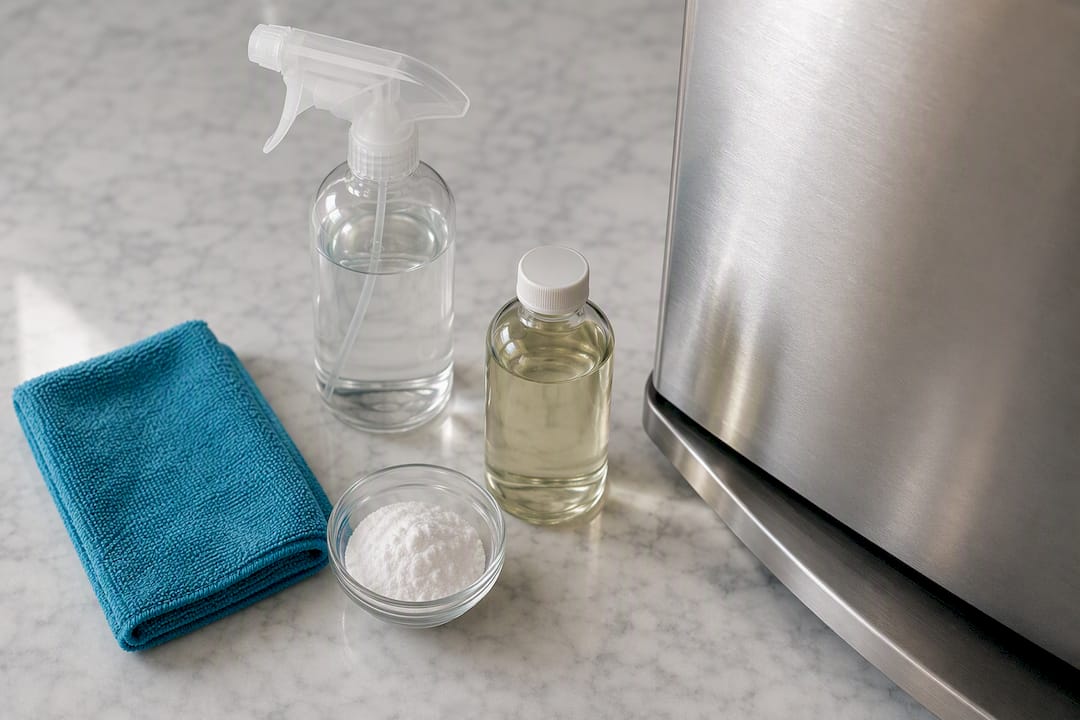
Most of the supplies that work best on stainless steel are already gentle on the environment. Baking soda, white vinegar, and mineral oil are inexpensive, widely available, and don't carry the same environmental concerns as heavy-duty degreasers or chlorine-based products.
Vinegar and baking soda both break down naturally and don't require special disposal, unlike some commercial oven cleaners or bleach-based products. Choosing a mild dish soap over a harsh degreaser also means less runoff of aggressive chemicals down the drain every time you clean.
If you prefer a ready-made option, look for stainless cleaners labeled biodegradable or free of aerosol propellants. Aerosol sprays disperse a fine mist into the air that you end up breathing in during use, while pump sprays and wipes limit that exposure.
For households that want to go further, a mix of one part white vinegar to two or three parts water in a reusable spray bottle handles most light cleaning jobs and cuts down on packaging waste from disposable wipes. Reusing microfiber cloths instead of paper towels does the same thing over time, since a good microfiber cloth can be washed and reused for months before it wears out. Reference guides on eco-friendly cleaning methods cover similar low-impact swaps across the rest of the home, not just stainless surfaces.
How Should You Clean Stainless Cookware Differently From Appliances?
Pots, pans, and stainless sinks take more abuse than a refrigerator door, which means the rules shift slightly.
Cookware regularly deals with scorched oil, burnt sauce, and hard water mineral buildup from boiling, none of which appliance panels encounter. A hot water soak with a drop of dish soap for 15 minutes loosens most stuck-on food before you ever pick up a scrub pad. For genuinely burnt-on residue, adding washing soda to that soak, or switching to a baking soda paste, handles what soap alone can't.
Cookware also tolerates slightly more scrubbing pressure than appliance panels, since pots are solid metal all the way through rather than a thin surface bonded to insulation and electronics. Still, stick to nylon pads over steel wool, and always scrub in the direction of any visible grain on the pan's interior.
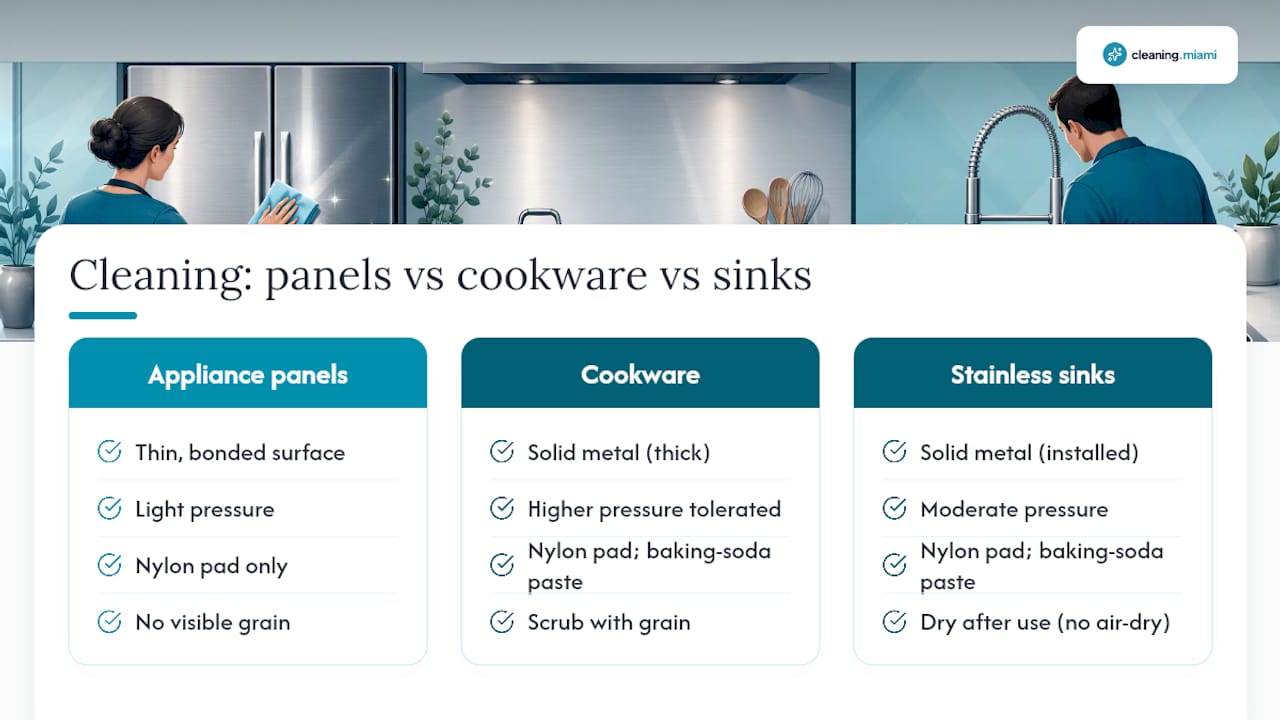
Stainless sinks fall somewhere in between. They're solid metal like cookware, but they're installed like an appliance and can develop water spots and mineral scale fast, especially in areas with hard water. Wipe them dry after each use rather than letting water air-dry on the surface, and address stuck-on food or soap scum with the same baking soda paste method used on cookware.
What's the Best Way to Deal With Hard Water Stains and Scale?
White, chalky spots on stainless steel are almost always mineral deposits left behind when hard water evaporates rather than getting wiped away, and they build up fast in kitchens and bathrooms with high mineral content in the water supply.
The fix is straightforward: white vinegar cuts through mineral deposits effectively because its acidity dissolves the calcium and magnesium buildup that causes the spots. Apply it with a soft cloth, let it sit for a minute or two on stubborn scale, then rinse thoroughly and dry immediately. Skipping the rinse just replaces one mineral residue with a faint vinegar smell.
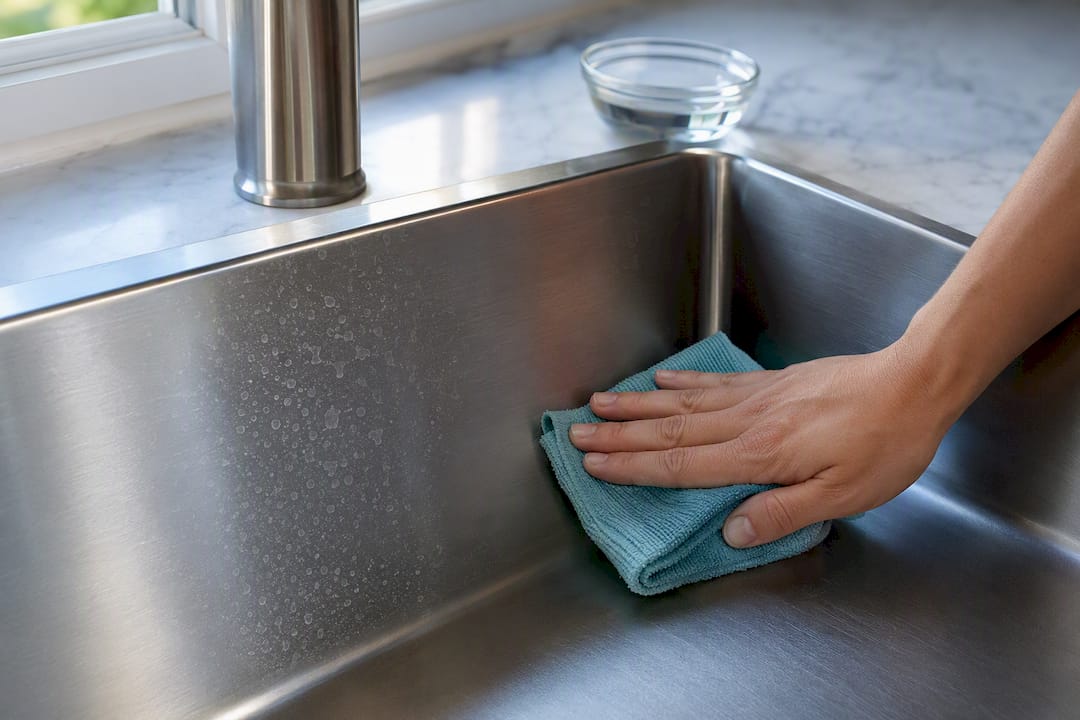
For sinks and faucets dealing with scale on a regular basis, drying the surface completely after every use prevents most buildup before it starts. A squeegee or a quick towel pass takes seconds and beats scrubbing away crusted mineral deposits later.
If plain water leaves spots faster than seems normal, it's worth checking whether your home's water hardness has increased. Some areas see seasonal shifts in mineral content, and a household water softener can cut down on scale across every stainless surface in the kitchen and bathroom, not just the sink.
When Does Stainless Steel Care Need a Professional?
Most stainless steel problems are DIY territory. But there's a point where the smart move is picking up the phone instead of the scrub pad.
Widespread pitting, corrosion that keeps returning after cleaning, or heavy baked-on grease that's built up over months usually needs equipment and products beyond what's practical to keep at home. A professional team also brings something harder to replicate solo: familiarity with which cleaner works on which finish, learned from cleaning hundreds of different kitchens rather than one.
Professional cleaning teams being background-checked, insured, and bonded matters when you're letting someone into your home to handle appliances you rely on daily. Our approach leans on the same principle backed by industry maintenance research: consistent, gentle care beats occasional aggressive scrubbing every time. That's why our process focuses on finish-aware products and technique, not brute force.
For homeowners weighing whether a job is worth handing off, our guide on choosing the right cleaning service breaks down what separates a reliable team from a risky one.
— Erik
Book a Cleaning That Actually Protects Your Appliances
Professional cleaning is the practical alternative to guessing your way through a stainless steel problem with the wrong product. Experienced teams know which cleaner works on brushed steel versus a fingerprint-resistant coating, avoiding trial-and-error that can damage a finish permanently.

A standard appointment includes appliance-safe methods across your kitchen, from the range hood to the refrigerator door, using eco-friendly products suited to Miami-Dade's humidity and salt air. Every team is background-checked and insured, and every job is backed by a 100% satisfaction guarantee. If a stainless surface still shows streaks or spots after we leave, we make it right.
Booking takes under 60 seconds. Head to our house cleaning services page to pick a time that works, whether you need a one-time deep clean before guests arrive or a recurring visit to keep your kitchen looking the way it did on day one.
Sources
- Consumer Reports — Best stainless steel cleaners (2026)
- American Cleaning Institute — Ask ACI: Cleaning stainless steel appliances
- World Stainless — Cleaning stainless steel at home (industry handbook, 2025)
- Popular Mechanics — Stainless-steel cleaning tips (2026)