
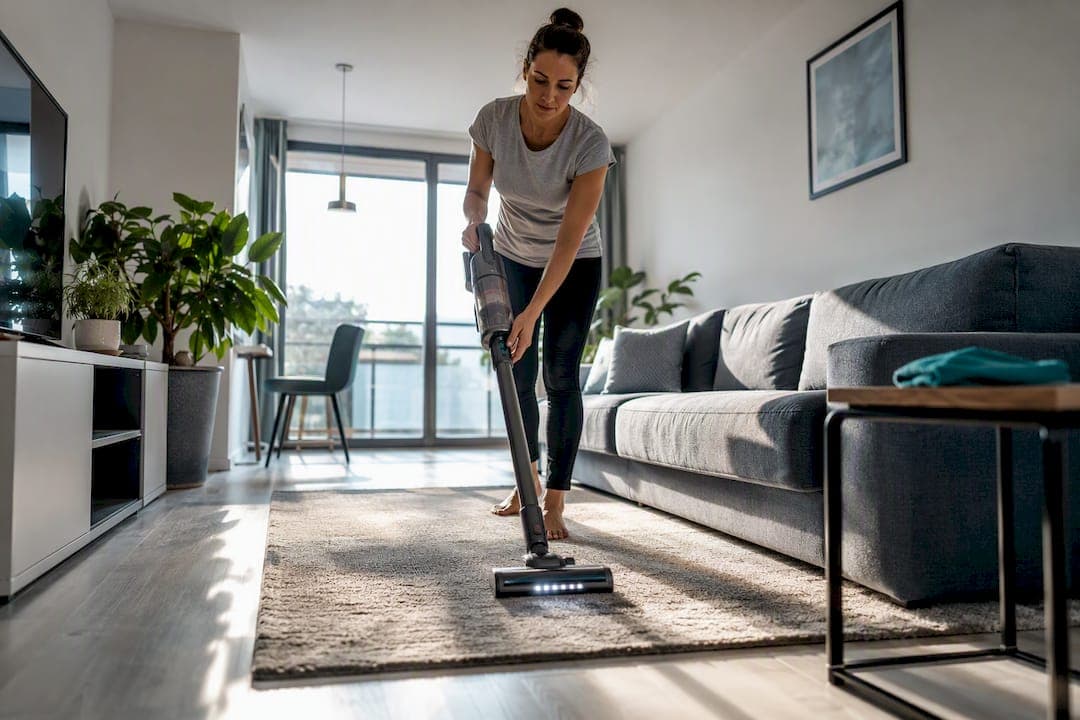
The most reliable way to keep a small apartment clean is a 5 to 10 minute daily reset, one 30 to 60 minute weekly power clean, and a monthly targeted deep-clean session for the spots the weekly pass skips. Below you'll find the exact checklist, a compact toolkit built around microfiber cloths and a light cordless vacuum, and a top-to-bottom workflow that keeps the whole thing from ever ballooning into a weekend project.
TL;DR:
- Small apartments benefit from daily 5-10 minute resets, weekly 30-60 minute power cleans, and monthly targeted deep-clean sessions for effective maintenance.
- Pairing cleaning tasks from top to bottom across rooms reduces time and prevents cross-contamination, especially when batching similar chores.
- Decluttering with a one-in, one-out rule and strategic storage solutions significantly accelerates cleaning and keeps spaces more organized.
- A minimal cleaning kit with a cordless vacuum, microfiber cloths, and multi-surface spray is most effective, avoiding bulky, specialized tools.
- Scheduling routine cleanings around personal availability and considering professional help for move-outs or after neglect ensures a consistently clean apartment.
Table of Contents
- The Daily, Weekly, and Monthly Small Apartment Cleaning Checklist
- What Should You Clean in Each Room of a Small Apartment?
- How Do You Declutter a Small Apartment So Cleaning Is Faster?
- What's the Minimum Cleaning Kit You Actually Need?
- How Do You Build a Cleaning Schedule You'll Actually Follow?
- When Does It Make Sense to Hire a Professional Cleaner?
- How Do You Keep a Small Apartment Clean With a Pet?
- How Should You Handle Laundry in a Small Apartment?
- Where Should You Store Cleaning Supplies in a Tiny Apartment?
- What I've Learned Testing This Routine in Real Apartments
- Want the Deep Clean Without the Weekend Lost to It?
- Sources
The Daily, Weekly, and Monthly Small Apartment Cleaning Checklist
A small apartment gets dirty fast because everything is close together. Dishes pile on the counter that's three feet from your couch. Shoes track grit into a living room that doubles as an entryway. The fix isn't more cleaning. It's cleaning that's broken into frequencies matched to how quickly each mess actually builds.
Cleaning professionals generally recommend small daily actions paired with one deeper weekly session, working top to bottom so dust and crumbs fall onto surfaces you haven't cleaned yet, not ones you already finished. Here's how to break that down for a studio or one-bedroom.
- Daily (5 to 10 minutes): Make the bed, wipe down kitchen counters and the stovetop, load or empty the dishwasher, wipe the bathroom sink, and do a 60-second floor check for anything obviously out of place.
- Weekly (30 to 60 minutes): Vacuum or sweep every floor, clean the bathroom (toilet, tub, mirror), wipe kitchen appliance exteriors, change bed sheets, and take out the trash and recycling.
- Monthly: Wipe baseboards, clean inside the microwave and fridge shelves, dust ceiling fans and vents, wash shower curtains or liners, and vacuum under furniture you don't move weekly.
- Quarterly: A full deep clean, including oven interiors, grout, and window tracks, which is the pace most checklists recommend to stop buildup before it becomes a project.
The order matters as much as the frequency. Work top to bottom (shelves before floors) and left to right around each room so you never backtrack over a spot you already cleaned. In a 400 square foot apartment, that discipline alone can cut your cleaning time by a third, because you stop repeating steps.
Pro Tip: Batch identical tasks across rooms instead of finishing one room completely before moving on. Wipe every glass surface in the apartment in one pass, then every counter, then every floor. Your brain stays in one motion instead of switching tools and postures every few minutes.
What Should You Clean in Each Room of a Small Apartment?
Small apartments don't have separate zones for separate problems. Your kitchen grease ends up on your living room rug faster than in a house, and your bathroom humidity reaches your bedroom closet. Room-by-room tasks still matter, but they need to account for that overlap.
Kitchen:
- Fill a bowl with water and a splash of vinegar, microwave it for three minutes, and the steam loosens baked-on grime so you can wipe the interior clean in seconds.
- Clear counters completely once a week, not just around the clutter, so grease film doesn't build in the corners you normally skip.
- Rinse and wipe the sink daily. A wet sponge left sitting in a small kitchen sink is often the single biggest odor source in an apartment.
Bathroom:
- Keep a squeegee on the shower wall and use it after every shower. Thirty seconds of squeegeeing prevents most of the soap scum and water spotting that otherwise needs scrubbing later.
- Spot-treat grout weekly with a baking soda paste rather than waiting for a deep clean, since grout in small, less-ventilated bathrooms discolors faster.
- Run the exhaust fan during and 15 minutes after every shower. Small bathrooms trap humidity longer, and that's exactly what feeds mold behind the toilet and under the sink cabinet.
Living room and bedroom:
- Reset surfaces daily, meaning clear anything that doesn't belong there back to its storage spot before you sit down for the night.
- Vacuum or spot-wipe multi-use furniture (a sofa bed, a storage ottoman) weekly, since these get more daily contact in a small apartment than in a house with more seating options.
- Rotate and fluff cushions and flip mattress toppers monthly to prevent permanent compression marks, which happen faster in furniture that gets used for sitting, sleeping, and storage all at once.
Entryway:
- Keep a small tray or mat right at the door so shoes come off before feet hit carpet or rugs.
- Wipe down the entry surface (a shelf, a console, even a wall hook area) weekly since it collects mail, keys, and bag residue that tracks dirt further into the apartment.
This room-by-room approach, paired with the top-to-bottom workflow most professionals recommend, keeps each space from cross-contaminating the next.
How Do You Declutter a Small Apartment So Cleaning Is Faster?
Decluttering isn't a separate project from cleaning. In a small apartment, it's the thing that determines how long cleaning takes. A studio with visible clutter on every surface takes three times longer to clean than the same studio with clear counters, because you spend most of your time moving things instead of wiping them.
The one-in, one-out rule is the simplest high-leverage habit here: when something new comes into the apartment, something else leaves. Removing even a handful of items consistently keeps visible clutter from creeping back, which is one of the most repeatable tactics for small-space organization that experts point to again and again.
Beyond that rule, a few storage moves do most of the work:
- Install over-door organizers on closet and pantry doors. That's square footage you're currently wasting.
- Use vertical wall shelving above desks, above the toilet, and above the kitchen counter line to get items off horizontal surfaces entirely.
- Slide flat bins under the bed for off-season clothing or linens instead of stacking them in a closet you use daily.
- Add shelf risers inside cabinets to double your usable storage without adding a single new piece of furniture.
- Choose furniture that does two jobs: a storage ottoman, a bed frame with drawers, a coffee table that lifts to become a desk.
If your closet or entry storage still feels tight after these fixes, a custom setup like the systems One Day Doors & Closets builds can reclaim space that generic organizers can't reach.
Pro Tip: Set a two-minute purge timer once a week. Walk one room, grab anything that doesn't belong, and either put it away or set it in a donation bag. Two minutes, once a week, prevents the kind of clutter that eventually needs a whole Saturday to undo.
What's the Minimum Cleaning Kit You Actually Need?
You don't need a closet full of specialty products. Small apartments benefit from fewer, better tools, since a lightweight, multi-use kit gets used more often than a garage-style collection that takes effort to dig out. Industry guidance on compact home cleaning tools backs this up: cordless, multi-surface tools see more frequent use precisely because they're easy to grab and easy to store.
The simplest framework is one main tool plus two supplements:
- Main tool: a lightweight cordless vacuum that handles floors, rugs, and upholstery without needing an outlet or a closet of its own.
- Supplement one: a stack of microfiber cloths, which trap dust more effectively than paper towels and cut way down on disposable wipe purchases.
- Supplement two: a multi-surface spray or a handheld steamer for glass, counters, and bathroom tile.
Round it out with pantry staples: white vinegar, baking soda, and dish soap handle most jobs a specialty cleaner claims to solve, at a fraction of the cost and without leaving harsh residue on rental finishes.
Skip the full-size upright vacuums and abrasive scouring powders. Both tend to be oversized for apartment storage and rough enough to scratch rental countertops or strip finish off cheaper cabinetry, which can turn into a deposit dispute later.
How Do You Build a Cleaning Schedule You'll Actually Follow?
The routine only works if it fits your actual week, not an idealized one. A single professional working long hours needs a different rhythm than a couple splitting chores or roommates sharing one bathroom.
- Solo, busy schedule: Daily reset in the morning while coffee brews (5 minutes), one weekly session on a fixed day like Sunday (30 minutes), monthly deep tasks split across two evenings.
- Couple: Split daily resets by zone (one person handles kitchen, the other handles bathroom), then tackle the weekly power clean together in a focused 20 minute sprint using timers.
- Roommates: Assign fixed zones (kitchen, bathroom, shared living space) on a rotating weekly basis so no one person defaults to always doing the least visible chore.
Micro-sprint timers turn open-ended chores into something closer to a game. Set a timer for 10 minutes and race to reset the living room before it goes off. That structure improves follow-through because the task has a visible end point instead of feeling endless.
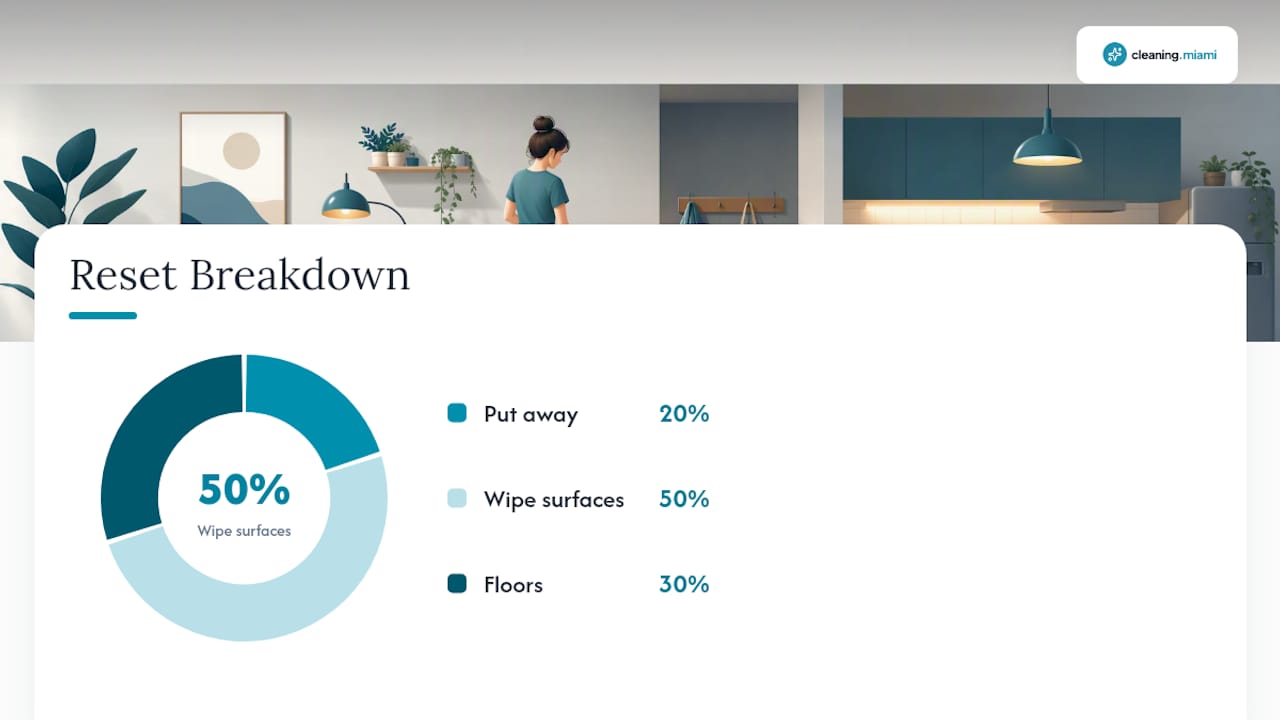
Pro Tip: In a 10-minute reset, spend the first 2 minutes putting things away, the next 5 wiping visible surfaces, and the last 3 on floors. That split covers the areas guests actually notice first.
When Does It Make Sense to Hire a Professional Cleaner?
DIY routines cover the maintenance. They don't always cover the reset. A handful of situations justify bringing in a professional even if you're diligent about your daily and weekly habits.
- Move-out cleanings, where a deep clean can be the difference between getting your full security deposit back and losing part of it to cleaning fees.
- Airbnb turnovers, where the apartment needs to look untouched within hours, not days.
- Heavy soil or long neglect, like after an illness, a busy work stretch, or a renovation that left dust in every crevice.
- Time scarcity, where the math of your hourly rate versus a cleaner's hourly rate just makes sense.
Professional cleaning is generally most useful for scheduled deep cleans, turnover cleanings, or moments when DIY becomes impractical rather than as a full replacement for your own routine. Pricing for a short clean varies by locality, scope, and whether you're booking a one-time move-out job versus a recurring visit, so get a quote based on your specific apartment size and condition rather than assuming a flat rate. Before anyone arrives, declutter visible surfaces, secure valuables and medications, and clear a path to high-traffic areas so the cleaner's time goes toward actual cleaning, not organizing your stuff first.
How Do You Keep a Small Apartment Clean With a Pet?
Pets in small apartments concentrate fur, dander, and odor in a footprint that has nowhere to disperse it. That means the daily reset needs one addition: a quick pass with a rubber pet brush or a lint roller over upholstery and rugs, since fur builds visibly faster in tight quarters than it would spread out in a house.
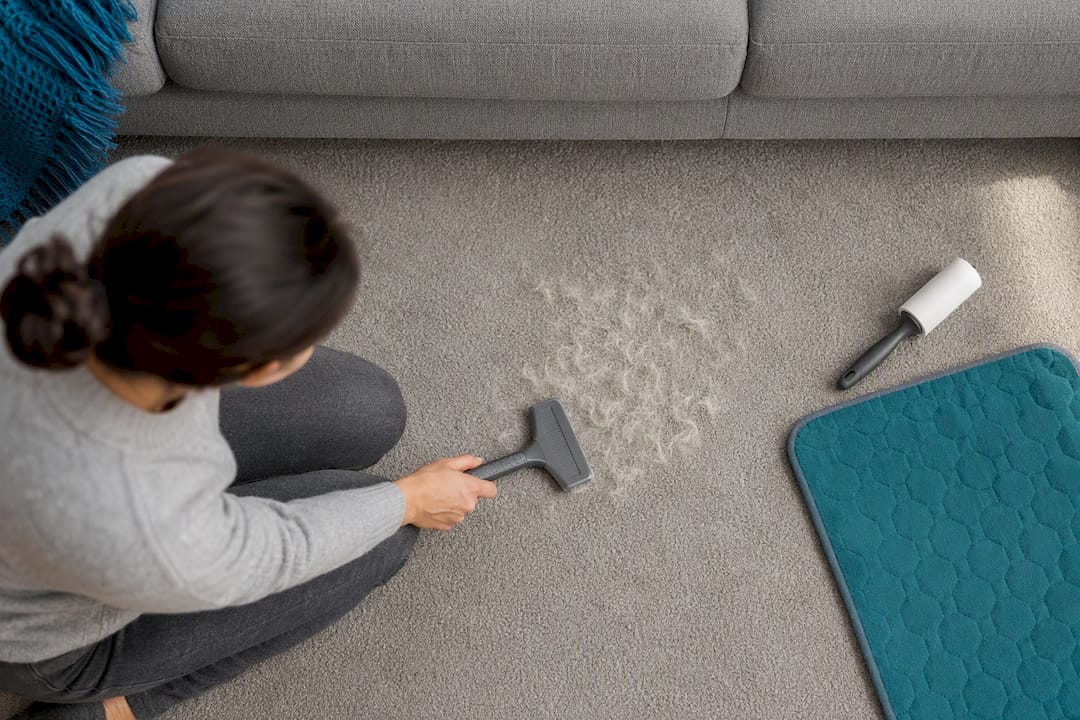
Litter boxes and pet beds need placement away from airflow-restricted corners. Scoop litter daily, not every few days, because ammonia smell concentrates fast in a small room with limited ventilation. Wash pet bedding weekly alongside your regular laundry rather than letting it sit for a monthly cycle, since pet dander builds bacteria and odor quicker than human bedding does.
Water and food bowls deserve a daily wipe-down of the surrounding floor, since spills in a small kitchen or hallway track further than they would in a bigger space with more distance between the bowl and your main walking path. A washable mat under the bowls catches most of it before it reaches the floor at all.
For carpet or rug accidents, treat the spot immediately with an enzyme cleaner rather than a general all-purpose spray. Enzyme formulas break down the organic compounds causing the odor instead of just masking scent, which matters more in a small apartment where a lingering smell has nowhere to dilute. If shedding is heavy, a cordless vacuum with a dedicated pet-hair attachment earns its spot in your minimal kit faster than almost any other add-on tool.
How Should You Handle Laundry in a Small Apartment?
Limited space usually means limited laundry equipment, whether that's a shared building machine, a laundromat trip, or a stackable unit crammed into a closet. The fix is treating laundry as a scheduled task, not a reactive one triggered by an empty drawer.
Set one or two fixed laundry days a week rather than letting it pile until you're down to your last clean option. A hamper with a removable liner bag makes trips to a shared laundry room faster since you carry one bag instead of loose clothes.
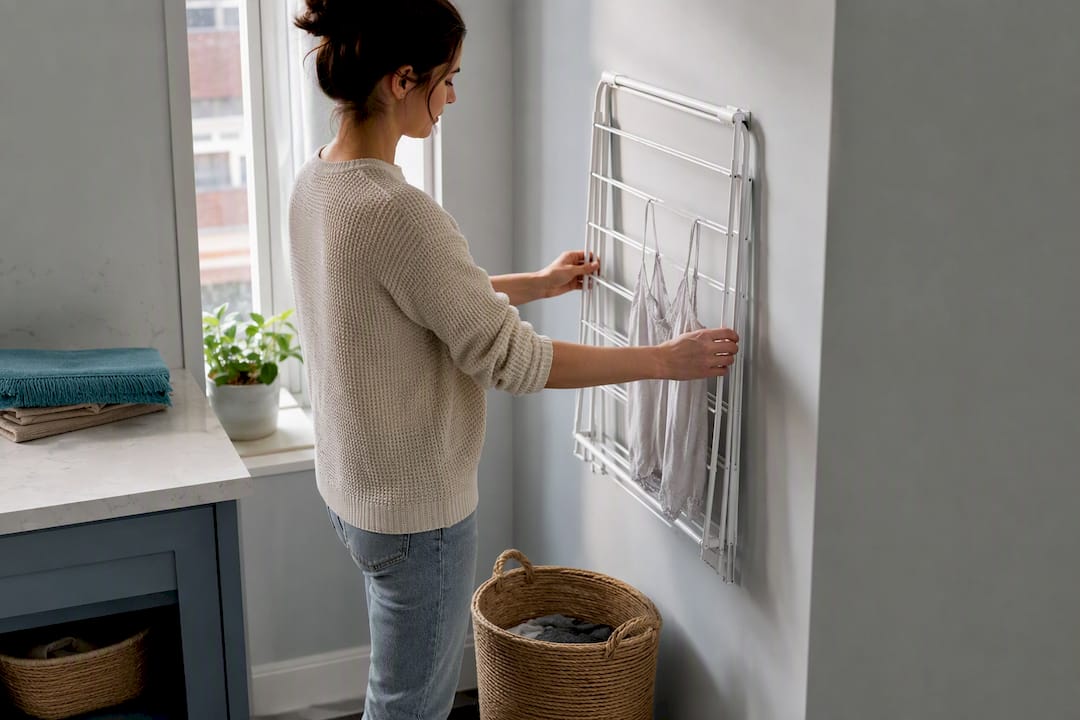
Fabric care in small spaces benefits from a drying rack that folds flat against a wall when not in use, since a small apartment rarely has room for a permanent drying setup. Air-drying delicate items also extends their life and skips the dryer heat that wears out fabric fastest.
Keep a small stain-treatment stick or spray by the hamper so stains get pretreated within a day instead of setting in for a week before wash day. For bedding and towels, which take up the most storage volume, a weekly wash on a fixed day keeps you from ever needing to store a backup set, freeing up shelf space that a small linen closet usually can't spare anyway.
Where Should You Store Cleaning Supplies in a Tiny Apartment?
Cleaning supplies fail you when they're inconvenient to grab, so storage placement matters almost as much as the supplies themselves. A portable caddy is the single best fix here: load it with your microfiber cloths, multi-surface spray, and baking soda, and carry the whole thing room to room instead of walking back and forth to a closet mid-task.
Store the caddy somewhere central, like under the kitchen sink or in a hallway closet, rather than splitting supplies across multiple rooms. One central location means one spot to restock and one spot to check before you run out mid-clean.
Hang a small over-the-door organizer inside a closet or pantry door specifically for cleaning tools, keeping sprays upright and cloths rolled rather than piled loose in a bin where you have to dig for what you need. Vertical wall hooks near a utility closet work well for a broom, mop, or handheld steamer, keeping floor space clear in a storage area that's likely already tight.
Keep the kit small on purpose. If you can't fit everything you own into one caddy and one small shelf, you likely have duplicate products doing the same job. Consolidating down to true multi-use items, per the compact-kit approach covered earlier, is what keeps this storage system from sprawling back into clutter within a month.
What I've Learned Testing This Routine in Real Apartments
The biggest misconception about small apartment cleaning is that less space means less effort. It's the opposite. Small spaces show mess immediately, which means the margin for skipping a day is thinner than in a house where clutter can hide in a spare room. What actually works isn't a longer cleaning session. It's a shorter one, repeated more consistently, with fewer tools that you'll actually reach for.
Testing this compact routine across different apartment layouts, the daily reset paired with the weekly power clean consistently outperformed sporadic deep-cleaning binges, both in time spent and in how the space actually felt day to day...
.
— Erik
Want the Deep Clean Without the Weekend Lost to It?
Cleaning.Miami exists for the exact gap this routine can't close on its own: the quarterly deep clean, the move-out reset, or the Airbnb turnover you don't have three hours to handle yourself between guests. Where your daily and weekly habits keep the apartment livable, a professional visit handles the grout, the inside of appliances, and the baseboards that pile up buildup even the best routine eventually needs help clearing.

Cleaning.Miami's apartment cleaning service covers everything from studios to full-size condos across Miami-Dade County, with background-checked, insured teams and eco-friendly products built for local humidity and salt-air conditions. It fits busy professionals who want the monthly deep clean handled without losing a Saturday, Airbnb hosts who need fast turnovers between guests, and renters prepping a unit for move-out inspection. Not sure if you should tidy up first? Check out what to do before your cleaner arrives for a quick rundown. Get a quote and pick a time that works for your schedule.
Sources
- How to clean an apartment — The Spruce
- 15 essential tips for spring cleaning small spaces — Woman & Home
- Apartments