

A safe, guest-ready turnover comes down to three things checked in order: life-safety devices, clear egress, and working locks and lighting. Everything else on a short term rental inspection checklist matters, but those three items are what create liability and what guests notice first. The room-by-room checklist below covers turnovers, monthly audits, and annual reviews, and gives you a documentation system to back it up.
TL;DR:
- Prioritize checking life-safety devices, clear egress pathways, and functional locks and lighting during every turnover to minimize liability and guest complaints.
- Confirm smoke and CO alarms are properly placed, tested monthly, and replaced after about ten years, especially in units with gas appliances.
- Regularly inspect appliances, plumbing, HVAC, and outdoor equipment to prevent issues like leaks, malfunctions, or safety hazards before guests notice.
- Maintain detailed records of inspections, repairs, and photographs to support liability claims and ensure compliance during municipal audits.
- Outsource deep cleaning to insured teams when managing multiple units to save time and catch issues that photos alone might miss, such as odors or grout buildup.
Table of Contents
- Quick Room-by-Room Inspection Checklist
- Life-Safety and Compliance Checklist
- Systems and Appliances Worth Testing Every Time
- Exterior and Seasonal Inspection Points
- Documentation, Cadence, and Recordkeeping
- The Two-Layer QC System That Catches What Photos Miss
- What Hosts Consistently Miss on Turnover Day
- A Faster Way to Handle Turnover Cleaning
- Where These Checklist Standards Come From
- Sources
Quick Room-by-Room Inspection Checklist
Run this on-site during every turnover. It takes a moderate amount of time once you know the sequence.
Entry and exterior:
- Address numbers visible from the street or hallway
- Walkway and steps clear of debris, hoses, or trip hazards
- Exterior lights functional at dusk
- Locks and smart-lock codes tested with a real key or code entry, not just visually inspected
Kitchen:
- Refrigerator emptied of prior guest items and wiped down
- All appliances powered on and cycled once
- Sink water runs clear with no odor
- Cookware and dish count matches the listing inventory
- Bathrooms: check drain flow in tub and sink, inspect caulk lines for mold, test every GFCI outlet with the test/reset button, and restock soap, toilet paper, and towels.
- Bedrooms: put fresh linens on every bed, open and close egress windows to confirm they operate freely, and confirm a smoke alarm is present and mounted correctly.
- Living areas: clear trip hazards like loose rugs or cords, power on the TV and test every remote, and check for lingering odors near upholstery.
- Extras: if the unit has a pool, confirm the gate latch works; if it has a grill, check the propane connection; balconies need a firm guardrail with no wobble.
Municipal inspection templates, including Fayetteville's short term rental checklist, repeat this same room-by-room structure because it maps directly to what inspectors and guests both check first.
Life-Safety and Compliance Checklist
Life-safety items are what most municipal inspectors check first, and they should be first on your list too. Boulder County's short term rental inspection checklist singles out smoke and CO alarms, egress, and handrails as the core compliance items municipalities check during licensing visits.
- Smoke alarms: press the test button on every unit, confirm placement in each bedroom and hallway, and note the manufacture date. Alarms built to UL 217 standards typically need replacement around the ten-year mark.
- CO alarms: required near sleeping areas in any unit with a gas stove, fireplace, or attached garage. Test monthly, not just at turnover.
- Fire extinguishers: mounted somewhere visible and accessible, with an inspection tag showing a current date.
- Egress and exits: confirm two usable exits per sleeping area, check that egress windows open fully without tools, and verify stair handrails are secure at a consistent height.
- Electrical safety: test every GFCI outlet in kitchens and bathrooms, and scan for exposed wiring or outlets overloaded with power strips.
Monterey County's vacation rental inspection checklist adds plumbing and occupancy checks to this same safety core, which is worth reviewing if your jurisdiction has similar bedroom-count rules.
Systems and Appliances Worth Testing Every Time
A cold shower or a dead thermostat turns into a refund request within the hour. Functional checks catch these before a guest ever notices.
- HVAC: run both heating and cooling modes if the season allows, check or replace the filter, and note any thermostat lag or error codes.
- Water heater: run hot water at the sink and shower for at least a minute; flag any unit older than 10 years or showing rust near the base.
- Plumbing: open every cabinet under sinks and behind toilets, looking for moisture, staining, or a faint mildew smell.
- Kitchen appliances: power cycle the fridge, oven, and dishwasher, and check door seals for gaps that let cold air escape.
- Dryer vent: clear the lint trap and confirm the external vent isn't blocked. This is a fire-risk item, not just a performance one.
Exterior and Seasonal Inspection Points
Outdoor conditions shift fast, and they're the items guests photograph and complain about most.
- Pathways and stairs need working lights, secure handrails, and no cracked or uneven steps.
- Address visibility and clear parking instructions matter for guests and inspectors alike.
- Check gutters and rooflines from the ground each season, and prep for local weather risk, hurricane shutters in coastal markets, ice dams further north.
- Grills, pool equipment, and outdoor furniture need a stability check. Wobbly furniture is a common source of guest injury claims.
Pro Tip: Keep a laminated seasonal card taped inside a utility closet listing the three things to check that month, hurricane shutters in June, gutter clearing in October. It takes cleaners ten extra seconds and saves you a callback.
Documentation, Cadence, and Recordkeeping
A checklist without records is just an opinion when a guest disputes damage. Hostaway's inspection framework recommends a five-category structure, safety, damage, systems, exterior, and documentation, paired with a cadence you can actually sustain:
- Quick post-checkout inspection after every single turnover.
- A deeper monthly audit covering systems and exterior items.
- A full annual review checking appliance age, roof condition, and warranty status.
| Record type | What to capture | When to update |
|---|---|---|
| Photo baseline | Dated wide shot of each room | Every turnover |
| Condition report | Damage notes, wear vs. guest-caused | Every turnover |
| Vendor receipts | Repairs, serial numbers, warranty tags | As work happens |
| Work orders | Issue, deadline, assigned vendor | When a defect is logged |
For recurring vendor problems, a 3-strike framework, documented briefing, formal probation, then replacement, keeps quality issues from dragging on for months.
The Two-Layer QC System That Catches What Photos Miss
Photos alone miss smells, grout buildup, and dust in vents. That's why practitioner templates recommend pairing remote photo verification with periodic in-person audits, a structure STR Specialist's inspection checklist outlines as the standard for remote hosts.
Require these specific shots from every cleaner, every turnover:
- Bed made with visible pillow corners
- Oven interior, door open
- Behind the toilet and under the tank
- Under each bed
Then schedule an in-person walkthrough monthly to catch what a photo can't show, a faint odor, gritty grout, dust caked on a vent cover. Attach both the photos and the walkthrough notes to your condition report; that pairing is what turns a damage claim from a guess into evidence.
Hosts who run photo verification on every turnover plus a monthly in-person audit catch recurring maintenance and cleanliness issues before they become guest complaints, and they walk into damage disputes with real evidence instead of a memory.
Pro Tip: Text the cleaner one line before they leave: "Send the four photos before you go." Missing shots get flagged same-day instead of discovered at the next guest's check-in.
At Cleaning, teams completing vacation rental turnovers are background-checked and insured, and every job is backed by a satisfaction guarantee, which gives hosts a second layer of accountability beyond their own audit schedule.
What Hosts Consistently Miss on Turnover Day
The smell test gets skipped more than anything else on a checklist. A photo can't capture mildew behind a shower curtain or dust caked on a vent grille, and those are exactly what a guest notices in the first five minutes. Fix life-safety and visible-impact items first, then work the rest. For a fast walkthrough, I'd sequence it: entry and locks, bathrooms, kitchen, bedrooms, living area, exterior last. That order catches the guest-facing failures before you run out of time.
— Erik
A Faster Way to Handle Turnover Cleaning
Running this checklist yourself works, but it eats an hour or more every turnover, time that's harder to find once you're managing more than one listing or living somewhere else entirely. Cleaning is the practical alternative for Miami-Dade hosts: insured, background-checked teams handle the deep clean and flag anything the checklist would catch, damage, low supplies, a broken lock, before the next guest ever sees it.
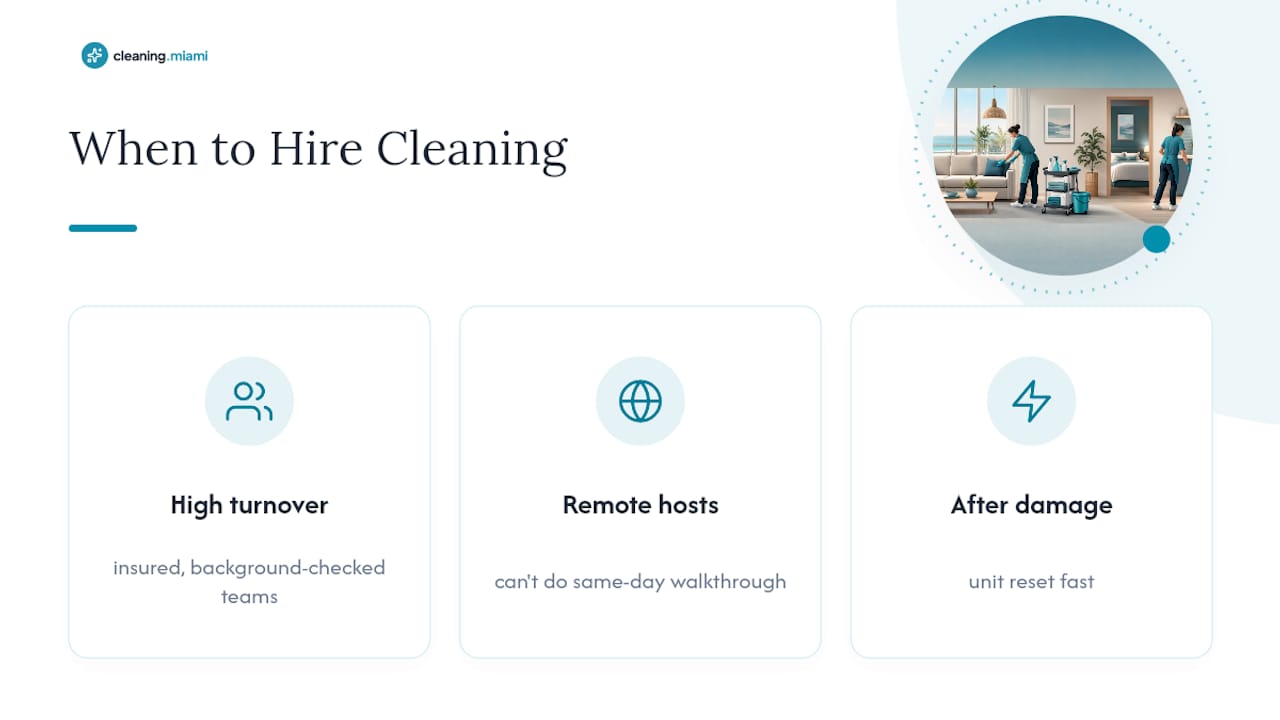
Hire Cleaning for high-turnover listings, for remote hosts who can't do a same-day walkthrough, or right after a guest reports damage and you need the unit reset fast. If you manage multiple units, an agent productivity checklist can help you build a workflow around the cleaning schedule too.
Book a vacation rental turnover online in under 60 seconds, or check the Airbnb cleaning service page for fast-turnaround options between guest stays.
Where These Checklist Standards Come From
The room-by-room items and safety standards here draw from actual county inspection forms, including Boulder County's and Fayetteville's, plus detector standards from Public Health Madison & Dane County. Check your own county's site for the exact form your jurisdiction requires.
Sources
- Short-Term and Vacation Rental Inspection Checklist — Boulder County
- Short term rentals inspection checklist — Public Health Madison & Dane County
- Vacation rental inspection checklist — Hostaway
- Free Airbnb property inspection checklist (STR Specialist)
- Short Term Rental Inspection Checklist — Fayetteville (PDF)