
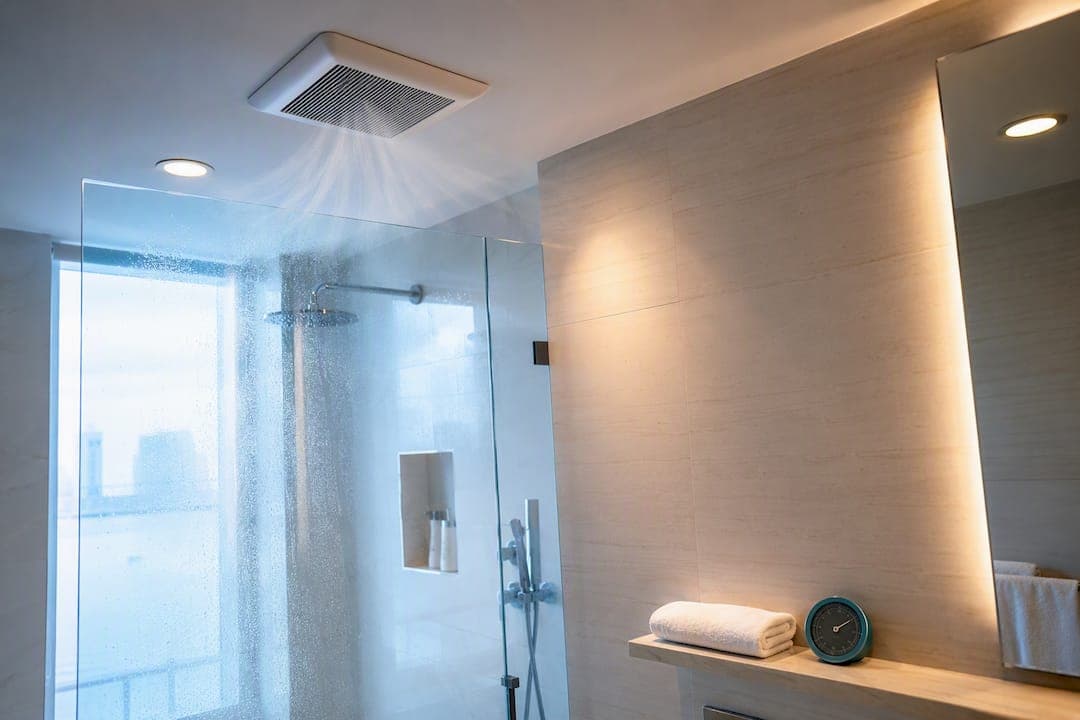
The simplest way to prevent mold in the bathroom is to control moisture: ventilate during and after every shower, dry standing water off surfaces, and fix leaks the moment you spot them. Run the exhaust fan, squeegee the glass, and check under the sink weekly. You cannot eliminate every mold spore floating through the air, but you can absolutely stop the moisture that lets those spores turn into a colony on your grout.
TL;DR:
- Maintaining indoor humidity between 30% and 50% with a hygrometer prevents moisture from lingering long enough for mold to establish.
- Running a bathroom fan rated for at least 50 CFM outside during and after showers is critical, especially in rooms without windows.
- Regularly cleaning grout with a stiff brush and washing bath items in hot water disrupts mold growth before it starts.
- Addressing issues like cracked grout, degraded caulk, or poor insulation is essential to prevent recurring mold despite cleaning efforts.
- If mold exceeds 10 square feet, keeps returning, or is accompanied by household health symptoms, professional remediation becomes necessary.
Table of Contents
- Priority Checklist for Bathroom Mold Prevention
- Why Ventilation and Humidity Control Actually Stop Mold
- A Cleaning Routine That Keeps Mold From Ever Starting
- How to Remove Existing Mold Safely
- Repairs and Materials That Keep Mold From Coming Back
- When It's Time to Call a Mold Remediation Professional
- What a Professional Cleaning Team Does Differently With Bathroom Mold
- Quick Reference: Tools, Targets, and Habits
- Prevention Beats Reaction Every Time
- Consider a Professional Cleaning Team for Recurring or Hidden Mold
- Sources
- FAQ
Priority Checklist for Bathroom Mold Prevention
Start here if you're dealing with a musty smell or dark specks in the grout and want results this week. These four habits address the moisture sources mold needs most, and they cost nothing beyond a few minutes a day.
- Run the exhaust fan during every shower and for 20 to 30 minutes afterward to clear humid air.
- Squeegee the shower walls and glass, then towel-dry the tub or floor before you leave the room.
- Hang wet bath mats, loofahs, and towels somewhere they can fully dry, not folded on a rod.
- Wash towels, mats, and shower liners on a regular schedule so mildew never gets a foothold.
Statistic Callout: The EPA recommends keeping indoor relative humidity between 30% and 50%. A $10 to $50 hygrometer tells you exactly where your bathroom stands instead of leaving it to guesswork.
Why Ventilation and Humidity Control Actually Stop Mold
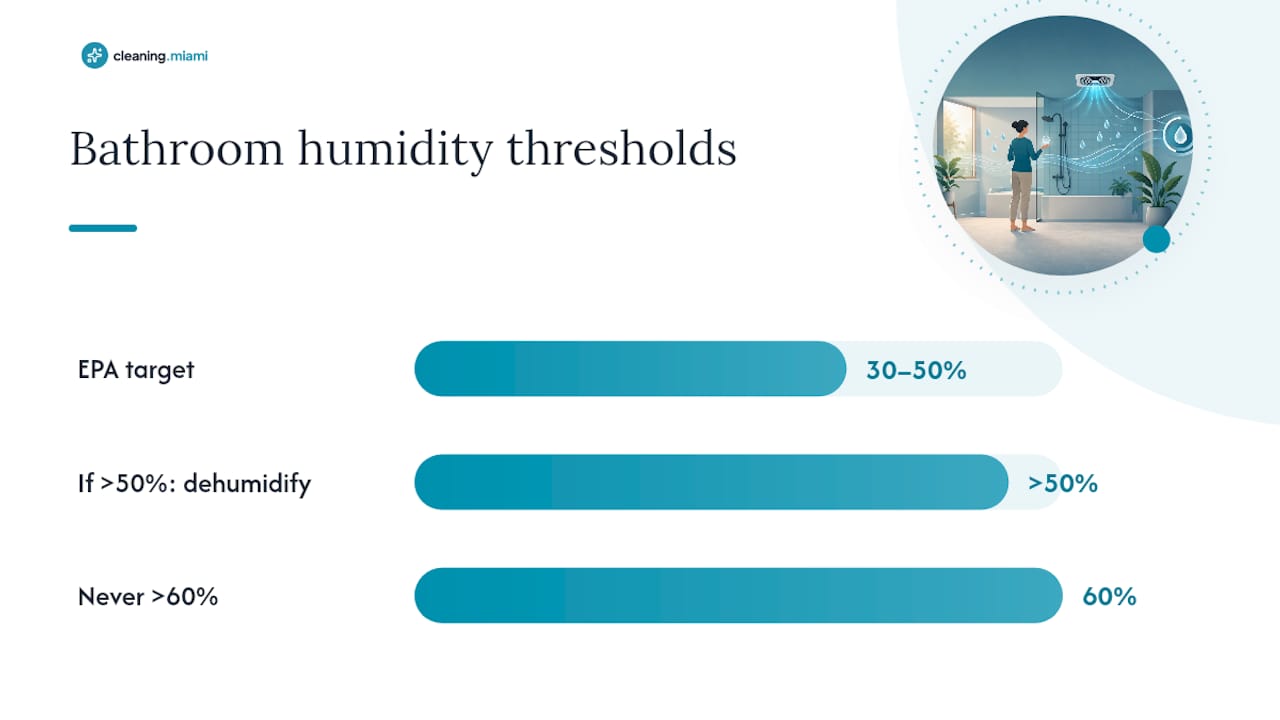
Mold needs sustained moisture to establish itself, not just a few damp minutes after a shower. That's why the EPA sets 30 to 50 percent relative humidity as the target range and flags 60 percent as the ceiling you never want to cross. Above that threshold, condensation lingers on tile and drywall long enough for spores to take root.
A bathroom fan rated for at least 50 CFM (cubic feet per minute) for a standard-size room clears humid air fast, but only if it vents outside rather than dumping moisture into the attic. Mount a hygrometer at eye level away from direct water spray, so you get an accurate daily reading instead of a hunch.
Pro Tip: If your bathroom has no window and a weak or nonexistent fan, run a portable dehumidifier for 30 minutes after showers, or crack the door and run a hallway fan to pull humid air out of the room.
When humidity consistently reads above 50%, even with the fan running, that's your cue to add a dehumidifier or check whether the fan is actually sized for the room. Consumer Reports points to exactly this combination: ventilation plus a dehumidifier when ventilation alone isn't cutting it.
A Cleaning Routine That Keeps Mold From Ever Starting
Mold prevention tips only work if they turn into habits, so split the routine into what happens daily and what happens weekly.
- Every day after a shower: squeegee the walls, towel-dry the floor and tub edges, and hang wet items so air can reach every surface.
- Once a week: scrub grout lines with a stiff brush and wash bath mats, shower liners, and towels in hot water.
- As needed: wipe down soap scum before it hardens. Soap scum traps moisture and body oils that feed mold, and it gets much harder to remove the longer it sits.
Stick to safe, effective cleaners: white vinegar and hydrogen peroxide cut through mildew without damaging most finishes, and baking soda works as a gentle abrasive on grout. Martha Stewart's cleaning guidance recommends diluted bleach only on nonporous surfaces like tile and glass, always with the fan running, and never mixed with other cleaners. Replace a bath mat or loofah once it stays damp for more than a day at a time. Porous items that never fully dry are one of the most common reasons mold in the bathroom keeps coming back.
How to Remove Existing Mold Safely
Small mold patches on nonporous surfaces are a manageable DIY job. Bigger or recurring infestations are a different story.
- Ventilate first. Open a window or run the exhaust fan, and put on gloves and a mask before you start scrubbing, so you're not breathing in disturbed spores.
- Apply your cleaner. White vinegar, hydrogen peroxide, or a diluted bleach solution (on tile, glass, or fiberglass only) each need a few minutes of contact time before scrubbing, not an instant wipe.
- Scrub, rinse, and dry completely. A damp surface right after cleaning just invites the mold back within days.
- Check the grout and caulk. If mold has stained deep into the caulk or grout lines, re-caulking or resealing is often more effective than repeated scrubbing.
SERVPRO's guidance draws a clear line here: small, visible patches on hard surfaces are fine to tackle yourself, but mold that keeps returning after cleaning, or growth larger than roughly 10 square feet, signals a moisture problem you haven't found yet.
Repairs and Materials That Keep Mold From Coming Back
Cleaning treats the symptom. Cracked caulk, degraded grout, and poor insulation are usually the actual cause, and no amount of scrubbing fixes those.
- Reseal grout annually, since gaps let water seep behind tile where you can't see it forming mold.
- Swap old silicone caulk for a mold-resistant formula rated for wet environments.
- Wrap exposed pipes and check wall insulation near the shower. Condensation on a cold pipe or wall is a hidden, constant moisture source.
- Use mold-resistant paint on bathroom ceilings and walls, especially if the room runs humid despite good ventilation.
- Call a tradesperson if you find soft drywall, a persistent leak behind a wall, or tile that sounds hollow when tapped.
When It's Time to Call a Mold Remediation Professional
The EPA is specific about timing: dry any water-damaged area within 24 to 48 hours, or mold has enough time to establish itself. Past that window, or once mold is already visible, a few signs mean it's time to bring in a professional rather than keep scrubbing.
- Mold covering more than roughly 10 square feet.
- Musty odors with no visible source, suggesting growth behind walls or under flooring.
- Mold that returns within weeks of cleaning, even after you've addressed ventilation and cleaning habits.
- Any health symptoms in the household that improve when someone leaves the house.
Pro Tip: Before hiring a remediation company, ask for their containment process, whether they test air quality after the job, and a written scope of work. A vague answer to any of those questions is a reason to keep looking.
What a Professional Cleaning Team Does Differently With Bathroom Mold
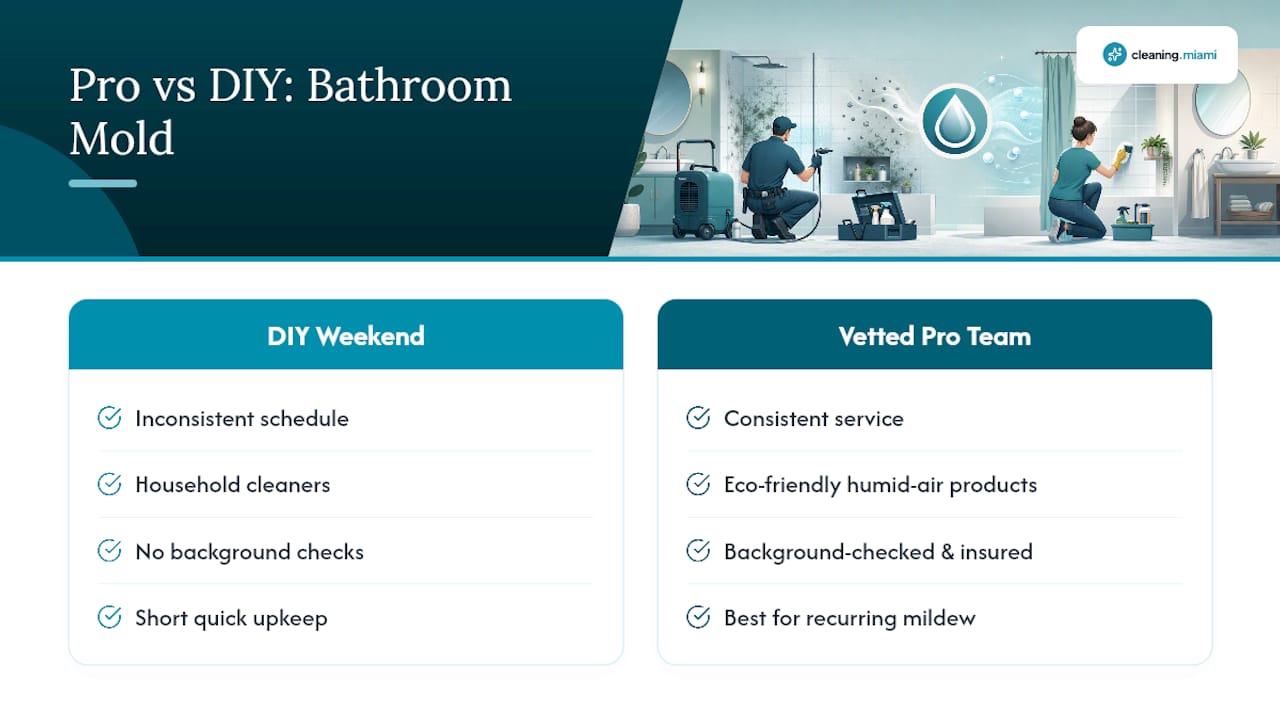
A vetted cleaning crew brings something a weekend DIY session usually can't: consistency. Cleaning uses eco-friendly products suited to humid and salty air environments, and cleaning teams are background-checked and insured, which matters when you're handing over access to your home or rental unit.
That kind of service earns its keep in specific situations: a rental where mildew keeps reappearing on shower curtains and mats between tenants, an Airbnb host with back-to-back bookings and no time to scrub grout between guests, or a bathroom that already shows staining and needs a deeper reset than a spray bottle can manage. If bathroom mold prevention has become a recurring chore rather than a five-minute habit, that's usually the sign to bring in help.
Quick Reference: Tools, Targets, and Habits
Keep this list near the bathroom cabinet as a fast reminder of what actually matters.
- Tools worth buying: a hygrometer ($10 to $50), a squeegee, a stiff grout brush, and gloves for cleaning.
- Target humidity: 30% to 50%, checked with the hygrometer, fan running 20 to 30 minutes post shower.
| Do | Don't |
|---|---|
| Dry surfaces fully after every shower | Leave damp towels or mats bunched on the floor |
| Fix leaks the same week you spot them | Mix bleach with vinegar or ammonia based cleaners |
| Reseal grout and caulk once a year | Ignore a musty smell with no visible source |
| Run the fan even with the window cracked | Assume one deep clean solves a moisture problem |
Prevention Beats Reaction Every Time
Moisture control is the whole game. Every mold problem I've read about traces back to water that sat somewhere too long, whether that's a leaky supply line, a fan nobody bothered to run, or a bath mat left damp on the floor for a week. Cleaning products treat the surface. Ventilation and dry surfaces treat the cause.
Pair the daily habits with an honest look at your bathroom's design. Humid climates like South Florida punish shortcuts on ventilation and materials, and a bathroom without a real exhaust path will keep producing mold no matter how often you scrub. When the problem outpaces your schedule, bringing in professional help isn't giving up. It's recognizing where your time is better spent.
— Erik
Consider a Professional Cleaning Team for Recurring or Hidden Mold
Cleaning is the practical alternative when scrubbing grout every weekend stops being worth your time. Our teams use eco-friendly products built for Miami-Dade's humidity, and every cleaner is background-checked and insured, so you're not handing bathroom access to a stranger.

If mold keeps returning despite good ventilation, or you're managing an Airbnb turnover between back-to-back guests and don't have an hour to spare on grout, that's exactly when a professional visit pays off. Our deep cleaning service targets the buildup a quick wipe-down misses, and if you're running a rental, our Airbnb turnover cleaning keeps bathrooms guest-ready between stays without you lifting a squeegee. Book a visit through the house cleaning page in under 60 seconds and get a bathroom that stays dry, not just clean for a day.
Sources
- A Brief Guide to Mold, Moisture and Your Home | US EPA
- How to prevent mold from growing in your bathroom | Consumer Reports
- How to Remove Shower Mold and Mildew With Little Effort | Martha Stewart
FAQ
How Can I Prevent Mold From Forming in My Bathroom?
Control the moisture: run the exhaust fan during and after every shower, squeegee or towel-dry wet surfaces, and fix leaks right away. Keeping indoor humidity between 30% and 50% and washing towels and mats weekly closes off the conditions mold needs to grow.
What Time of Year Is Worst for Mold?
Warm, humid months bring the highest mold risk because higher outdoor humidity makes it harder to keep bathroom air below that 60% threshold. In humid coastal climates, that pressure runs closer to year-round, which is why ventilation habits matter every month, not just in summer.
What Kills Mold Permanently in the Bathroom?
Nothing kills mold "permanently" if the moisture source stays unresolved. Cleaning visible mold with vinegar, hydrogen peroxide, or diluted bleach on nonporous surfaces removes it, but it returns unless you also fix the leak, reseal the grout, or improve ventilation that let it grow in the first place.
What Are the First Signs of Mold Sickness?
Early symptoms often mirror allergies: sneezing, a stuffy or runny nose, itchy eyes, and coughing that improves when you leave the house and returns once you're back. Anyone with asthma or a compromised immune system should treat these symptoms seriously and consider having the bathroom inspected sooner rather than later.