
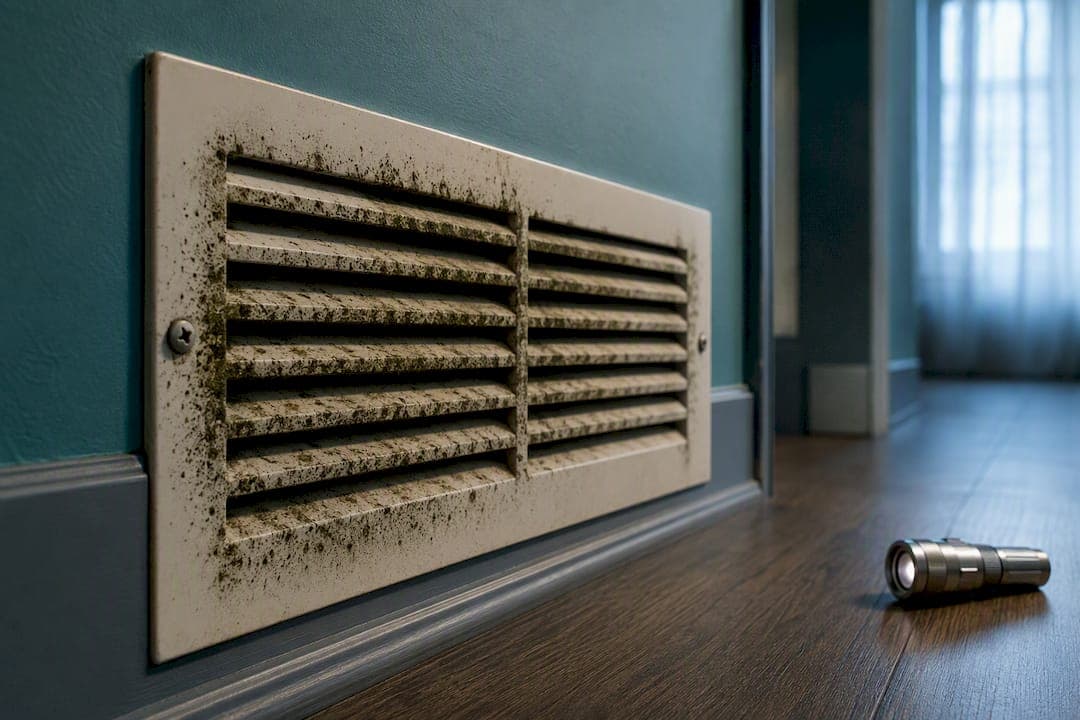
If you spot mold on AC vents, shut the system off at the thermostat right away so you don't blow spores through the house. A moldy register cover is usually safe to remove and wash yourself. Mold inside the ducts, on the evaporator coil, or on insulated duct lining is not a DIY job. Fix the moisture source (clogged drain, high humidity) or it comes right back.
TL;DR:
- Visible mold typically appears as dark, fuzzy patches near vent slats or stains that bleed into the duct, often accompanied by a musty odor when the system runs.
- Moisture sources such as clogged drain lines, leaky or uninsulated ducts, and restricted airflow from dirty filters largely cause mold growth inside HVAC systems.
- DIY cleaning can handle surface vent covers with proper protective gear, but mold inside ducts or on the coil requires professional remediation.
- When mold contamination exceeds 10 square feet or affects duct linings, an industry-certified mold remediation team should follow containment and negative-pressure protocols.
- Prevent future mold growth by maintaining indoor humidity between 30% and 50%, regularly replacing filters, and scheduling HVAC inspections every one to three years.
Table of Contents
- How Do You Know If It's Mold on Your AC Vents?
- Why Does Mold Grow on Vents and Inside HVAC Systems?
- How Do You Safely Clean Mold Off Vent Covers Yourself?
- When Should You Call a Mold Remediation Professional?
- How Can You Stop Mold From Coming Back?
- Why DIY Vent Cleaning Only Solves Half the Problem
- Get Vent and Surface Cleaning Done Right the First Time
- Sources
How Do You Know If It's Mold on Your AC Vents?
Dirt on a vent looks gray and dry. Mold looks different: dark specks clustered around the slats, fuzzy black or greenish patches, or a stain that seems to bleed into the duct opening rather than sitting on the surface. Run a finger near it (gloved, not bare) and dirt smears; mold often stays put or smudges into a greasy streak.
The nose test matters as much as the eyes. A musty smell that shows up specifically when the AC kicks on, then fades when it's off, points straight at the HVAC system rather than a random damp corner of the house. If anyone in the house has noticed worse allergy symptoms, coughing, or sinus irritation indoors, that's a second data point worth taking seriously, especially for kids, older adults, or anyone with asthma.
For a quick check, kill the power to the unit, pull the register, and shine a flashlight a few inches into the opening. Look, don't reach.
- Dark or fuzzy patches near the vent slats
- Staining that extends past the visible edge
- Musty odor tied to system run cycles
- Worsening respiratory symptoms indoors
Mold can establish itself in an HVAC system within 24 to 48 hours of sustained moisture exposure, though visible colonies inside ductwork often take longer to show because of normal system cycling.
Why Does Mold Grow on Vents and Inside HVAC Systems?
Mold needs moisture, a food source (dust, skin cells, fabric fibers), and a surface to cling to. Your air conditioner supplies all three more often than you'd think.
The evaporator coil condenses moisture out of the air constantly while cooling. That water is supposed to drain away cleanly, but a clogged condensate line or a cracked drain pan lets it pool instead, creating exactly the damp environment mold needs. Ducts running through attics or crawl spaces sweat when they're leaky or poorly insulated, and that condensation soaks into duct lining. A dirty filter or an oversized unit that short-cycles restricts airflow, which raises humidity inside the system itself.
- Clogged condensate drain lines or cracked drain pans
- Leaky or uninsulated ducts sweating in attics and crawl spaces
- Dirty filters restricting airflow and trapping moisture
- Oversized units that short-cycle instead of running long, steady cycles
These are common mechanical causes behind HVAC mold, and they explain why mold on the coil or inside insulated duct lining almost always needs a technician rather than a sponge. Porous insulation that's absorbed moisture usually has to be replaced, not cleaned.
How Do You Safely Clean Mold Off Vent Covers Yourself?
Register covers and the first few inches of visible duct are fair game for a homeowner. Anything past that lip is not. Here's the sequence that keeps you safe and avoids pushing spores deeper into the system.
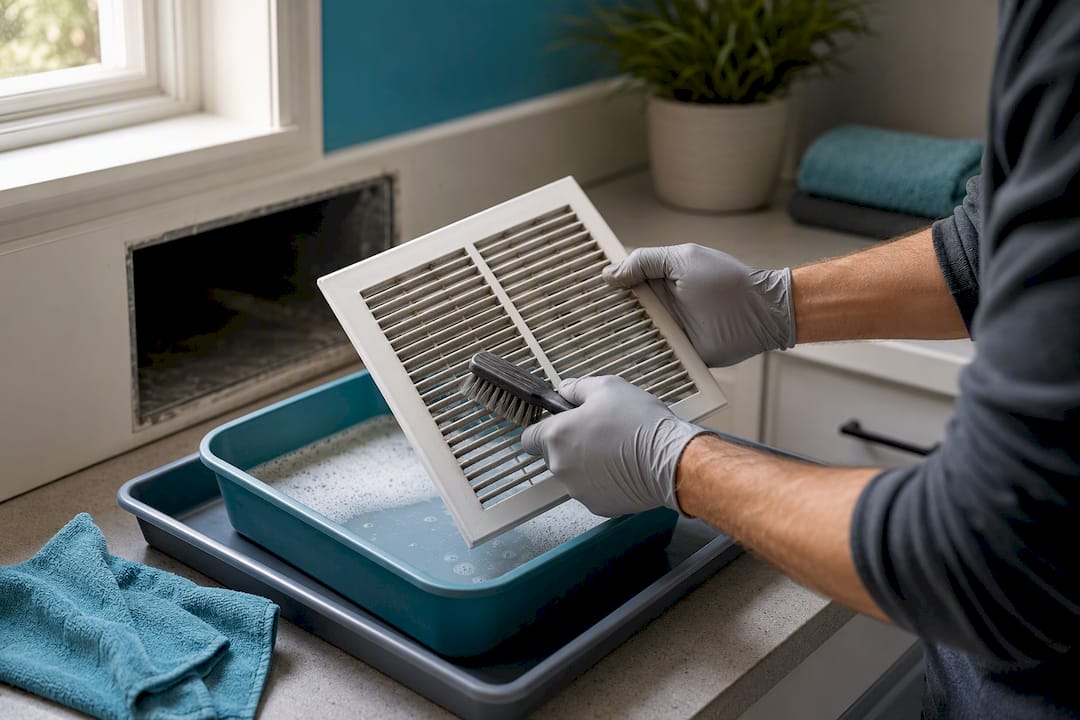
- Turn the HVAC system off at the thermostat and give it a few minutes before you touch anything.
- Put on an N95 respirator or better, gloves, and eye protection. Mold spores are small enough to irritate lungs fast.
- Unscrew the register and take it outside if you can.
- Wash it with plain detergent and water, scrubbing the slats with an old toothbrush or soft brush.
- Rinse thoroughly and let it dry completely. Detergent and water are the standard recommendation here; skip the bleach.
- Vacuum the visible duct opening, going in no more than 6 to 12 inches, using a soft brush attachment.
- Replace the HVAC filter while everything's open and accessible.
- Reinstall the dry register and only restart the system once everything is fully dry.
Pro Tip: Don't spray anything liquid into the duct itself, even "safe" cleaners. Moisture pushed into insulated lining is how a small surface problem becomes a hidden one.
The biggest mistakes homeowners make: running the system while cleaning (which spreads whatever's loose), using bleach or steam cleaners inside ducts, and shoving a vacuum wand deep into the ductwork chasing a smell. The EPA specifically warns against operating a system you suspect is contaminated, since that's exactly how spores travel to every room the vent serves.
When Should You Call a Mold Remediation Professional?
There's a real line between "clean it yourself" and "get someone certified out here," and it's not just about how gross it looks.
The EPA's general threshold is about 10 square feet of contamination. Past that, or if the mold is inside ductwork, on the air handler, or growing on insulated duct lining rather than a bare metal register, professional remediation is the right call, not a bigger bottle of cleaner.
- Multiple vents affected, not just one isolated register
- Musty odor that returns within days of cleaning
- Duct lining that looks stained, soft, or wet to the touch
- Standing water sitting in the drain pan
A certified remediation crew typically follows containment and negative-pressure protocols outlined in IICRC S520, the industry standard for mold remediation, paired with HEPA filtration, coil and drain cleaning, and duct section replacement where the lining can't be salvaged. Costs and timelines vary a lot by region and how much ductwork is involved, so treat any number you see online as a rough starting point rather than a quote. Look for NADCA or IICRC membership when you're vetting who to hire, and check credentials the same way you'd vet any licensed cleaning service.
How Can You Stop Mold From Coming Back?
Cleaning up the mold you can see fixes today's problem. Stopping the moisture that caused it is the only thing that keeps it from returning next month.
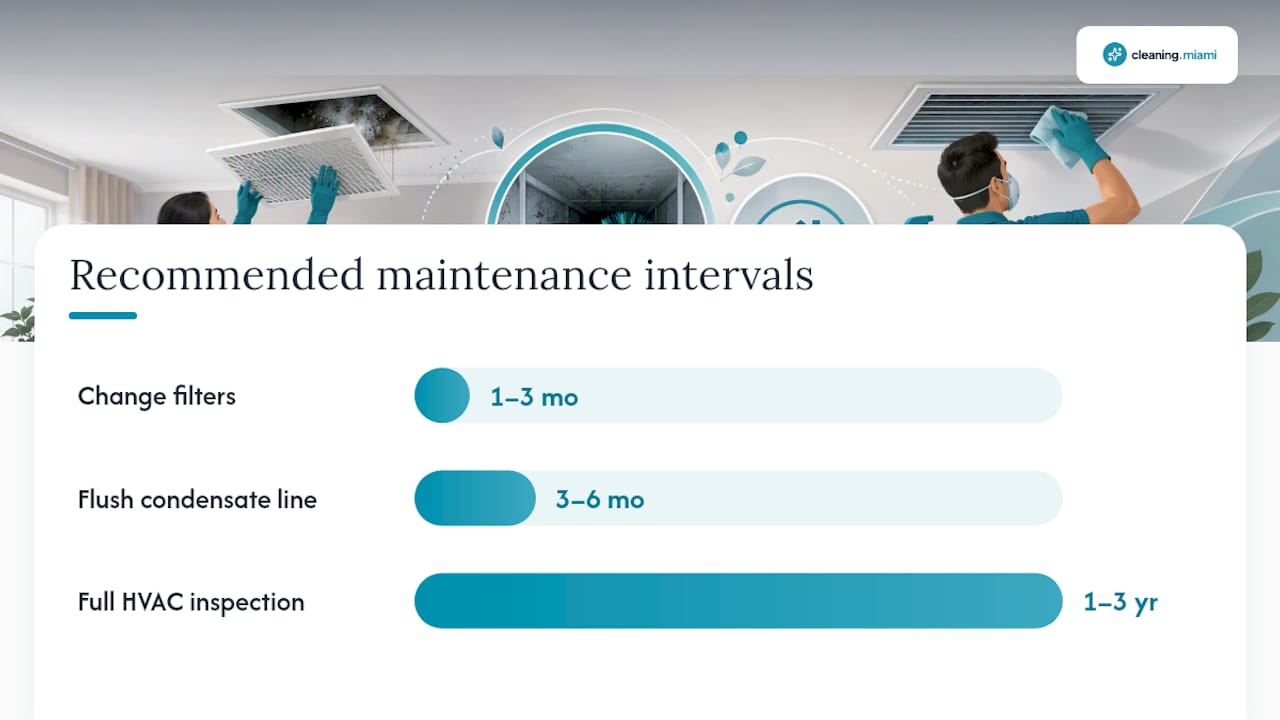
Keep indoor relative humidity between 30% and 50%. A $15 hygrometer tells you where you stand, and a portable dehumidifier earns its keep fast in Florida's climate if your central AC isn't pulling enough moisture out on its own. Swap filters on a real schedule, not "whenever I remember,” generally every one to three months depending on pets, dust, and how much the system runs, using the MERV rating your manufacturer recommends.
- Keep indoor humidity between 30% and 50% with a hygrometer
- Change filters every 1 to 3 months at the correct MERV rating
- Flush the condensate drain line every 3 to 6 months
- Insulate ducts running through attics or crawl spaces
- Schedule a full HVAC inspection every 1 to 3 years
Regular air conditioner maintenance also catches oversized-unit short-cycling and airflow problems before they turn into a coil covered in condensation. Some homeowners add UV-C coil lights to slow microbial growth on the coil itself, which pairs well with a scheduled duct inspection rather than replacing either strategy on its own.
Pro Tip: Set a recurring phone reminder for your condensate drain flush. It's the maintenance step people forget most, and a clogged line is one of the top causes of coil mold in the first place.
If your ducts run through an unconditioned attic, a specialist in dryer vent and duct maintenance can also flag insulation gaps that a general HVAC tech might skip over.
Why DIY Vent Cleaning Only Solves Half the Problem
Most homeowners treat mold on a vent cover as a cleaning problem. It's really a moisture problem wearing a cleaning problem's clothes. You can scrub a register spotless every week and still watch mold come back if the condensate line stays clogged or the duct in the attic keeps sweating.
That's the gap I'd push back on hardest: the internet is full of advice about wiping down visible mold, and almost none of it forces the reader to ask why the mold showed up in that exact spot. If it's only ever on one register, that's a local moisture issue, maybe a leaky duct joint right above it. If it's on every vent in the house, look at the coil and drain pan first.
Cleaning.Miami's teams can handle the surface-level work well: register covers, visible duct openings, and deep cleaning of carpets or upholstery that picked up spores nearby. What they won't do, and what no responsible cleaning company should claim to do, is open up ductwork or replace a coil. That's HVAC and remediation territory. A good cleaning crew should tell you plainly when a job is past their scope, not stretch to cover it.
— Erik
Get Vent and Surface Cleaning Done Right the First Time
Scrubbing a moldy register yourself works, but it takes real time, the right gear, and a strong stomach for crawling around near your HVAC unit. Cleaning.Miami handles the surface-level cleanup for you: insured, background-checked teams who know how to clean vent covers, surrounding carpets, and affected upholstery using eco-friendly products suited to Miami-Dade's humidity, without cutting corners on safety gear or drying time.

Here's the honest scope: Cleaning.Miami cleans what's visible and reachable, not what's inside the ductwork or on the coil itself. If your mold problem looks bigger than a register, we'll tell you to pair our visit with an HVAC inspection rather than pretend a wipe-down will fix a drain-pan issue. If you've got a musty smell and want the visible mold handled properly while you sort out the HVAC side, book a house cleaning today and get it off your plate.
This article is general information, not a substitute for advice from a qualified doctor. Consult a qualified healthcare professional about your own circumstances before acting on anything here.