
For streak-free interior windows, use distilled or warm water with a single drop of dish soap or a light vinegar mix, wash the pane top to bottom, then squeegee with a one-inch overlap and buff the edges dry with microfiber. This method is fast, leaves almost no residue, and repeats the same way every time, whether you're doing one bedroom window or a whole condo full of sliders.
TL;DR:
- Using distilled water with a small amount of dish soap prevents streaking caused by mineral deposits in tap water.
- Replacing worn or nicked squeegee blades every few months ensures a streak-free finish, as damaged blades drag water and leave trails.
- Proper prep, including vacuuming tracks and removing or covering nearby objects, reduces mess and improves cleaning efficiency.
- Applying cleaning solutions generously and following a systematic squeegee technique with overlapping passes produces the best results.
- Regular cleaning of window frames, tracks, and screens extends the appearance of cleanliness and prevents grime from recontaminating glass.
Table of Contents
- Tools and Supplies for Interior Window Cleaning
- Prep: How to Clear the Area Before You Start
- What Cleaning Solution Should You Use on Glass?
- The Step-by-Step Squeegee Technique Pros Use
- How Do You Clean Window Frames, Tracks, and Screens?
- Removing Stubborn Stains and Mineral Deposits
- How Often Should You Clean Interior Windows?
- Common Mistakes That Cause Streaks
- A Miami Pro's Take on Interior Glass Cleaning
- When It's Time to Call a Cleaning Service in Miami
- Where These Techniques Come From
- Sources
Tools and Supplies for Interior Window Cleaning
You don't need a truck full of gear. You need the right handful of tools, used correctly.
- A squeegee, 10 to 14 inches, with a fresh rubber blade
- A microfiber applicator sleeve or a soft scrubber pad
- A bucket (a second one for rinse water helps)
- Lint-free microfiber cloths for detailing and buffing
- A spray bottle for spot treatments
- A small brush or old toothbrush for corners and tracks
- Rubber gloves if you're mixing vinegar or commercial solutions
A worn or nicked squeegee blade is the single biggest reason DIY jobs streak. Rubber blades harden and chip after repeated use, and a chipped blade drags a thin trail of water no amount of wiping fixes. Replace blades every few months if you clean often. Cheap microfiber pills up and leaves lint on glass, so spend a little more on a dense weave.
Pro Tip: Skip ammonia-based sprays on tinted, tempered, or specialty-coated glass. Ammonia can cloud certain films and coatings over time, even if the label doesn't warn you directly.
Prep: How to Clear the Area Before You Start
Wet cleaning gets messy fast if you skip prep. Fifteen minutes of setup saves you a soggy windowsill and a streaky redo.
- Clear sills of plants, decor, and anything that can't get splashed.
- Lay towels or a drop cloth along the base of the window and floor.
- Remove or secure blinds and curtains; unlatch and pull out screens if they're removable.
- Vacuum the track and sill first, then use a toothbrush to loosen debris packed into corners.
Screens usually need their own cleaning pass, ideally outdoors with a hose and mild soap, since spraying glass cleaner through a dusty screen just pushes grit onto the glass you're trying to clean. Professional interior window cleaning workflows follow this same order: protect first, vacuum second, wet-clean last.
What Cleaning Solution Should You Use on Glass?
The solution matters more than most people think, mainly because tap water minerals are the hidden cause of half the streaking complaints out there.
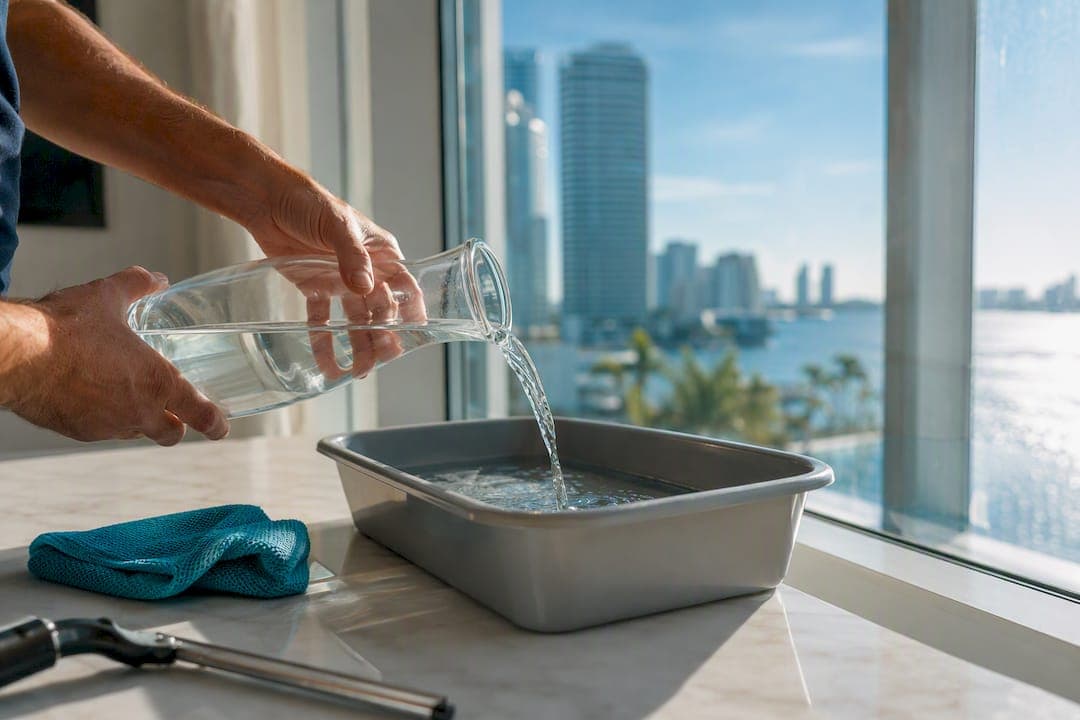
- Distilled water + 1 to 2 drops of dish soap. This is the everyday workhorse. Distilled water skips the calcium and magnesium that tap water leaves behind as a hazy film once it dries, which is why professional crews often favor a low-soap, distilled-water mix over heavier detergents.
- Vinegar mixed 1:1 or 1:2 with water. Good for cutting mineral spots and light hard-water film, but skip frequent use on rubber window seals or certain coated glass, since regular acid exposure can degrade them over time.
- Isopropyl alcohol, diluted with water for spot work. This handles grease smudges and fingerprints fast, especially near handles and lower panes kids touch.
If DIY mixing isn't your thing, Consumer Reports testing found some commercial glass cleaners require less scrubbing and leave a shinier finish, though a few of those same formulas aren't safe for tinted or specialty glass. Read the label before you spray anything on a coated window.
The Step-by-Step Squeegee Technique Pros Use
This is the sequence that separates a streaky job from a genuinely clean pane, and it's simpler than it looks once you've done it twice.
- Apply your solution generously with the microfiber applicator, scrubbing top to bottom so grime lifts instead of smearing sideways.
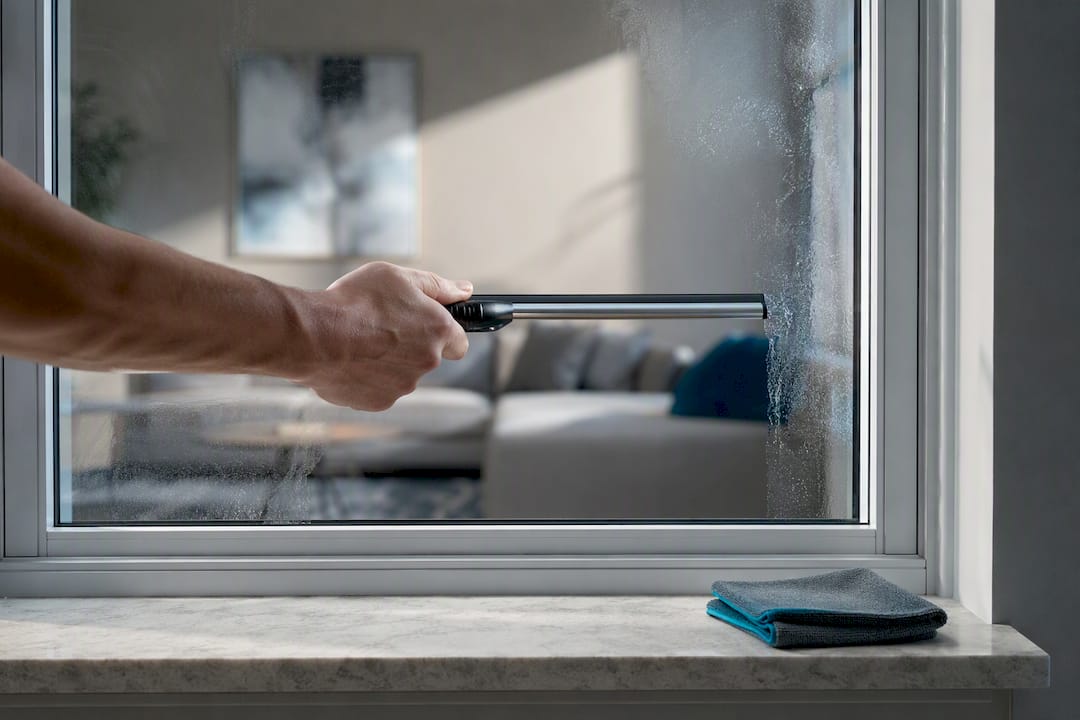
- Wipe a dry strip across the very top of the glass, about an inch wide. This is the "cut-in," and it stops water from dripping down the frame as you pull the squeegee.
- Set the squeegee blade into that dry strip and pull straight down in one firm, steady stroke.
- Overlap each vertical pass by about an inch, wiping the blade dry with a cloth between passes so you're not just relocating dirty water.
- Detail the corners with a folded cloth or a cotton swab, since squeegees can't reach tight edges.
- Finish with a microfiber buff on any leftover damp spots.
The one-inch overlap isn't optional if you want a continuous, streak-free result. Skip it and you'll see faint vertical lines where the passes didn't quite meet, a detail professional squeegee guides treat as a non-negotiable part of the cut-in method.
Pro Tip: Run the squeegee dry over the finished pane with no solution at all. Any haze that shows up under that dry pass is residue you missed, and it's easier to catch now than after the window dries.
How Do You Clean Window Frames, Tracks, and Screens?
Glass looks clean for about a day if the frame around it is still dirty, since grime works its way back onto the pane every time you open the window.
- Vacuum loose dust and debris from the track before adding any liquid.
- Scrub tracks and corners with mild soap and an old toothbrush, rinsing with a damp cloth.
- Avoid abrasive pads on painted or vinyl frames, which scratch and dull the finish.
- Wash screens separately with soap and water, let them dry fully, and reinstall only once they're bone dry to avoid trapping moisture.
Cleaning sills and frames on a regular basis, not just the glass, is what actually keeps windows looking clear longer between deep cleans, as detailed in our best tips to clean your beautiful interior doors.
Removing Stubborn Stains and Mineral Deposits
Hard water spots and old buildup need a more targeted approach than your everyday wipe-down.
- Apply a vinegar soak or a product like CLR directly to mineral deposits, following the label's contact time exactly.
- For light etching, fine-grade #0000 steel wool used wet can lift stubborn spots, but test a small corner first since it can scratch certain coatings.
- For adhesive residue from stickers or tape, a mild solvent applied with a cloth (never scraped dry) usually does the job. Always test a hidden section first and avoid power tools near glass seals, a caution professional guides consistently repeat when it comes to chemical mineral removers.
How Often Should You Clean Interior Windows?
A baseline of twice a year keeps most homes looking good, but that number moves depending on where you live and how you use the space.
- Every 2 to 3 months in dusty climates, homes with pets, or houses near construction.
- Kitchen windows often need attention monthly since cooking grease settles on glass faster than dust does.
- Hiring a pro typically costs vary depending on window size, accessibility, and the amount of mineral buildup. Second-story windows, French panes with many small sections, and heavily soiled glass all push the price up.
Professional service earns its cost fastest on large sliders, second-floor windows you can't safely reach, or glass with years of buildup a spray bottle won't touch.
Common Mistakes That Cause Streaks
Most streaking problems trace back to two things: bad timing and too much soap.
- Cleaning in direct sun causes solution to dry before you can squeegee it off, leaving streaks behind. Overcast days or shaded hours work far better, a timing tip BobVila's window cleaning guide also recommends.
- Too much dish soap leaves a film no amount of buffing fully removes; less is genuinely more here.
- Cotton towels and paper towels shed lint on glass. Stick with microfiber.
- Always finish with a dry-squeegee pass and a quick pass over the corners with a cloth. That final check catches the haze you'd otherwise notice only once the sun hits it.
A Miami Pro's Take on Interior Glass Cleaning
Humidity and salt air change the math on window cleaning. Cleaning.Miami's crews lean on distilled water with barely a drop of soap specifically because heavier suds combine with airborne salt residue to leave a stubborn film on south Florida glass. Drying fast matters more here too. Salt air slows evaporation, so a thorough microfiber buff right after the squeegee pass isn't optional, it's what keeps coastal windows from spotting again within days. If you want more of these climate-specific fixes, Cleaning covers questions homeowners ask most.
— Erik
When It's Time to Call a Cleaning Service in Miami
Some jobs are worth handing off, and interior window cleaning is one of them the moment it stops being a quick chore and starts eating your Saturday. Tall sliders, windows with years of mineral buildup, or a schedule too packed to squeegee a dozen panes are all good reasons to let someone else handle it.

Professional window cleaning teams familiar with humidity and salt air effects on glass can help avoid guesswork with cleaning solutions and reduce streaks that reappear quickly. If your windows are part of a bigger job, like a move-in clean or a full top-to-bottom sanitize, the deep cleaning service covers that too. Ready to skip the ladder and the streaks? Book your house cleaning and get a quote in a couple of clicks.
Where These Techniques Come From
- Consumer Reports for tested commercial cleaner results
- J. Racenstein for the pro cut-in squeegee method
- Wirecutter for distilled water and hard-water fixes