
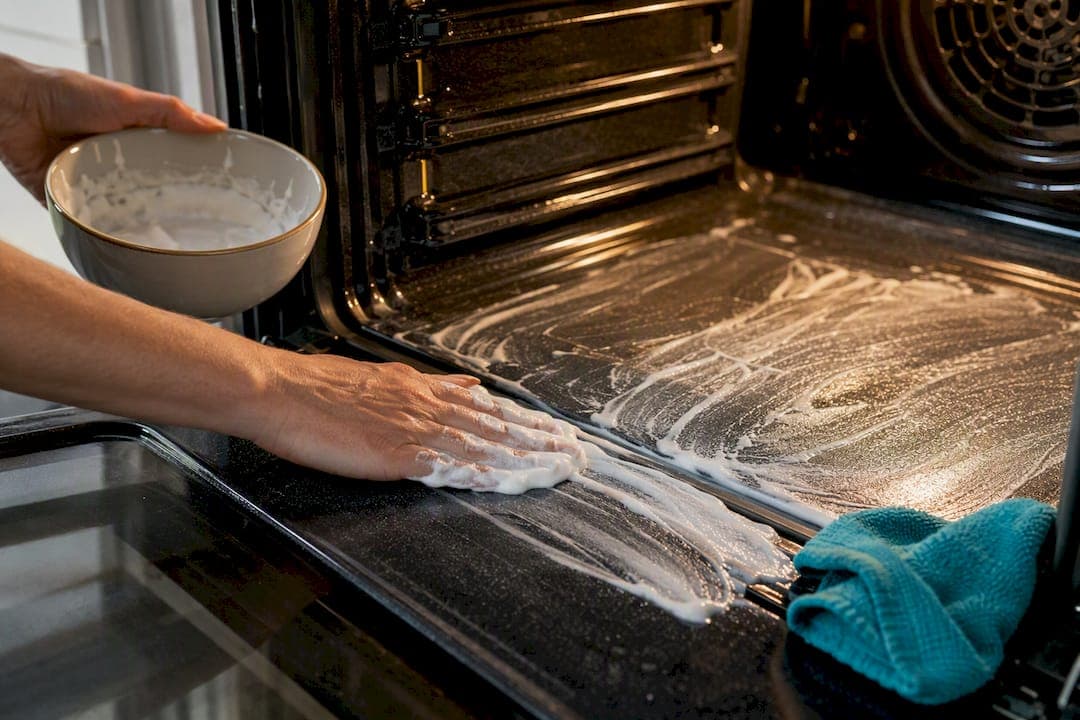
For most home ovens, a baking soda paste beats every other method on the market. It's non-toxic, costs about $2, and handles everything short of severe carbonization. Self-clean and steam clean cycles work too, but only when your manual approves them and the soil level actually calls for that much heat. Whatever method you choose, ventilate the kitchen and pull the racks unless your manual says otherwise.
TL;DR:
- Baking soda paste is the most effective, safe, and affordable DIY method for most home ovens, especially for regular maintenance and moderate soils.
- Self-cleaning cycles are best suited for heavy, years-old buildup but pose safety risks and require venting, while steam cleaning offers a gentler alternative for light, recent soils.
- Proper preparation includes vacuuming crumbs beforehand and avoiding water contact with slide rails and electronics to prevent damage during cleaning.
- Regular spot cleaning and using liners can significantly extend the time between deep cleans, reducing overall effort and avoiding baked-on spills.
- Hiring professional cleaners is recommended for severe buildup, rental turnovers, or if you prefer to avoid fumes and extensive scrubbing, with many teams using eco-friendly, non-toxic products.
Table of Contents
- What You Need Before You Start Cleaning Inside Your Oven
- How Often Should You Deep Clean the Inside of an Oven?
- Self-Clean vs. Steam Clean vs. Manual: Which One Fits Your Oven?
- How to Deep Clean Your Oven Interior with Baking Soda
- Cleaning Oven Racks and the Door Without Damaging Them
- Safety Rules That Prevent Damage and Accidents
- Small Habits That Keep Your Oven Cleaner Longer
- Eco-Friendly Alternatives to Commercial Oven Cleaners
- Is DIY Oven Cleaning Actually Worth the Effort?
- When Hiring a Pro Beats DIY Oven Cleaning
- Where to Check Model-Specific Oven Cleaning Rules
- Sources
- FAQ
What You Need Before You Start Cleaning Inside Your Oven
Before you touch a single spatula, get everything within arm's reach. Half the frustration of inside oven cleaning comes from stopping mid-job to dig through the cabinet under the sink.
Here's what to gather:
- Baking soda and a spray bottle of white vinegar
- A rubber or plastic spatula (never metal, it'll scratch enamel)
- Rubber gloves and a couple of microfiber cloths
- A non-scratch sponge or pad
- Old towels to catch drips at the oven door
Prep takes ten minutes. Let the oven cool completely, pull the racks, and vacuum out loose crumbs and ash with a hose attachment before anything wet touches the surface. Skipping the vacuum step turns crumbs into a muddy sludge the moment your paste or vinegar hits them, which just means more scrubbing later. Lay towels under the door and, if your racks use ball-bearing slides, keep water away from the rails.
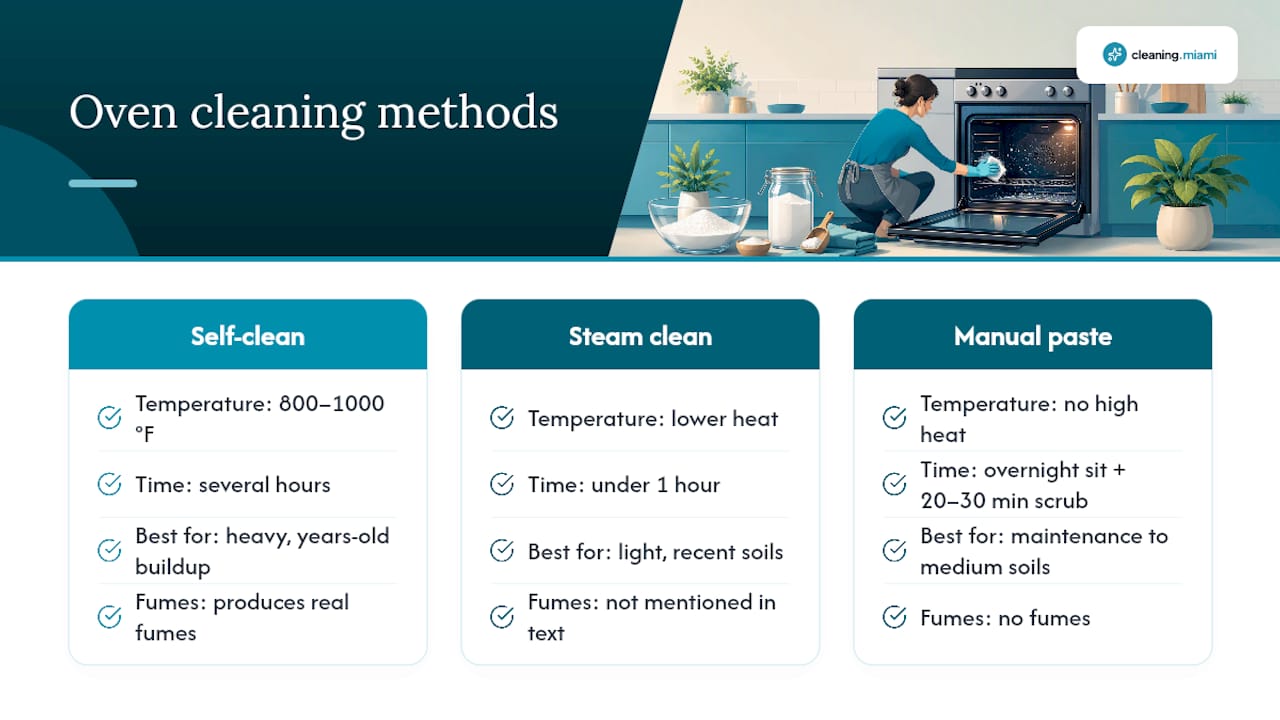
Time-wise, plan for an overnight sit if you're doing the paste method, under an hour for a steam cycle, and several hours if you're running a self-clean.
How Often Should You Deep Clean the Inside of an Oven?
Most households need a real deep clean every 3 to 6 months. If you're roasting, broiling, or baking daily, bump that up to 4 or 5 times a year.
Spot-cleaning between deep cleans matters more than people think. Wipe a spill the same day it happens and you'll stretch that 3 to 6 month window considerably, because grease and drippings that never get the chance to carbonize come off with almost no effort. The exceptions are sugary spills (think fruit pie overflow) and heavy grease from roasts. Both bake onto the oven floor fast and turn into a much bigger job if you leave them for your next scheduled cleaning.
Self-Clean vs. Steam Clean vs. Manual: Which One Fits Your Oven?
The right method depends on how bad the soil is, what your manual allows, and how much disruption you can tolerate.
Self-clean runs the oven cavity up to 800 to 1000 degrees Fahrenheit for several hours, incinerating baked-on residue into ash you just wipe out afterward. It's the strongest option for heavy, years-old buildup, but it produces real fumes, heats up the whole kitchen, and can be dangerous for pet birds, whose respiratory systems are extremely sensitive to the smoke. Remove the racks first unless your manual specifically says they can handle the heat.
Steam clean is the gentler cousin. It uses water and lower heat in a cycle under an hour, which loosens light, recent soils but does nothing for anything baked on for months. Treat it as maintenance, not restoration. You'll still need to wipe the loosened grime out by hand afterward.
Manual cleaning with baking soda and vinegar takes longer, usually an overnight sit plus 20 to 30 minutes of scrubbing, but it produces no fumes, doesn't heat the kitchen, and is safe on virtually every oven finish.
Decision rule: light soil and time pressure, go steam. Heavy carbonized buildup and a manual that permits it, go self-clean. Everything in between, and especially if you have pets or prefer zero fumes, the paste wins.
How to Deep Clean Your Oven Interior with Baking Soda
This is the method that works for the vast majority of home ovens, and it's the one worth mastering.
- Mix ½ cup of baking soda with a few tablespoons of water until you get a paste roughly the texture of frosting. Add water a little at a time; you want spreadable, not runny.
- Spread the paste across the oven floor, walls, and door interior with your gloved hands or a spatula, avoiding the heating element and any temperature sensor.
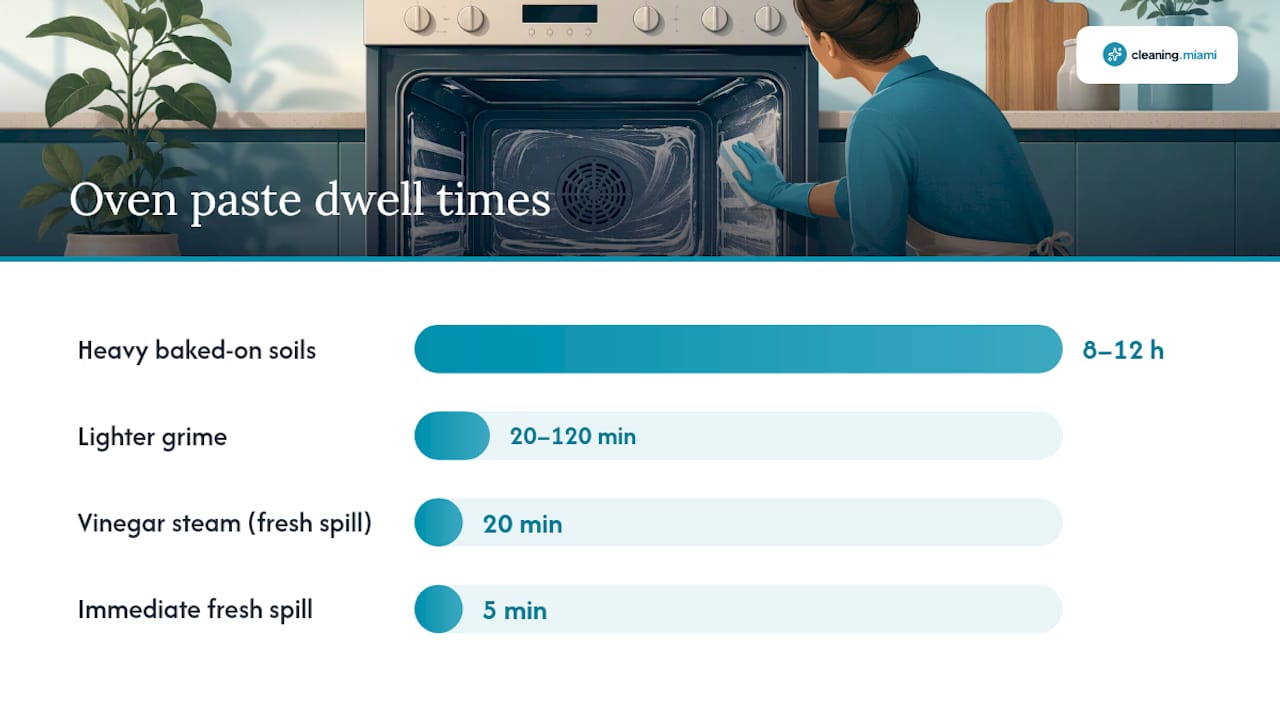
- Let it sit. Heavy, baked-on soils need 8 to 12 hours or a full overnight rest; lighter grime only needs 20 minutes to 2 hours.
- Scrape the dried paste off with a plastic or silicone spatula, catching the debris in a towel or trash bag as you go.
- Wipe down the interior with a damp cloth to lift the remaining film.
- Spray white vinegar over any leftover residue. It will foam on contact with lingering baking soda, which is your cue that it's dissolving whatever paste is left.
- Do a final wipe with a clean, damp cloth and let the interior air-dry before you close the door.
For stubborn carbonized spots that don't budge on the first pass, reapply paste locally and let it sit again overnight rather than reaching for a chemical stripper or a metal scraper. Enamel surfaces scratch permanently, and there's no undoing that. Repetition beats aggression here every time.
If you're dealing with a fresh spill rather than old buildup, skip the overnight step entirely. A vinegar steam (a shallow dish of water and vinegar heated at 300 degrees for 20 minutes) or a squirt of dish soap on a damp sponge handles same-day messes just fine.
Pro Tip: Keep a small jar of premixed baking soda paste in the fridge. Fresh spills get five minutes of direct treatment instead of waiting for your next full oven session.
Cleaning Oven Racks and the Door Without Damaging Them
Racks and doors need separate handling because they're not built like the oven cavity.
- Soak standard racks in a bathtub or large tub with warm water and a few tablespoons of dish soap or baking soda for 3 to 4 hours, then scrub with a non-scratch pad.
- Skip the soak on aluminum racks. Baking soda can discolor bare aluminum, so check your care instructions or spot-test first.
- Never soak ball-bearing slide rails or let cleaning solution drip into the mechanism. Water inside the slides ruins the glide function permanently, so wipe the rails with a barely damp cloth instead.
- For the door's interior glass, a thin layer of baking soda paste and a non-scratch pad works well. Some door glass is sealed between panels and not user-accessible, so check whether your model's door disassembles before attempting to reach the inner layer.
Safety Rules That Prevent Damage and Accidents
Read your owner's manual before you run a self-clean cycle or spray anything liquid near the oven's electronics. Manufacturers vary widely on what's safe for a given model, and skipping this step is the fastest way to void a warranty.
Ventilation matters more than most people assume. Run your range hood and crack a window during any self-clean cycle, and keep pets, especially birds, and small children out of the kitchen while it runs. Never use a commercial oven spray inside a self-cleaning oven unless the manufacturer explicitly says it's compatible, and steer clear of abrasive pads or metal scrapers on enamel surfaces no matter which cleaning method you're using. Keep water away from ball-bearing slides and control panels, and let the door glass cool fully before you touch it. Rushing that last step is how people burn themselves.
Small Habits That Keep Your Oven Cleaner Longer
A few repeatable habits do more to prevent buildup than any single deep clean.
- Wipe spills once the oven has cooled to warm, not scorching hot. Grease that's still soft comes off in seconds; grease that's carbonized needs the full paste treatment.
- Use a catch pan or oven-safe liner under dishes prone to bubbling over, if your manufacturer allows one (some ovens restrict liners because they block airflow).
- Run a quick steam clean or spot wipe monthly if you cook daily. It's a five-minute habit that pushes your full deep clean further out.
- Keep a small stash of baking soda, vinegar, and a spatula in a kitchen drawer so cleaning never waits on a supply run.
Pro Tip: Set a recurring reminder on your phone for a seasonal deep clean, right before the holidays when your oven is about to work overtime.
Eco-Friendly Alternatives to Commercial Oven Cleaners
Commercial oven cleaners rely on lye or other caustic chemicals that strip grease fast but leave behind fumes strong enough to require a respirator on the label. Baking soda and vinegar do the same core job through a gentler chemical reaction, no ventilation mask required.
Lemon steam is a solid alternative for lighter soils. Slice a lemon into a shallow, oven-safe dish of water, heat the oven to around 250 degrees for 20 to 30 minutes, then let the steam loosen grime while the citrus oil cuts through grease and leaves the interior smelling clean instead of chemical. Coarse salt sprinkled on a fresh grease spill, then wiped once the oven cools, works as a quick absorbent for grease that hasn't had time to bake on.
Castile soap diluted in warm water is another gentle option for wiping down racks and door glass without introducing synthetic fragrance or preservatives into a surface that touches your food. None of these alternatives match the raw stripping power of a self-clean cycle on decades-old buildup, but for regular maintenance and moderate soils, they get the job done without the fumes, the plastic bottle waste, or the ingredient list you can't pronounce.
Baking soda itself deserves credit here too: it's mined, not manufactured through a chemical process, and it breaks down completely in wastewater without the aquatic toxicity concerns tied to some commercial degreasers.
Is DIY Oven Cleaning Actually Worth the Effort?
The baking soda method wins on cost, safety, and odor for the vast majority of home cooks. It's cheap, it doesn't off-gas anything, and it handles most soil levels if you're willing to give it an overnight sit.
That said, hiring a professional makes sense in specific situations: an oven with years of neglected carbonization, a rental turnover with a tight deadline, or a household that simply can't spare the time for the scrape-and-wipe cycle. A vetted, insured cleaning team also removes the guesswork around warranty-sensitive finishes, which matters more than most DIYers realize until they've scratched an enamel surface with the wrong tool.
— Erik
When Hiring a Pro Beats DIY Oven Cleaning
Some jobs genuinely aren't worth doing yourself. If your oven hasn't seen a real clean in years, you're prepping a rental for a same-day guest turnover, or you just don't want fumes or scrubbing on your weekend, that's exactly the gap Cleaning fills.

Professional cleaning teams use eco-friendly products suited to South Florida's humidity and salt air, and cleaners are background-checked, insured, and bonded before entering your home. This is especially helpful for situations DIY struggles with: heavy carbonized buildup, rental turnovers with strict cleaning standards, or households that prefer not to spend significant time scrubbing racks. Bookings take under 60 seconds online, and the 100% satisfaction guarantee means you're not gambling on the outcome.
If your oven interior needs more than a weekend project can fix, book a deep cleaning appointment and let a vetted local team handle it start to finish.
Where to Check Model-Specific Oven Cleaning Rules
Always confirm cleaning steps against your own oven's user manual before running any automated cycle. Manufacturer sites like GE Appliances and Whirlpool publish model-specific guidance, and outlets like Good Housekeeping and The Kitchn have tested the natural methods covered here.
Sources
- From Grime to Shine: The Ultimate Guide to Cleaning Your Oven
- Self-clean vs steam clean: Whirlpool
- How to clean an oven naturally with baking soda & vinegar | The Kitchn
- Experts explain how to use the self-cleaning setting on your oven | Good Housekeeping
FAQ
What can I use to clean the inside of my oven?
A baking soda and water paste, left overnight and wiped away with a vinegar rinse, handles most soil levels without fumes. For light, fresh grime, a damp sponge with dish soap works fine.
Can I use Dawn to clean the inside of my oven?
Yes, dish soap like Dawn works well for fresh, light spills and general grease on racks, though it won't cut through old carbonized buildup the way a baking soda paste will.
What do professionals use to clean an oven?
Professional cleaning teams generally rely on the same non-toxic staples, baking soda, vinegar, and non-scratch pads, though for severe buildup or rental turnovers they may use stronger degreasers meant for commercial use.
Do baking soda and vinegar really clean ovens?
Yes. Baking soda's mild abrasiveness lifts baked-on grease, and vinegar's acidity dissolves the remaining film when it foams on contact, a combination tested and recommended by multiple cleaning editors as an effective, non-toxic method.
How often should I deep clean the inside of my oven?
Every 3 to 6 months for typical households, or 4 to 5 times a year if you cook daily, according to GE's cleaning guidance.