
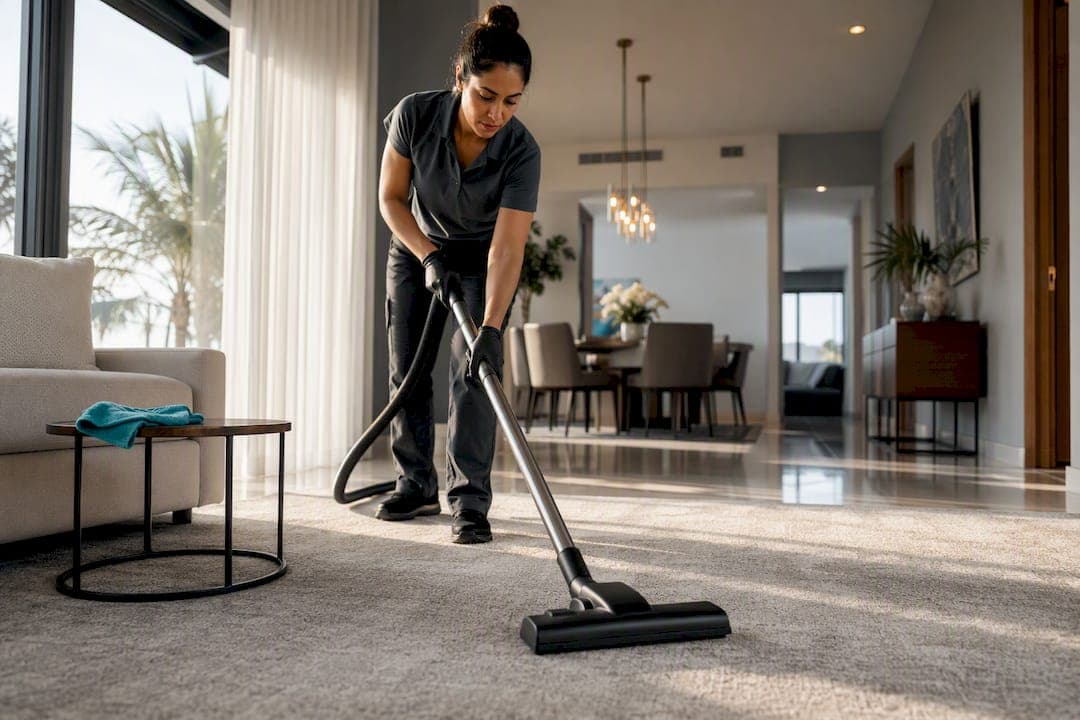
Most single-cleaner standard cleans run 2 to 6 hours depending on home size, while a two-person team cuts that clock time roughly in half. A first-time or deep clean typically adds 40 to 60% more time than a recurring visit, so book extra time for the first appointment and expect faster, shorter visits after that once a routine is established.
TL;DR:
- Deep and first-time cleans typically require 40 to 60% more time than recurring visits, especially in homes with heavy clutter or after renovations.
- Kitchens and bathrooms consume 60 to 70% of cleaning time, with deep cleans adding significant minutes for appliance, grout, and fixture detailing.
- The number of cleaners and whether the quote is in labor-hours or clock-hours critically affects scheduling and actual on-site time.
- Pre-cleaning prep, such as decluttering and trash removal, can reduce cleaning time by 10 to 15 minutes per home.
- Additional factors like home condition, flooring type, pet presence, and building access influence total cleaning duration significantly.
Table of Contents
- How Long Does House Cleaning Time Take by Home Size?
- How Long Does Each Room Take to Clean?
- What Factors Change How Long Cleaning Takes?
- Labor-Hours vs. Clock-Hours: Reading a Cleaning Quote Correctly
- How to Shorten Your Cleaning Time
- Real Timing Scenarios: How the Math Works
- Why Professional Timing Predictability Comes Down to the Team You Hire
- An Editorial Take on Booking Smarter
- Book the Right Clean With Cleaning.Miami
- Sources
- FAQ
How Long Does House Cleaning Time Take by Home Size?
The single biggest variable in house cleaning time is square footage and bedroom count, but team size changes the clock-hour math just as much. A studio takes a fraction of the time a five-bedroom house needs, and a job quoted at "4 labor-hours" plays out very differently depending on whether one person or two shows up.
Here's how the ranges typically break down for standard, recurring cleans:
These typical professional time ranges assume a home in reasonably maintained condition. A few things shift the numbers:
- First-time and deep cleans run 40 to 60% longer than the recurring maintenance visit that follows, since nothing has been touched in weeks or months.
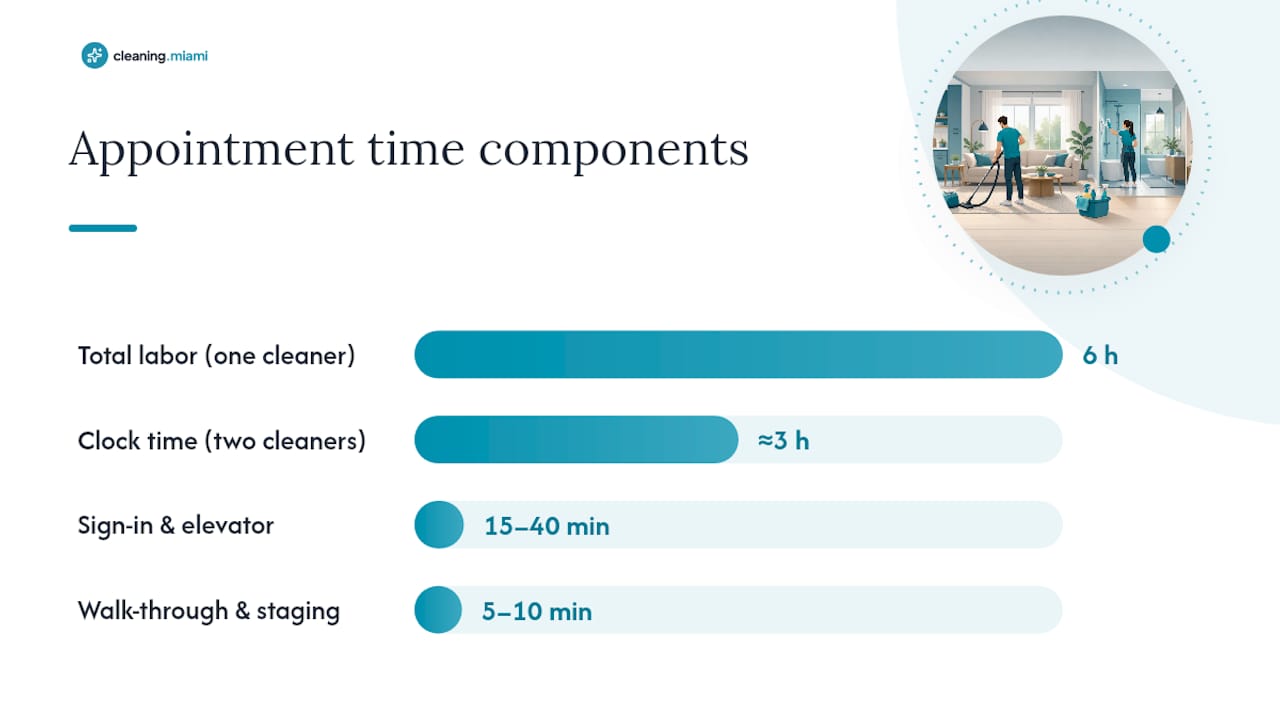
- A "labor-hour" measures total work required, not time on-site. Six labor-hours means one cleaner needs six hours, or two cleaners can finish in roughly three.
- Post-renovation jobs and heavy clutter or hoarding situations regularly blow past the high end of these ranges and often get quoted separately.
The pricing angle matters here too. A company quoting labor-hours is really pricing the amount of work, and the number of cleaners sent determines how long they're actually in your home. Ask at booking how many cleaners are coming. It's the single fastest way to convert a quote into a real schedule.
How Long Does Each Room Take to Clean?
Kitchens and bathrooms dominate any cleaning session. Together they often eat up 60 to 70% of total cleaning time on a standard job, which is why a two-bathroom home takes noticeably longer than a one-bathroom home of the same square footage.
- Kitchen: 20 to 40 minutes for a standard wipe-down and floor pass; 45 to 75 minutes for a deep clean that includes the stovetop, backsplash, and cabinet fronts.
- Bathroom: each full bathroom adds roughly 30 to 50 minutes standard, climbing toward 60 to 90 minutes for a deep clean with grout and fixture detailing.
- Bedrooms: 10 to 20 minutes for a tidy pass (dusting, making the bed, vacuuming); 25 to 40 minutes if it's a full clean with under-bed and closet-adjacent surfaces.
- Living and dining areas: 15 to 30 minutes standard; deep cleans with upholstery and baseboard detailing can push past 45 minutes.
- Entry and hallways: usually quick, 5 to 15 minutes, unless there's heavy foot traffic or pet hair.
Extras are where quotes go sideways if nobody flags them upfront. Inside-oven cleaning can add 20 to 30 minutes. Inside-cabinet wipe-downs, another 15 to 30 minutes per kitchen. Blinds, baseboards, and interior windows each add 10 to 20 minutes per room, and garages are usually priced and timed separately entirely.
What Factors Change How Long Cleaning Takes?
Two homes of the same size can take wildly different amounts of time, and the gap almost always comes down to these variables.
- State of the home. A home that hasn't seen professional cleaning in months takes longer than one on a biweekly rhythm. This is the single biggest swing factor in any quote.
- Bathroom count and stairs. Each additional bathroom adds real minutes, and multiple flights of stairs slow down equipment moves and vacuuming.
- Flooring type. Carpet takes longer to vacuum thoroughly than hard flooring, but hard floors need more careful mopping around furniture legs and baseboards.
- Pets, clutter, and occupants. Pet hair adds vacuuming time, clutter adds put-away time before surfaces can even be wiped, and more people living in a home generally means more daily mess to clear.
- Cooking habits. A household that cooks daily generates more grease buildup around the stove and counters than one that eats out often.
- Access and logistics. Street parking, elevator waits in high-rises, and building sign-in procedures all eat into the appointment without touching a single surface. Budget extra buffer minutes for any of these.
- Seasonal factors. Tracked-in salt, sand, and mud during rainy stretches or storm season add measurable cleaning time that a dry-season visit wouldn't need.
Labor-Hours vs. Clock-Hours: Reading a Cleaning Quote Correctly
A quote that says "6 labor-hours" is not a promise about how long someone will be in your home. It's a measurement of total work. One cleaner working alone needs six hours to finish. Two cleaners split that same workload and can often finish in about three hours, though not always exactly half, since some tasks (like waiting for a floor to dry) don't compress just because more people are present.
Pro Tip: Ask whether your quote is in labor-hours or clock-hours before you book. It changes how you plan your day, and it explains why two nearly identical quotes can result in very different appointment lengths.
Companies that quote in labor-hours tend to price predictably, but only if you know how many cleaners are coming. That single question turns an abstract number into a real schedule.
Hidden time also factors into the total appointment window, separate from active cleaning:
- Building sign-in and elevator waits in condos or apartments can add 15 to 40 minutes depending on the building.
- Parking and equipment carry-in adds a few minutes in low-rise buildings, more in secured garages.
- Staging supplies and initial walk-through with the homeowner typically takes 5 to 10 minutes.
How to Shorten Your Cleaning Time
Most homeowners can knock real minutes off a booked appointment just by prepping before the cleaner arrives.
- Declutter surfaces first. Countertops, dressers, and floors need to be clear before wiping and vacuuming can even start.
- Bag and remove trash. This alone can save 10 to 15 minutes per visit across a full home.
- Clear kitchen counters of dishes. A sink full of dishes means cleaners are washing dishes instead of cleaning surfaces.
- Gather pet items and toys. Pick up bowls, beds, and loose toys so floors are fully accessible.
- Open access to every room. Unlock guest rooms, move furniture blocking closets, and clear paths to bathrooms.
Communicate priorities at booking, not on arrival. If the kitchen matters more than the guest bedroom this visit, say so. It focuses the time where you actually want it.
For scheduling, book mid-day if your building has elevator or parking constraints, since early morning and late afternoon tend to be peak traffic windows. Choose a two-person team for anything above a 3-bedroom home. Book deep cleans for a day when the home will be empty, since foot traffic during a clean slows everyone down.
Pro Tip: Keep a five-item minimum prep list taped inside a cabinet: clear counters, bag trash, corral pet items, unlock rooms, and clear the entryway. On a busy week, that's the fastest path to a shorter appointment.
Real Timing Scenarios: How the Math Works
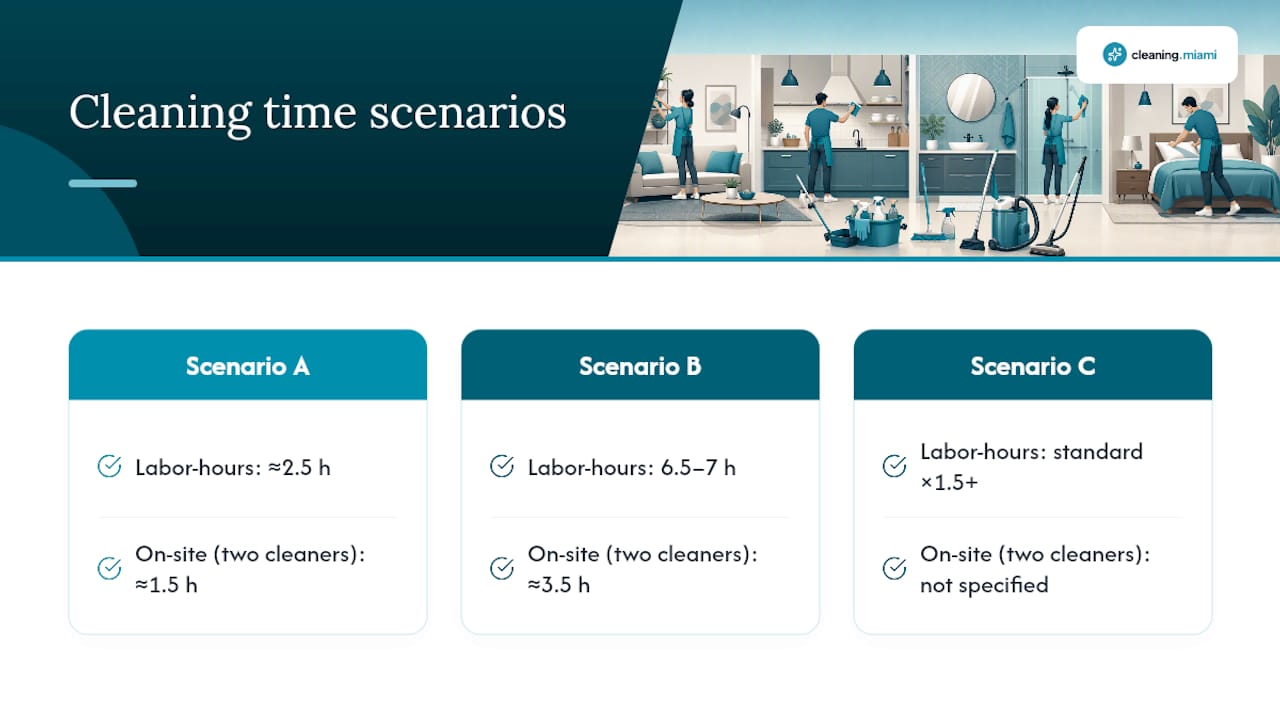
Scenario A: Recurring 2-bedroom, 1-bath. Standard maintenance clean, home already tidy. One cleaner: roughly 2.5 hours. Two cleaners split the same labor-hours: about 1.5 hours on-site.
Scenario B: First-time deep clean, 3-bed, 2-bath, two pets. Base standard time of 4 hours, plus a 50% deep-clean multiplier, plus extra vacuuming for pet hair. Total labor-hours land around 6.5 to 7 hours, meaning a two-person team should plan for roughly 3.5 hours on-site.
Scenario C: Move-out clean, 1-bed with oven and cabinet interiors. A move-out clean starts from an empty-home baseline but adds interior appliance and cabinet detailing throughout, which is why move-out jobs use the largest multiplier of any category, often 50% or more above a standard clean of the same size.
Why Professional Timing Predictability Comes Down to the Team You Hire
Uncertainty around cleaning time usually traces back to who shows up and whether they know the space. Insured, background-checked teams tend to move through onboarding and building sign-in faster because they've done it before, which cuts down on the logistics minutes that pad every appointment. Cleaning.Miami backs every visit with a 100% satisfaction guarantee, so if scope gets missed, the fix doesn't cost extra time out of your week.
Before booking, ask these questions to lock down scope and timing:
- How many cleaners will be assigned to this job?
- Is the quote in labor-hours or a fixed clock-hour window?
- Does the price include a re-clean if something's missed?
An Editorial Take on Booking Smarter
Homeowners consistently underestimate their own clutter, not their square footage. The fix isn't a longer booking. It's ten minutes of counter clearing before the cleaner's key turns in the lock, and telling them exactly what matters most that day.
— Erik
Book the Right Clean With Cleaning.Miami
Cleaning.Miami handles the full range this guide covers: standard recurring cleans, first-time deep cleans, move-out and move-in turnovers, and Airbnb turnover cleaning for hosts working against tight guest windows.
Every job runs on teams that meet key safety and reliability standards. For anything above three bedrooms or a first-time deep clean, request a two-person team when you book so your clock-hours stay reasonable instead of stretching into a half-day event. Head to the house cleaning page to see your service options and get a quote for your specific home size in Miami-Dade County.
Sources
- Home Cleaning Schedule Guide
- How Long Does It Take to Clean a House? An Ultimate Guide
- How Long Does a Professional House Cleaning Take ...
- How Long Should It Take to Clean the House? Realistic Timelines by Size
FAQ
How Long Should It Take to Clean a 1,400 Sq Ft House?
A 2 to 3-bedroom home usually takes about 2 to 4.5 hours for one cleaner on a standard visit, or roughly 1.5 to 2.5 hours with a two-person team. A first-time or deep clean of the same size home typically adds 40 to 60% more time.
What Is the 20-Minute Rule in Cleaning?
The 20-minute rule refers to setting a short timer to tackle one room or task fully before moving to the next, which keeps momentum going and prevents a cleaning session from sprawling into hours. It pairs well with a daily reset routine of 10 to 20 minutes to keep a home from ever needing a marathon deep clean.
What Is the 5-5-5 Rule for Cleaning?
Definitions of the 5-5-5 rule vary by source, but a common version has you spend five minutes each on decluttering, wiping surfaces, and putting items away in a single room. It's best used as a quick daily maintenance habit rather than a substitute for a full room clean.
Is $20 an Hour Good Pay for House Cleaning?
Fair pay depends on region, experience, and whether the cleaner works independently or through an insured company covering overhead like insurance and supplies. Rates vary widely across markets, so it's worth comparing against local going rates rather than a single national figure.