
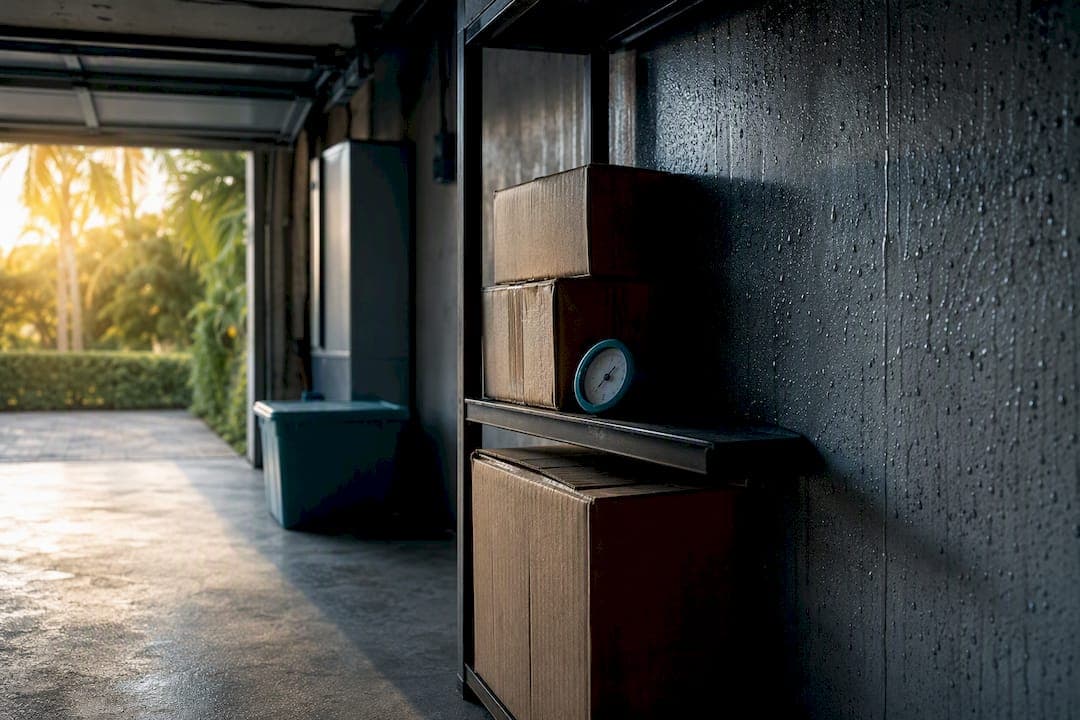
If your garage smells musty, stop and find the moisture source first, then dry or discard whatever is holding water. Deodorizers and air fresheners only mask the smell and let mold keep growing underneath. Check the floor drain, door seals, and any wet cardboard or fabric within minutes of noticing the odor. If the affected area is bigger than roughly 10 square feet, or you suspect sewage or HVAC contamination, skip the DIY route and call a professional.
TL;DR:
- Fix the water source first, such as sealing leaks, refilling dry floor drain traps, and removing damp stored items, before attempting cleaning or deodorizing.
- Use a hygrometer to monitor humidity levels and keep indoor moisture below 50 percent to prevent mold growth and the odors from recurring.
- Discard porous materials like cardboard, insulation, and drywall that are heavily soaked or moldy, as they cannot be fully cleaned and pose ongoing risks.
- Employ a properly sized dehumidifier with a continuous drain and ventilate strategically, avoiding constant airflow which can worsen humidity during humid conditions.
- Consider professional cleaning for areas larger than ten square feet, recurring odors, hidden mold, or health symptoms, to ensure thorough and safe remediation.
Table of Contents
- Where a Garage Musty Smell Actually Comes From
- How Do You Get Rid of a Musty Smell in a Garage?
- Controlling Humidity So the Smell Doesn't Come Back
- Tools That Actually Help (No Brand Shopping Required)
- When to Call a Professional Instead of DIY
- What a Professional Cleaning Actually Looks Like
- The Real Lesson Buried in All This Moisture Advice
- Book a Deep Clean Instead of Fighting the Smell Alone
- Sources
- FAQ
Where a Garage Musty Smell Actually Comes From
A musty garage smell almost always traces back to trapped water, not dirt. Work through a short list before touching a single cleaning product, because guessing wastes time and lets moisture keep feeding whatever is growing.
- Floor drains: a dry trap loses its water seal and lets sewer gas rise into the garage; standing water or trapped leaves nearby can rot and smell just as bad.
- Building envelope: worn garage-door seals, a slow roof leak, or a cracked wall penetration let rain and humidity seep in unnoticed.
- Vehicles: tires and undercarriages track in rainwater that pools on concrete and never fully evaporates.
- Stored items: damp cardboard boxes, old fabric, foam padding, and fiberglass insulation soak up ambient moisture and hold it for weeks.
- Trash and recycling bins: food residue and rainwater inside bins ferment fast in warm garages.
A common diagnostic checklist also points to recent storms or a sudden swing in outdoor humidity as triggers, especially if the smell showed up overnight rather than building slowly.
How Do You Get Rid of a Musty Smell in a Garage?
Work through this sequence in order. Skipping steps, especially the drying step, is the most common reason odors come back within a month.
- Clear the space and inspect hidden surfaces. Move boxes, bins, and stored gear away from walls so you can see what's actually wet. Photograph any staining, warping, or discoloration before you clean it, in case you need it for an insurance claim later.
- Fix the water source. If a floor drain trap has dried out, pour a bucket of water down it to reseal the trap and block sewer gas. If a door seal is cracked or a small roof leak is obvious, patch it temporarily until a proper repair happens.
- Clean hard surfaces with detergent and water. Scrub concrete, metal shelving, and sealed surfaces with a regular household detergent, not just water. Avoid pressure washers or dry brushing on visible mold, since both can send spores airborne. EPA guidance recommends drying cleaned surfaces completely within 24 to 48 hours to prevent regrowth.
- Discard what you can't fully clean. Cardboard, insulation, drywall, and heavily soaked fabric usually can't be cleaned well enough to matter, because mold works its way into porous materials faster than surface cleaning can remove it. Bag contaminated items before carrying them through the house and dispose of them outdoors.
- Protect yourself while you work. Wear gloves, goggles, and an N95 mask for anything beyond a small, isolated patch. Anyone with asthma, a compromised immune system, or chronic lung disease should avoid DIY mold cleanup entirely and let someone else handle it, or hire a pro.
Pro Tip: Don't try to identify the exact mold species before cleaning it up. It rarely changes what you do next: remove it, fix the moisture, and move on.
Controlling Humidity So the Smell Doesn't Come Back

Cleaning solves today's problem. Humidity control solves next month's. A garage that sits above 60% relative humidity for days at a time will grow mold again even after a thorough scrub down, so this step isn't optional if you actually want the smell gone for good.
Buy a hygrometer and place it at mid-height, away from doors and vents, so it reads actual ambient conditions rather than a draft. EPA's mold guidance sets the target at 30% to 50% relative humidity, with 60% as the hard ceiling before mold risk climbs sharply.
- Choose a dehumidifier sized for your garage's square footage, not a generic "medium room" model that can't keep up.
- Run it with a condensate drain hose if possible, since a manual bucket that overflows overnight defeats the purpose.
- Ventilate on a schedule, not constantly. Opening the garage door during humid weather can pull in wetter outdoor air and make things worse rather than better.
- Pay extra attention after storms or during warm, humid stretches, when moisture loads spike fastest.
In consistently warm, humid regions, air conditioning alone often can't pull enough moisture out of a garage that isn't climate controlled. Building science research on supplemental dehumidification backs up standalone dehumidifiers as a practical fix for exactly this gap.
Tools That Actually Help (No Brand Shopping Required)
You don't need specialty gear, just the right basic tools used correctly.
- Hygrometer: placed mid-height, away from vents and doors, checked weekly at first.
- Portable dehumidifier: sized to square footage, ideally with a continuous drain hose instead of a manual bucket.
- Fans: useful for drying a cleaned, water-damaged area, but skip them during active mold removal since airflow can spread spores.
- Desiccant packs or moisture-absorbing tubs: good for cabinets and enclosed storage where a dehumidifier's airflow doesn't reach.
- Detergent, a scrub brush, and a wet-vac: the core cleaning kit for hard surfaces. Skip bleach on porous materials. It doesn't penetrate deep enough to matter and can damage the material.
When to Call a Professional Instead of DIY
Some situations aren't worth handling yourself, either because of scope or because of risk.
- Size: EPA sets its own homeowner cleanup threshold at about 10 square feet, roughly a 3 foot by 3 foot patch. Anything larger usually calls for a trained remediator.
- Recurrence: mold that returns after you've already cleaned and dried the area points to a hidden moisture source you haven't found yet.
- Hidden contamination: a musty smell with no visible source may mean mold is growing behind a wall, floor, or in HVAC ductwork, and disturbing it yourself can release spores into the air.
- Health symptoms: coughing, wheezing, or skin irritation in anyone using the garage regularly is a signal to stop DIY work.
Ask any remediator or cleaning company about their insurance coverage, references, exact scope of work, and how they verify the job is actually done before they leave.
What a Professional Cleaning Actually Looks Like
A professional visit typically starts with an inspection to confirm the moisture source, followed by targeted cleaning of hard surfaces, safe disposal of anything unsalvageable, and odor control paired with humidity recommendations for the space going forward. That last part matters.

Hiring makes more sense when you're short on time, dealing with a possible health concern, or you've already tried cleaning once and the smell came back.
The Real Lesson Buried in All This Moisture Advice
Most garage odor advice treats deodorizing and mold cleanup as the same problem. They're not. Spraying an odor eliminator over a damp cardboard box is like painting over rust: satisfying for about a week, then worse than before you started.
The conventional wisdom oversells scrubbing and undersells measurement. People reach for bleach and elbow grease before they ever check a hygrometer, which is backwards. You can't manage what you don't measure, and humidity swings 10 or 15 points in a Florida garage without anyone noticing until the smell comes back.
If there's one priority to take from all of this, it's sequencing. Fix the water source first, clean and dispose of contaminated items second, and only then think about long-term dehumidification. Skip straight to a dehumidifier without finding the leak, and you're just running an expensive fan against an ocean. The EPA's own framing treats moisture control and cleanup as one inseparable job, not two optional steps you can pick between.
— Erik
Book a Deep Clean Instead of Fighting the Smell Alone
Professional cleaning services offer a faster path than trial-and-error DIY, with eco-friendly products suitable for humid and coastal climates, teams that undergo background checks and insurance, and satisfaction guarantees.

A garage that's been holding moisture for weeks usually needs more than a surface wipe down, and that's exactly what deep cleaning is built for: heavier buildup, contaminated surfaces, and odor sources that a quick pass won't touch. If the smell is tied to a move, move-out and move-in cleaning covers the whole property, not just the garage. And if a damp rug or garage carpet is holding the odor, carpet cleaning handles that separately.
Every booking starts with an inspection, so the scope of work matches what's actually happening in your space rather than a generic checklist. If you're ready to stop guessing, book a house cleaning and get a quote before the odor gets any worse.
Sources
- Mold cleanup in your home | US EPA
- Mold course chapter 4 | US EPA
- Mold and health problems | CDC/NIOSH
- A brief guide to mold, moisture, and your home | US EPA
FAQ
How Can I Eliminate the Musty Smell From My Garage?
Find and stop the moisture source first, then clean or discard whatever stayed wet long enough to absorb the odor. EPA guidance recommends keeping relative humidity between 30% and 50% afterward to stop the smell from returning. Deodorizing sprays without fixing the water problem behind them almost never last.
Why Do Garages Smell Musty?
Garages trap moisture more easily than living spaces because they're rarely climate controlled and often have concrete floors, floor drains, and poor seals. Common triggers include a dried out floor-drain trap, a leaking roof or door seal, wet stored items, or humidity swings after a storm.
Does a Musty Smell Automatically Mean Mold?
Not always, but it's a strong signal worth checking. A musty odor can come from a dry drain trap releasing sewer gas or from damp materials that haven't yet grown visible mold, so inspect before assuming the worst.
Why Does My Garage Smell All of a Sudden?
A sudden change usually points to a specific event: a heavy rain that tracked in on a vehicle, a bin that got wet, a recent humidity spike, or a leak that just reached a threshold where you could smell it. Walk through the common causes checklist to narrow it down fast.