

Ceiling fan cleaning is usually included when you book a deep clean or a recurring cleaning plan, but it often becomes an add-on for vaulted ceilings, fans at unusually high ceilings, or heavy grease buildup. If you need results fast, wipe the blades yourself with a pillowcase and a damp cloth, or mention the fans when you book a deep or recurring service. Either way, plan to dust monthly and deep clean every few months, more often if you have pets, allergies, or a kitchen fan collecting cooking residue.
TL;DR:
- Professional ceiling fan cleaning usually includes dusting all blades, wiping the motor housing, and cleaning light globes, with heavy grease requiring blade removal and extra effort.
- Extra charges often apply for vaulted ceilings, fans over stairwells, or ornate fixtures that need more setup time and equipment, with standard jobs taking less than an hour.
- DIY cleaning with the pillowcase method effectively traps dust and is suitable for fans within reachable heights, requiring only basic supplies like a ladder, damp cloth, and vacuum.
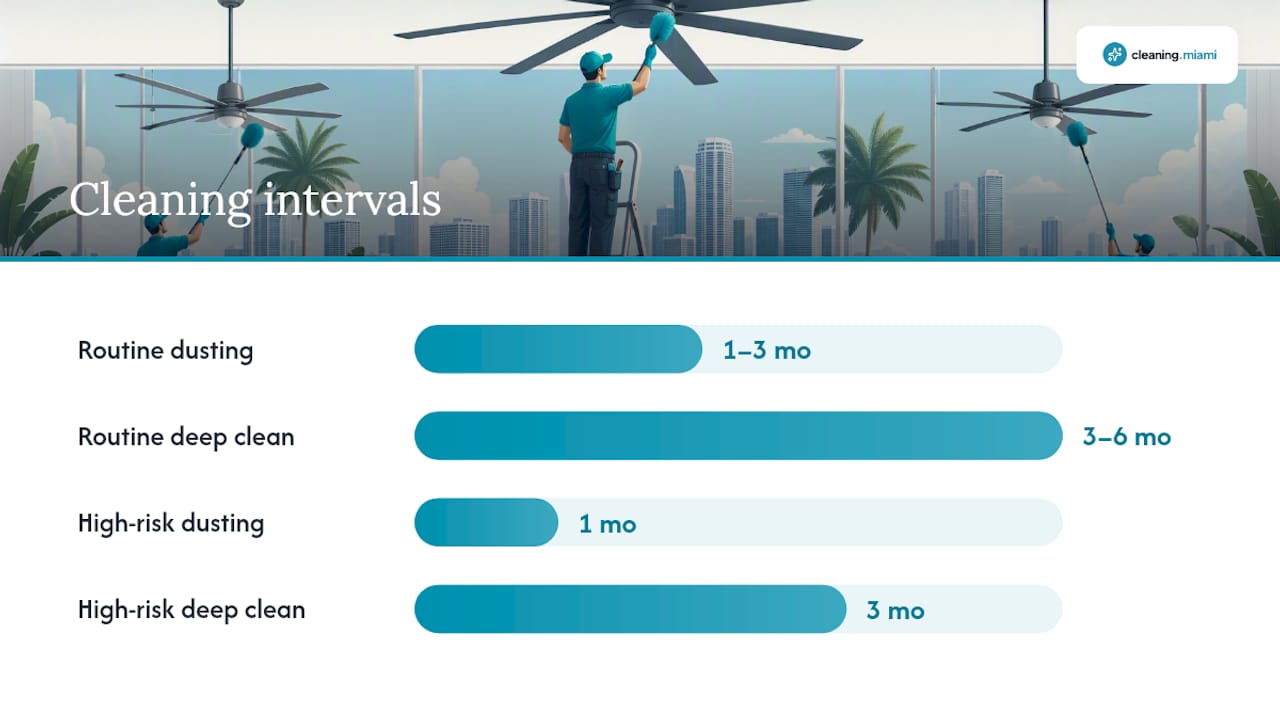
- Frequent dusting every one to three months and deep cleaning every three to six months are recommended, especially for homes with pets, allergies, or kitchen grease buildup.
- To ensure accurate pricing, specify the number of fans, ceiling heights, and building access rules upfront when booking professional services.
Table of Contents
- What Does Professional Ceiling Fan Cleaning Include?
- How to Clean a Ceiling Fan Yourself, Step by Step
- Why Fan Cleaning Sometimes Costs Extra
- Getting Your Home Ready for the Cleaning Crew
- Access and Safety on Tall or Tricky Fans
- Bundling, Climate, and What a Good Visit Looks Like
- Booking Fan Cleaning with Cleaning
- Where to Learn More About Fan Care and Cleaning Frequency
- Sources
- FAQ
What Does Professional Ceiling Fan Cleaning Include?
A real fan cleaning job covers more than a quick swipe across the blades. Technicians typically work through the whole fixture, top to bottom, so the room doesn't need a second pass later.
A thorough visit generally includes:
- Dusting and wiping both the top and bottom of each blade, including the leading edges where grime collects
- Wiping down the motor housing, where dust often cakes onto vents and seams
- Cleaning the light globes and pull chain, including bulbs when they're cool to the touch
- Sweeping or vacuuming the floor and nearby surfaces below the fan so dislodged dust doesn't resettle on furniture
That last point matters more than most homeowners realize. A complete fan clean finishes the job in the room, not just on the fixture. If a crew dusts the blades and walks away leaving a fine film on your dresser or TV stand, the visit was incomplete.
For fans with heavy kitchen grease or years of buildup, some technicians will remove the blades to degrease them properly, or check that the fan is balanced and spinning without wobble once it's clean. That's a different job than a standard dusting, and it's worth asking about upfront if your fan hasn't been touched in a year or more.
Pro Tip: Ask whether the quote includes "below-area cleanup." Some flat rates cover the fan itself but not the floor and furniture underneath, which means you could end up dusting your own bookshelves after the crew leaves.
How to Clean a Ceiling Fan Yourself, Step by Step
DIY fan cleaning is genuinely easy if you contain the dust instead of scattering it into the air. Here's what to gather and how to move through it.
Materials: an old pillowcase, two or three lint-free cloths, mild dish soap, a stable ladder or an extendable duster, and a vacuum with a brush attachment.
- Turn off the fan and let the blades stop completely before you touch anything.
- Slide a pillowcase over each blade, one at a time, and pull it back toward you. The dust stays trapped inside the case instead of falling on your floor or furniture.
- Wipe both sides of each blade with a damp, lint-free cloth. For greasy kitchen fans, add a drop of mild dish soap to the cloth.
- Clean the light globes and pull chain, wiping bulbs only once they're cool.
- Wipe down the motor housing and any visible switches.
- Vacuum or sweep the floor below to catch anything that escaped containment.
The pillowcase method is preferred over plain dusting because dry dusting tends to knock particles into the air rather than removing them, which is worse for indoor air quality, not just messier.
Cleaning frequency: dust every one to three months and do a full deep clean every three to six months. Homes with pets, allergy sufferers, or a fan near the stove should lean toward the shorter end of both ranges.
Stop and call a professional if you're dealing with a ceiling above 10 feet, a wobbly or noisy fan, or blades caked in years of grease. A fall from a ladder isn't worth saving a service fee.
Why Fan Cleaning Sometimes Costs Extra
Standard-height fans, usually eight to nine feet, are the fans most likely to be included in a deep or recurring clean at no extra charge. Once you go beyond that baseline, pricing tends to shift.
Common triggers for an add-on charge:
- Vaulted or cathedral ceilings that push fans well above standard reach
- Fans mounted over stairwells or foyers, where a straight ladder setup isn't possible
- Heavy grease buildup on kitchen fans that requires extra time or degreasing
- Decorative fixtures with light kits, multiple blades, or ornate housings that take longer to detail
Time is the real driver behind these charges. A standard fan clean typically takes between half an hour and a bit less than an hour, and anything that adds setup time, like a taller ladder or blade removal, adds cost. When you request a quote, confirm the ceiling height cap included in the base price, how many fans you have, and whether light globes get removed and cleaned or just wiped in place.
Bundling almost always beats booking a standalone fan visit. A deep cleaning already involves ladders, containment supplies, and a crew moving through the whole home, so adding fans to that visit costs far less than paying for setup and travel twice.
Getting Your Home Ready for the Cleaning Crew
A little prep keeps your quote accurate and the visit efficient.
- Count your fans and estimate ceiling height in each room before you call or book online.
- Clear breakable items and furniture from directly beneath each fan where you can.
- Flag anything unusual: kitchen grease, a fan you haven't cleaned in years, or decorative light kits.
- Ask directly about containment methods, whether the floor gets cleaned afterward, and what happens if something gets missed.
If you live in a condo or high-rise, mention that too. Buildings across Brickell and other high-rise neighborhoods often require a certificate of insurance or an elevator reservation before a crew can even get to your unit, so flagging that at booking avoids a wasted trip.
Access and Safety on Tall or Tricky Fans
Specialty access covers anything beyond a standard eight or nine-foot ceiling: vaulted rooms, fans set above 10 to 12 feet, or fixtures hanging over a staircase where a normal ladder won't reach safely.
These jobs need different tools than a routine clean:
- Extension ladders, scaffolding, or stabilizer platforms rated for higher reach
- Extendable dusting poles for spots too risky to climb toward
- A second person on-site for ladder stability on taller setups
Pro Tip: If a company won't quote a price for your vaulted ceiling over the phone, that's usually a sign they need to see it in person, not a red flag. Height changes the math too much for a fair estimate sight unseen.
This is also where insurance matters most. A fall from a stairwell fixture is a real liability, which is exactly why background-checked, insured teams matter more on tall or awkward jobs than on a routine dusting. Some technicians will decline oddly wired or unstable fixtures and recommend an electrician instead, and that's the right call, not a cop-out.
Bundling, Climate, and What a Good Visit Looks Like
Miami's humidity and salt air push dust and grime onto fan blades faster than in drier climates, which is one reason eco-friendly cleaning products matter here beyond marketing language. Harsh chemicals can react oddly with humid air and leave residue that attracts more dust. Cleaning generally recommends bundling fans into a deep clean rather than booking a one-off visit, since the setup cost gets absorbed into a larger job anyway.
DIY makes sense for a single standard-height fan you can safely reach. A pro makes more sense once you're juggling multiple fans, vaulted ceilings, or a schedule that doesn't leave room for a ladder project. On a proper visit, expect containment, a clean floor when the crew leaves, and pricing that was clear before anyone touched a ladder.
— Erik
Booking Fan Cleaning with Cleaning
Cleaning.Miami is the straightforward alternative to guessing whether your quote actually covers the fans. Fan cleaning is commonly bundled into deep cleaning, recurring house cleaning, move-in and move-out cleaning, and Airbnb turnover cleaning, so most standard-height fans get handled without a separate charge. High ceilings or heavy grease may still bump the price, but you'll know that before the crew shows up.

When you book, have three things ready: how many fans you have, roughly how high your ceilings run, and any building access rules if you're in a condo or high-rise. This information helps you get an accurate quote quickly. Get a quote for your next cleaning and mention your fans when you book.
Where to Learn More About Fan Care and Cleaning Frequency
For step-by-step photos and extended routines, see Hunter Fan's cleaning guide and Martha Stewart's fan-cleaning method. For a broader look at how professional services scope this work, see Shiny Go Clean's service breakdown.
Sources
- How to clean a ceiling fan | Hunter Fan
- How to clean a ceiling fan | Martha Stewart
- Expert Ceiling Fan Cleaning Service in Madison, WI | Shiny Go Clean
FAQ
Is Ceiling Fan Cleaning Usually Included in a Deep Clean?
Yes, standard-height fans are typically included in a deep clean without an extra charge. Vaulted ceilings, fans over stairwells, or heavy grease buildup often trigger an add-on fee because they need extra time and equipment.
How Often Should I Clean My Ceiling Fans?
Dust your fans every one to three months and do a full deep clean every three to six months. Homes with pets, allergies, or a kitchen fan near the stove should clean on the more frequent end of that range.
Can I Clean a Ceiling Fan Myself Without Making a Mess?
Yes, the pillowcase method traps dust instead of scattering it into the room. Slide a pillowcase over each blade, pull it back toward you, then wipe both sides with a damp cloth using the containment approach most pros favor.
Does Cleaning.Miami Charge Extra for High Ceilings?
Standard-height fans are generally covered within deep cleaning and recurring plans. Vaulted or very tall ceilings may need specialty access, so it's best to mention your ceiling height when booking so the quote reflects the actual job.
What Should I Ask Before Booking a Professional Fan Cleaning?
Ask whether the price includes cleanup of the floor and furniture below the fan, not just the blades themselves. Also confirm the ceiling height the base price covers and whether light globes get removed and cleaned individually.