
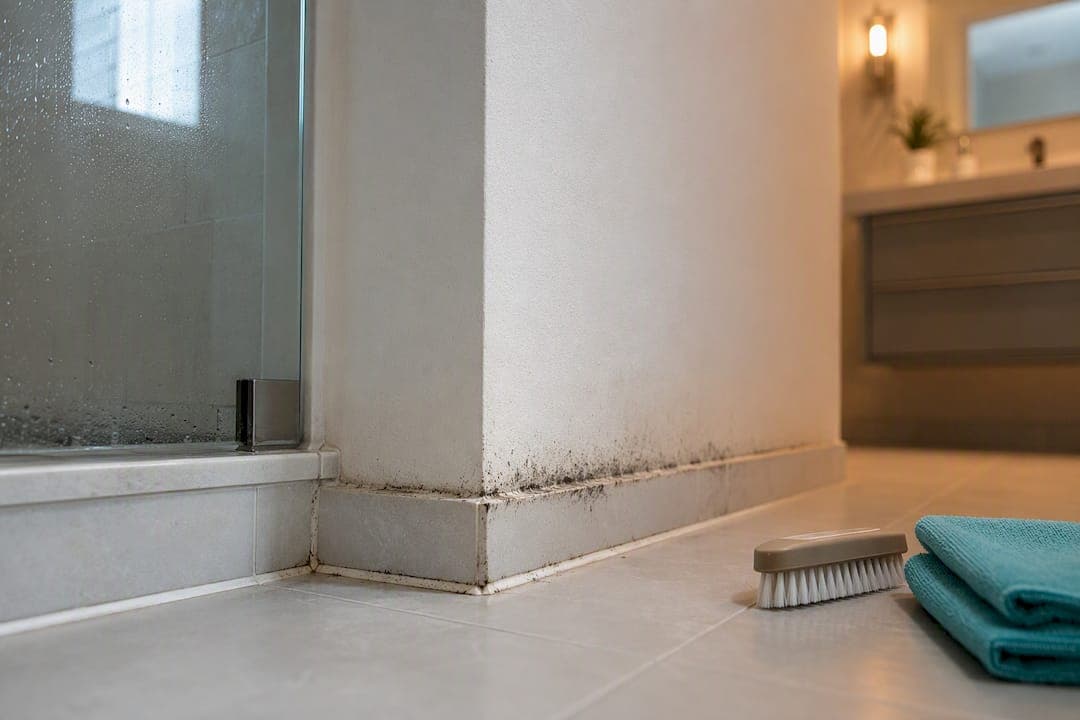
You can remove most small bathroom mildew safely yourself: pick the cleaner that matches the surface, put on gloves and a mask, run the fan, and dry the area completely afterward. That handles anything under roughly 10 square feet. Beyond that, or if it keeps coming back, the EPA recommends calling a remediation professional instead of scrubbing harder.
TL;DR:
- Bleach is effective only on non-porous surfaces like tile and glass, requiring 10 to 15 minutes of contact time for proper cleaning.
- Porous materials such as drywall, wood, and grout need specialized solutions like vinegar or resealing because mold grows into these surfaces rather than just on top.
- Moisture control by running exhaust fans, wiping surfaces, and maintaining indoor humidity between 30% and 50% is the most reliable method to prevent mildew recurrence.
- For mildew patches larger than 10 square feet or persistent growth, professional remediation is necessary to identify and fix underlying moisture issues.
- Always use safety gear like gloves, eye protection, and an N95 respirator for larger or heavy mold growth, and avoid mixing bleach with other cleaning chemicals to prevent dangerous fumes.
Table of Contents
- How to Remove Mildew From a Bathroom Step by Step
- Which Cleaner Works Best for Each Bathroom Surface?
- How Do You Stop Bathroom Mildew From Coming Back?
- What Safety Gear Do You Need for Mildew Removal?
- When Should You Call a Mold Remediation Professional?
- Your Bathroom Mildew Maintenance Schedule
- Why the "Just Bleach It" Advice Keeps Failing Homeowners
- When It Makes Sense to Just Book a Professional Cleaning
- Where This Information Comes From
- Sources
- FAQ
How to Remove Mildew From a Bathroom Step by Step
Bathroom mildew removal isn't complicated, but the order of operations matters. Skip a step, like drying the area afterward, and you'll be back scrubbing the same spot in two weeks.
- Clear and prep the space. Remove bath mats, shower curtains, and any loose items from the affected area. Open a window if you have one, and switch on the exhaust fan before you open a single bottle of cleaner.
- Gear up. Rubber gloves and eye protection are non-negotiable. If you're dealing with a patch bigger than a dinner plate, or the growth looks black and fuzzy rather than pink or gray, add an N95 respirator.
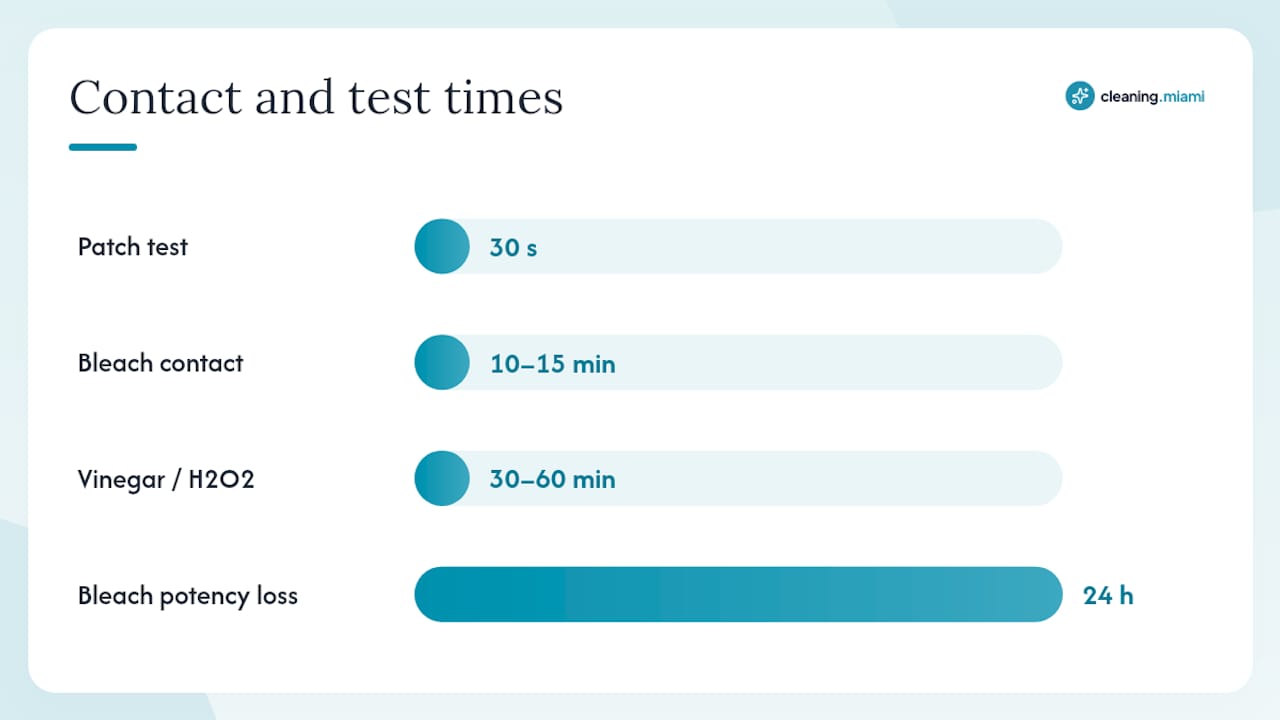
- Test the cleaner on a hidden spot first. Grout, painted drywall, and colored caulk can discolor or pit. A patch test on an inconspicuous corner takes 30 seconds and saves you from bleaching a stripe into your shower tile.
- Mix and apply. For non-porous surfaces like tile, glass, and porcelain, the CDC recommends one cup of household bleach per gallon of water. Apply with a spray bottle or sponge and let it sit for 10 to 15 minutes. If you'd rather skip bleach, undiluted white vinegar or 3% hydrogen peroxide both work on many household mold species, though they generally need a longer contact time of 30 to 60 minutes to match bleach's speed.
- Scrub gently, not aggressively. Use a soft-bristled brush, an old toothbrush for grout lines, or a non-scratch sponge. Never dry-brush mildew. Disturbing dry spores without moisture on the surface just launches them into the air you're breathing.
- Rinse thoroughly. Cleaner residue left behind can actually feed future growth or interact badly with the next product you use.
- Dry the surface completely. Towel-dry, then leave the fan running. This step gets skipped constantly, and it's the reason mildew "comes right back" a week later.
- Deal with your tools. Rinse brushes and sponges in hot water, then let them air-dry fully before storing them. Toss disposable wipes or rags used on heavy growth in a sealed bag rather than tossing them straight in an open hamper.
- Recheck in 48 to 72 hours. Look for regrowth, discoloration, or a musty smell returning. If it's back that fast, you're likely dealing with a hidden moisture source, not a cleaning problem.
Pro Tip: Keep a spray bottle of diluted vinegar under the sink for quick weekly wipe-downs. You don't need to mix a fresh bleach solution every time. Save the stronger stuff for actual buildup, not routine maintenance.
One detail that trips people up: a bleach solution loses potency fast once mixed, generally within 24 hours, so don't batch it and store it for later cleanings.
Which Cleaner Works Best for Each Bathroom Surface?
The single biggest mistake in bathroom mildew removal is treating every surface the same way. A cleaner that works beautifully on ceramic tile can be almost pointless on drywall, because porosity changes everything about how deep the mold has actually grown.
- Tile, glass, and porcelain (non-porous): Bleach solution or 3% hydrogen peroxide, 10 to 15 minutes of contact time, then rinse. These surfaces don't let mold roots penetrate, so surface cleaning genuinely resolves the problem.
- Grout: Undiluted white vinegar or a dedicated grout cleaner works better here than bleach, which tends to just bleach the surface without reaching what's growing in the porous cement. If staining keeps returning after cleaning, the grout needs resealing, not another round of scrubbing.
- Painted drywall and wood (porous): Vinegar is the safer first move. Bleach on these surfaces mostly removes color, not the mold itself, since the chemistry doesn't penetrate porous substrates the way it does on tile. If the material has been wet long enough for mold to embed, cleaning is cosmetic and replacement is the only real fix.
- Silicone caulk: If you can see gray or black mildew tracking along the seam and it won't lift with scrubbing, the mold is growing inside the caulk itself, not on top of it. Removing and re-caulking is usually the only durable solution at that point.
- Fabric shower curtains, liners, and bath mats: Launder on the hottest setting the fabric allows, ideally with a cup of white vinegar added to the wash. If the mildew has soaked through and left a smell that survives washing, replace it rather than fight it indefinitely.
The pattern across all of these: non-porous surfaces respond to cleaning because the mold sits on top. Porous ones often need removal because the mold has grown into the material itself, and matching the fix to the surface is what actually stops the cycle instead of just resetting the clock.
How Do You Stop Bathroom Mildew From Coming Back?
Mildew needs moisture, warmth, and something organic to feed on, and bathrooms hand it all three for free. Cutting off the moisture supply does more to prevent bathroom mold than any cleaner on the market.
- Run the exhaust fan during every shower and for 20 to 30 minutes after, a habit CDC guidance specifically calls out as one of the most effective prevention steps available.
- Leave the bathroom door open once you're done, so trapped humidity has somewhere to go.
- Squeegee shower walls and glass after every use. It takes about 15 seconds and removes most of the standing water that would otherwise sit and evaporate slowly into the grout.
- Towel-dry the sink area, tub edges, and windowsills if condensation tends to collect there.
- Keep indoor humidity between 30% and 50%. A basic hygrometer costs less than a bottle of specialty mold spray. If your bathroom regularly reads above 60%, especially in a humid coastal climate, a small dehumidifier earns its price fast.
- Reseal grout roughly once a year, or sooner if you're seeing staining return within a few months of cleaning.
If your bathroom has no window and a weak fan, ventilation troubleshooting resources like this guide on exhaust fan runtimes can help you figure out whether your fan is actually moving enough air, since a lot of builder-grade fans are undersized for the room.
By the numbers: Keeping indoor humidity in the 30% to 50% range and running your exhaust fan for 20 to 30 minutes post-shower are the two specific, CDC-backed habits that do the most to prevent regrowth after a clean.
What Safety Gear Do You Need for Mildew Removal?
Mildew removal exposes you to two real risks: inhaling disturbed spores and inhaling or splashing chemicals you didn't plan to mix. Both are avoidable with basic precautions.
- Gloves and eye protection for any cleaning session, no exceptions.
- An N95 respirator for heavy growth, dry scrubbing, or any area larger than a small patch, since fine spores and dust get airborne fast once disturbed.
- Ventilation before you start, not after you notice the fumes. Open windows, run the fan, and prop the door.
- Never mix bleach with vinegar, ammonia, or hydrogen peroxide. The CDC is explicit that combining bleach with other cleaners can produce dangerous fumes, and this is one of the most common accidental exposures in home cleaning.
- Bag contaminated rags and disposable tools rather than dropping them in an open laundry hamper, and let reusable brushes dry fully before storage so they don't become their own mildew problem.
When Should You Call a Mold Remediation Professional?
Call a professional once the affected area covers more than about 10 square feet, roughly a 3 by 3 foot patch. That's the EPA's own threshold for when DIY cleaning stops being the safer or more effective option.
A few other situations warrant a call regardless of size: mildew that returns within weeks of a proper cleaning, any sign of water damage or a hidden leak behind a wall or under flooring, and any occupant experiencing new respiratory symptoms, coughing, or allergy flare-ups tied to time spent in the bathroom.
Professionals approach this differently than a weekend cleaning session. They find and fix the actual moisture source, remove and dry wet materials within 48 hours, and, when needed, treat HVAC ducts or wall cavities that a spray bottle can't reach. If you're trying to figure out what a standard cleaning visit does and doesn't cover before booking one, this breakdown of typical cleaning criteria is worth a look.
Your Bathroom Mildew Maintenance Schedule
Consistency beats intensity here. A quick daily habit prevents the deep-clean marathon later.
- Daily: Squeegee shower walls and towel-dry the tub edge right after use.
- Weekly: Spot-clean grout lines and corners where moisture tends to pool.
- Monthly: Launder shower curtains and liners, wipe down caulk lines, and clean the exhaust fan cover of dust buildup.
- Annually: Reseal grout and do a visual inspection for slow leaks around the tub, toilet base, and supply lines.
Why the "Just Bleach It" Advice Keeps Failing Homeowners
Most bathroom mildew advice online treats bleach as a universal fix, and that's exactly why so many people end up cleaning the same spot every month. Bleach is genuinely excellent on tile and glass. It's a mediocre choice on grout and close to useless on drywall or wood, where it bleaches the color without touching what's growing beneath the surface. The mismatch between "cleaning" and "removing" is the real story behind recurring bathroom mold, not weak cleaners or lazy scrubbing.
The other pattern worth calling out: drying gets treated as optional, when it's arguably the more important half of the job. A perfectly cleaned, still-damp shower stall is just a mildew colony on a 10-day delay.
None of this means DIY is a bad choice. For a small, contained patch, it's the right call almost every time, and it's exactly the kind of eco-friendly, humidity-aware approach Cleaning takes with routine bathroom care across Miami-Dade County, where salt air and heavy humidity make mildew a near-constant fight. But once you're past that 10-square-foot line, or you're cleaning the same corner for the third month running, the honest answer is that a cleaner isn't going to solve a moisture problem. A professional assessment will.
— Erik
When It Makes Sense to Just Book a Professional Cleaning
Scrubbing grout on a Sunday morning isn't everyone's idea of a well-spent weekend, and for recurring or large-scale mildew, it's often not the most effective use of your time anyway. Professional cleaning services that handle house and deep cleaning often use eco-friendly products suited to humid, coastal regions with salt air, with teams that undergo background checks, insurance, and bonding before entering client homes.
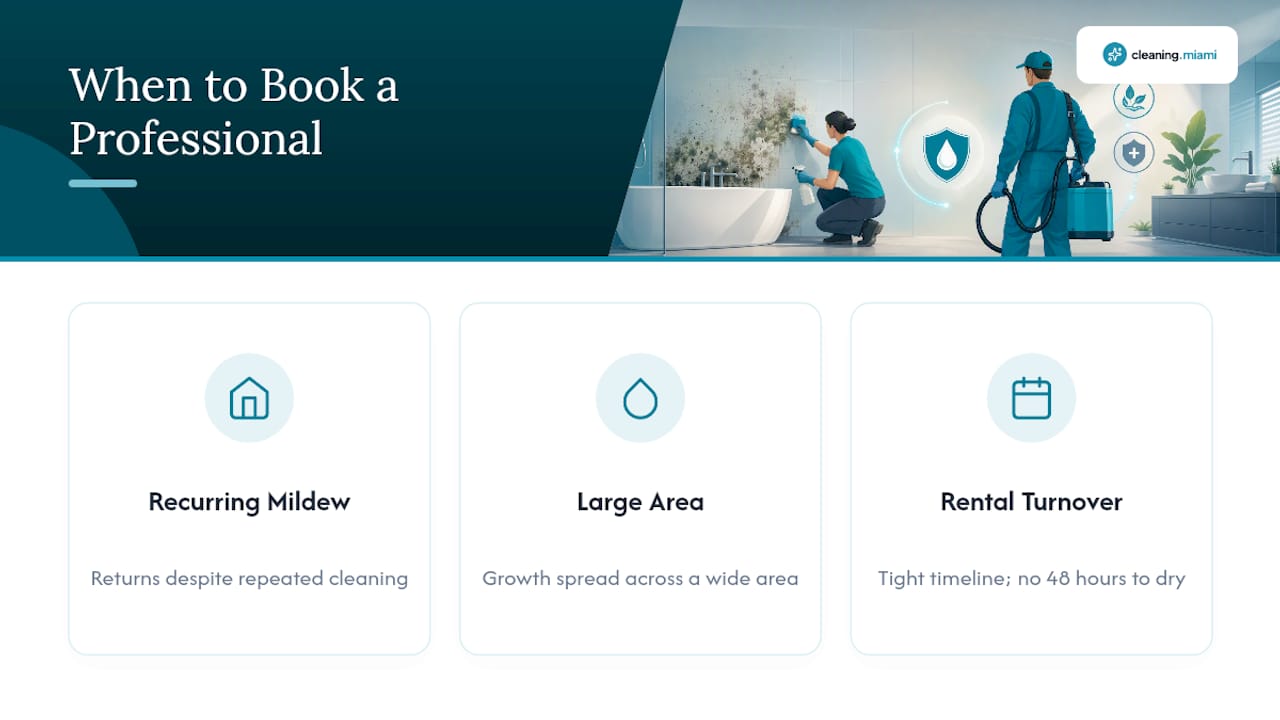
Booking makes the most sense in three situations: mildew that keeps returning despite your own cleaning efforts, growth spread across a large enough area that scrubbing it yourself feels like a losing battle, or a rental turnover on a tight timeline where you can't afford to gamble on drying times. Airbnb hosts juggling back to back guest changeovers, in particular, don't have 48 hours to spare waiting for a bathroom to fully dry between cleanings.
If your bathroom needs more than a spray bottle and a Sunday afternoon, start with a deep cleaning service built to handle exactly this kind of buildup.
Where This Information Comes From
This guide draws on cleanup thresholds and safety guidance from the EPA and CDC, plus practical technique tips from Martha Stewart and Good Housekeeping.
This article is general information, not a substitute for advice from a qualified doctor. Consult a qualified healthcare professional about your own circumstances before acting on anything here.
Sources
- Mold cleanup in your home | US EPA
- How to safely clean and sanitize with bleach | CDC
- How to Remove Shower Mold and Mildew With Little Effort | Martha Stewart
- Best way to remove mildew | Good Housekeeping
FAQ
Is bleach or vinegar better for killing mold?
Bleach acts faster and works well on non-porous surfaces like tile and glass, but vinegar penetrates porous materials like grout and wood more effectively and won't just bleach away surface color without addressing the growth underneath.
What's the difference between mold and mildew in a bathroom?
Mildew is typically a surface-level fungus that appears flat, white, or gray and is usually easier to clean off, while mold often grows in raised, black, or green patches and can penetrate deeper into porous materials.
What is the best bathroom mold remover?
There's no single best product. Bleach solution works best on tile and porcelain, undiluted vinegar suits grout and porous materials better, and a commercial option like a dedicated mold and mildew stain remover can help when DIY formulas aren't cutting through stubborn buildup. For anything over about 10 square feet, calling a professional beats reaching for a stronger chemical.