
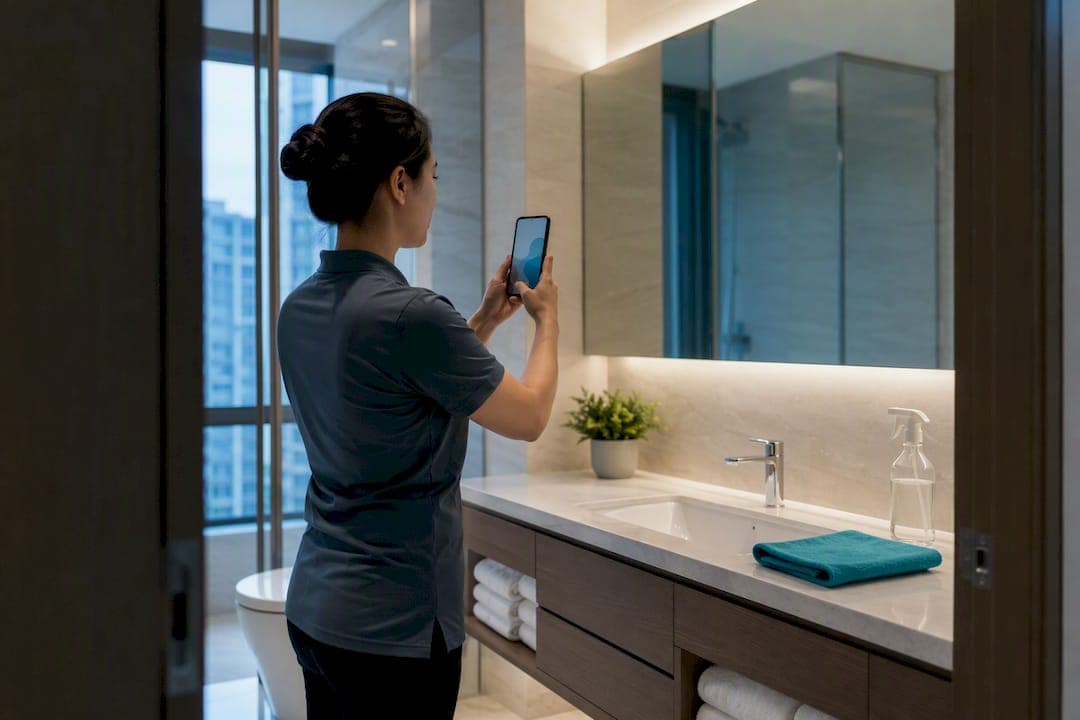
A professional apartment cleaning checklist is a room-by-room, SOP-aligned list plus a final photo-backed QA that crews use to scope, perform, and verify a clean. It covers three variants (standard, deep, and turnover), and success means no missed high-touch surfaces, documented before/after photos, and a signed-off inspection before the crew leaves.
TL;DR:
- Deep and turnover cleanings include interior appliances, cabinet interiors, and wall scuff cleaning, with turnover cleans required at each guest checkout.
- The checklist order is designed to prevent dirt transfer, starting with living areas and bedrooms, then kitchen, and ending with bathrooms, ending with a final walk-through.
- Crew supplies must include EPA-registered disinfectants, microfiber cloths by color code, and tools like HEPA vacuums and grout brushes to prevent cross-contamination.
- A standard operating procedure should contain clear steps, tools, and time estimates for consistency, with a typical bathroom taking 15 to 20 minutes and a kitchen 20 to 30 minutes.
- Final QA involves photographing the after state, scoring perfection, and documenting issues immediately to avoid disputes and ensure quality.
Table of Contents
- What's the Difference Between a Standard, Deep, and Turnover Cleaning Checklist?
- What Does a Room-by-Room Apartment Cleaning Checklist Cover?
- What Supplies Should a Cleaning Crew Bring?
- How Do You Turn a Checklist Into a Repeatable SOP?
- What Should a Final Inspection and QA Report Include?
- How Do You Write a Scope of Work That Avoids Disputes?
- Why Most Checklists Fail Before the Crew Even Shows Up
- Book a Cleaning That Follows This Exact Checklist
- Sources
- FAQ
What's the Difference Between a Standard, Deep, and Turnover Cleaning Checklist?
A standard clean is maintenance work: surfaces, floors, bathrooms, and kitchens kept in good shape between visits. A deep clean goes further into buildup that a weekly visit never touches: baseboards, light fixtures, cabinet fronts, grout. A turnover or move-out clean adds the highest level of detail: appliance interiors, cabinet interiors, and wall spot-cleaning that a standard checklist skips entirely.
Most Airbnb hosts and property managers need a deep clean before the first turnover, then standard cleanings between guests, with periodic deep cleans layered in. Typical checklist tiers look like this:
- Standard clean: wipe-downs, vacuuming, mopping, bathroom disinfection, kitchen counters and sink
- Deep clean: everything in standard, plus baseboards, grout scrubbing, light fixture dusting, cabinet exteriors
- Turnover/move-out clean: everything in deep, plus inside appliances, cabinet interiors, wall scuffs, odor treatment
Recurring residential clients typically book weekly or biweekly standard cleanings, with a deep clean every few months. Rental turnovers need the deep or turnover checklist every single time a guest checks out, regardless of how the last one went.
What Does a Room-by-Room Apartment Cleaning Checklist Cover?
A professional checklist runs top to bottom and follows a fixed sequence: common areas and bedrooms first, then kitchen, then bathrooms, with a final walkthrough closing out the visit. That order isn't arbitrary. It keeps crews from tracking dirt back into finished rooms and lets dwell-time chemicals work in the bathroom while the crew finishes elsewhere.
- Arrival and prep. The crew confirms the scope against the work order, photographs the "before" state of key areas (kitchen counters, bathroom fixtures, visible floors), and stages supplies room by room.
- Living areas and bedrooms. Dust top to bottom, starting with ceiling fans and shelves and ending with baseboards. Wipe down all surfaces, straighten and fold textiles, and check light switches, door handles, and window sills before vacuuming and mopping.
- Kitchen. Clear and wipe counters, disinfect the sink, wipe appliance exteriors, and clean inside the microwave. Cabinet exteriors get wiped, floors get mopped last, and grease spots get a pre-treatment soak before scrubbing on deep cleans.
- Bathrooms. Apply descaler and disinfectant first, then let it sit while the crew scrubs the shower, tub, and grout lines. Toilets get cleaned inside and out, sinks and mirrors are polished streak-free, and towels are reset or replaced.
- Floors, last pass. Vacuum edges and under light furniture, then mop according to floor type. Tile, hardwood, and vinyl each call for a different solution, and stubborn stains (grease near stoves, soap scum in showers) get spot-treated before the final rinse.
- Turnover-only tasks. Inside the fridge and oven, cabinet interiors, detailed baseboard wipe-downs, wall scuff spot-cleaning, and odor treatment for units sitting vacant between tenants.
Pro Tip: Ask any crew to photograph the inside of the oven and under the kitchen sink on turnover jobs. Those two spots cause more move-out deposit disputes than anywhere else in the apartment, and a timestamped photo settles the argument before it starts.
What Supplies Should a Cleaning Crew Bring?
A crew that shows up without its own gear is a crew that improvises, and improvising is how cross-contamination happens. Professional teams carry their own kit rather than relying on whatever is under the resident's sink:
- EPA-registered disinfectant, applied with dwell time in mind (commonly 30 seconds to several minutes, per the product label)
- Multi-surface cleaner, glass cleaner, wood polish, and a bathroom-specific descaler
- HEPA vacuum, a mop system matched to the floor type, a squeegee, an extendable duster, and a grout brush
- Color-coded microfiber cloths, kept separate for kitchen, bathroom, and general surfaces
- Gloves, trash liners sized to the unit, and spare linens for turnover jobs
The color-coding matters more than it sounds. A red cloth used on a toilet should never touch a kitchen counter, and any crew worth hiring enforces that rule without being asked.
How Do You Turn a Checklist Into a Repeatable SOP?
A checklist tells a crew what to clean. A standard operating procedure tells them exactly how, in what order, and for how long. An SOP lists each step as an action verb, the time it should take, the product or tool required, and a QA check to confirm it's done right.
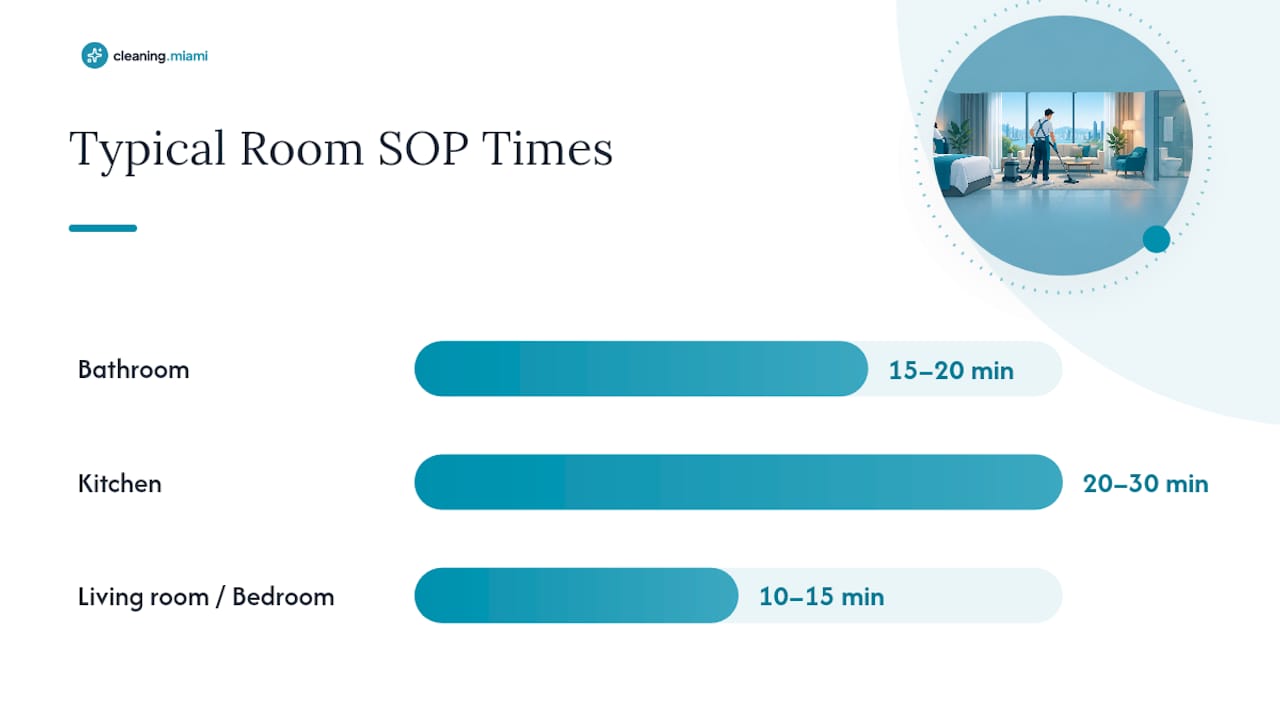
The industry sweet spot is 12 to 30 steps per SOP. Fewer than 12 and the document is too vague to train new hires; more than 30 and crews stop following it closely. A bathroom SOP might run something like: spray disinfectant on the toilet and let it sit for two minutes, scrub the tub while it works, wipe the mirror, then return to the toilet for the final wipe.
Timing anchors matter for staffing and pricing:
- A standard bathroom: roughly 15 to 20 minutes
- A kitchen: roughly 20 to 30 minutes depending on appliance load
- A living room or bedroom: roughly 10 to 15 minutes per room
Add those minutes up across a unit and you get a defensible time estimate for quoting the job, not a guess.
What Should a Final Inspection and QA Report Include?
The final walkthrough is where a clean either passes or gets flagged. A five-minute route through the unit, checking high-touch surfaces in the same order the crew cleaned them, catches most issues before the resident ever notices.
- Walk the rooms in cleaning order. Bedrooms and living areas first, kitchen next, bathrooms last, confirming nothing was skipped.
- Photograph after-state. Match the same angles used in the "before" photos, with timestamps, and store both sets in a shared dashboard or email thread the client can access.
- Score against a checklist. Many operations use a simple 1 to 5 scale per room, which turns "looks clean" into a trackable number you can compare visit to visit.
- Log any issue on the spot. Damage, pre-existing stains, or missed items get noted in writing before the crew leaves, not after a complaint call.
- Apply the re-clean policy. A fair policy gives the client a short response window (24 to 48 hours), guarantees a free re-clean for anything on the original scope that was missed, and requires photo evidence for any damage claim.
How Do You Write a Scope of Work That Avoids Disputes?
Most cleaning disputes trace back to a scope of work that never defined its own boundaries. A solid SOW states areas, task frequency, and pricing basis clearly enough that neither side has to guess what "clean" means.
- List every area by name and how often it's serviced (weekly, biweekly, per-turnover)
- State exclusions explicitly: appliance interiors on standard cleans, exterior windows, and heavy stain removal beyond normal wear
- Require QA evidence as a condition of payment: photos, a signed checklist, or both
- For high-rises, confirm certificate of insurance requirements and book service elevators in advance
- For same-day Airbnb turnovers, define the exact access window and backup plan if a guest checks out late
Property managers vetting a provider should also ask how the company handles onboarding new crews, since a scope of work is only as good as the people executing it.
Why Most Checklists Fail Before the Crew Even Shows Up
The checklist itself is rarely the problem. What fails is the assumption that a list of rooms equals a system. A sheet of tasks with no time estimate, no product assignment, and no QA step is a suggestion, not an SOP, and crews treat it accordingly.
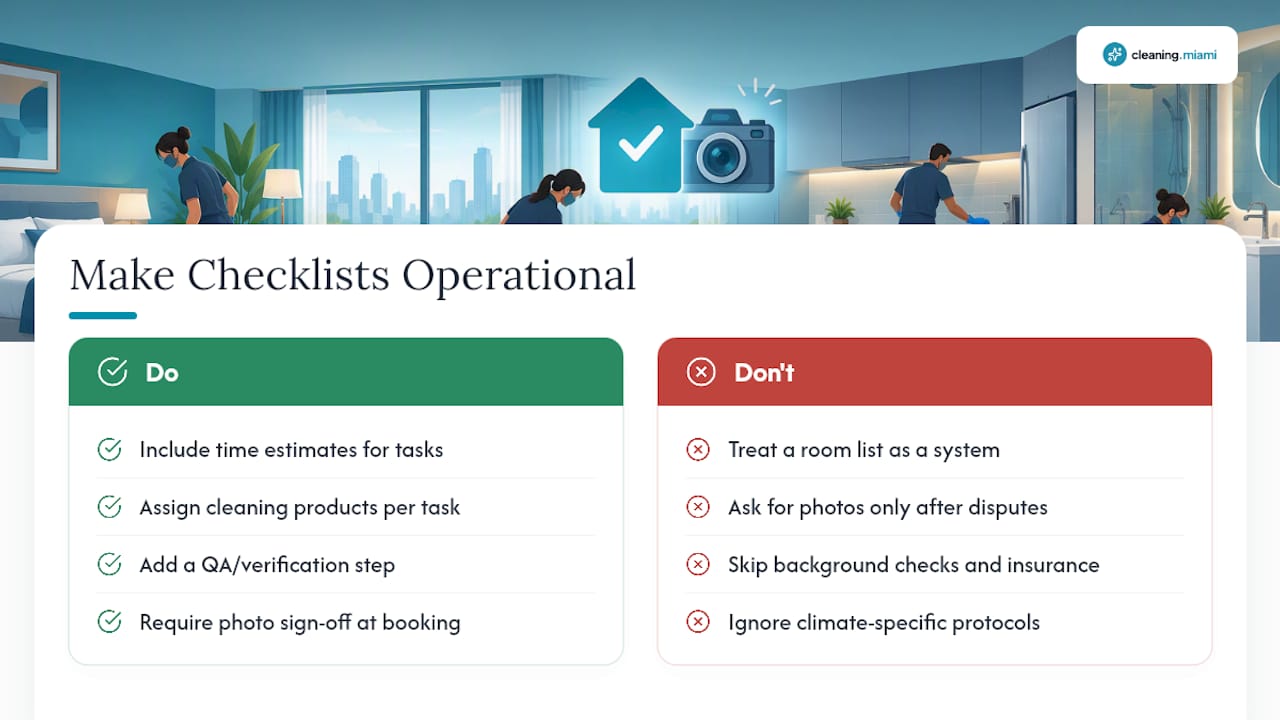
The bigger blind spot: most residents and hosts never ask for photo evidence until after a dispute happens. By then it's too late to prove what the apartment looked like before the crew arrived. Building photo sign-off into the process from the first booking, not after the first argument, is the cheapest insurance a property manager will ever buy.
Background-checked, insured crews following eco-friendly protocols suited to humid, salt-air climates aren't a marketing line. They're the operational baseline that makes a checklist mean something instead of just looking thorough on paper.
— Erik
Book a Cleaning That Follows This Exact Checklist
You don't have to build this system yourself or take a crew's word that they're following it. Cleaning.Miami runs Apartment & Condo Cleaning, Airbnb turnovers, and Move-In/Move-Out cleaning across Miami-Dade County using this same room-by-room, photo-verified process, and every team is background-checked, insured, and bonded before they get near your keys.
What that means for you in practice:
- Eco-friendly products chosen for Miami's humidity and salt air, so mold and mildew don't come back in a week
- A satisfaction guarantee with a free re-clean if anything on the scope gets missed
- No contracts, and booking can be done quickly online.
- Experience handling high-rise COI requirements and elevator scheduling for condo and Airbnb turnovers.
If you manage a rental or a busy household and want the checklist above applied without having to supervise it yourself, book an apartment cleaning and get a quote in minutes.
Sources
- Apartment Cleaning Service Checklist | Full Guide
- Cleaning Business SOPs: 10 Templates You Can Steal (2026)
- Building a Custom Scope of Work for Multi Unit Properties
FAQ
What's Included in a Standard Apartment Cleaning Checklist?
A standard checklist covers dusting, surface wipe-downs, vacuuming, mopping, kitchen counters and sink, and bathroom disinfection in every room. It excludes deeper tasks like inside appliances or cabinet interiors, which belong to deep and turnover cleans.
How Long Does a Professional Apartment Cleaning Take?
A one-bedroom apartment typically takes about one to two hours for a standard clean, based on the room-by-room timing anchors crews use for bathrooms, kitchens, and living areas. Turnover and deep cleans run longer because of appliance interiors and detailed baseboard work.
Does Cleaning.Miami Guarantee the Quality of the Clean?
Yes. Full details on Apartment & Condo Cleaning are available on request through a quick quote.
What Should I Exclude From a Cleaning Scope of Work?
Common exclusions include exterior window washing, heavy stain removal beyond normal wear, and appliance interiors unless a deep or turnover clean is specifically requested. Stating exclusions in writing on the scope of work prevents most billing disputes.
How Often Should I Deep Clean an Apartment I Rent Out?
Airbnb hosts should run a deep or turnover checklist after every guest stay, since standard cleans aren't designed to catch buildup between different occupants. Long-term rental units usually need a full deep clean every few months, with standard cleanings in between.