
A working Airbnb cleaning checklist needs four things: room-by-room tasks that match Airbnb's enhanced cleaning standards, a restocking list, a guest-perspective final walkthrough, and photo verification for every turnover. Skip any one of those and quality drifts within a few cleans. The fix is simple: build the checklist below into your cleaner's routine and require photo proof before every guest arrives.
TL;DR:
- Photo verification of key tasks for bathroom, kitchen, and bedroom is essential to prevent quality decline over multiple turnovers.
- Regular inventory checks, eco-friendly products, and clear restocking protocols keep cleaning supplies ready and consistent.
- Distinguishing between turnover, deep, and seasonal cleans ensures appropriate time and effort are allocated to each task.
- The final guest walk-through should replicate guest arrival conditions by checking lighting, functioning appliances, and restocking essentials.
- Outsourcing cleaning to insured, background-checked teams simplifies management and guarantees consistent quality using structured workflows.
Table of Contents
- What Supplies Do You Need for an Airbnb Turnover?
- Turnover Clean vs. Deep Clean: What's the Difference?
- Living Areas: The Spots Guests Notice First
- Kitchen Checklist: Where Bad Reviews Start
- Bathroom Checklist: The Highest-Scrutiny Room in the House
- Bedrooms: Matching the Listing Photos
- Laundry, Windows, and Outdoor Spaces
- How Do You Enforce a Cleaning Checklist That Actually Gets Followed?
- The Final Walkthrough: Checking Your Property Like a Guest
- What Cleaning.Miami's Turnover Process Looks Like in Practice
- What Most Hosts Get Wrong About Cleaning Checklists
- Why Hiring Cleaning.Miami Beats Managing the Checklist Yourself
- Templates and Guides to Build Your Own Checklist
- Sources
What Supplies Do You Need for an Airbnb Turnover?
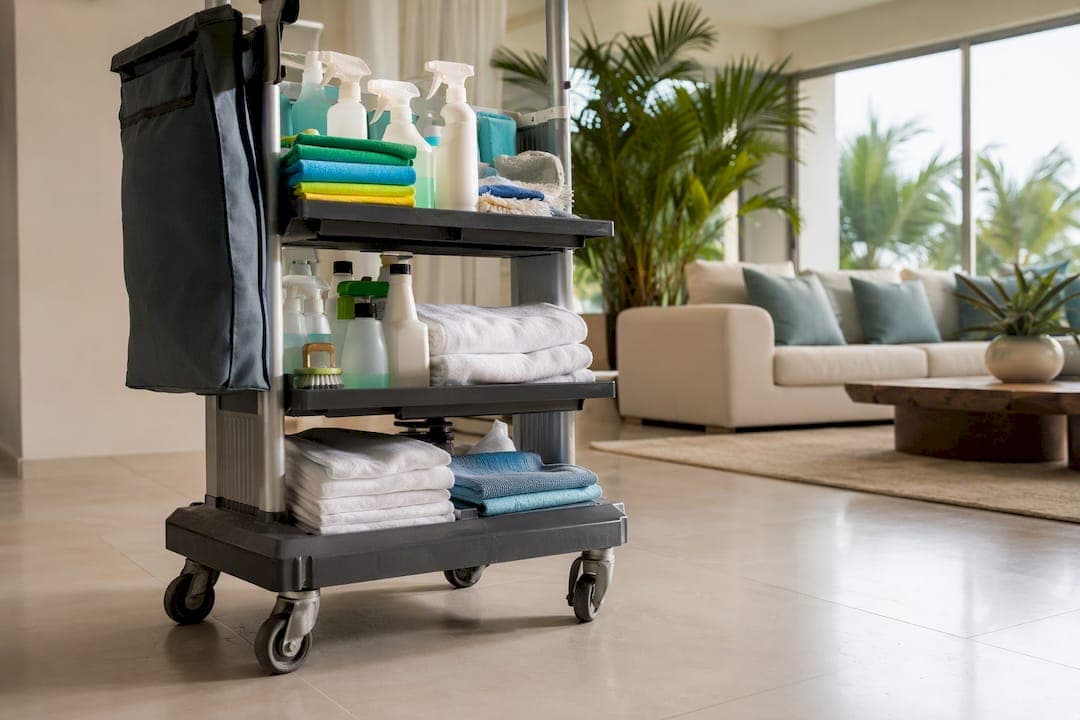
A turnover only runs on schedule when the cart is stocked before the cleaner walks in the door. Running out of glass cleaner mid-shift, or discovering the vacuum bag is full, turns a 90-minute clean into a two-hour scramble.
Your standard kit should include:
- All-purpose cleaner and a disinfectant that kills viruses and bacteria on high-touch surfaces
- Glass and mirror cleaner, plus microfiber cloths (color-coded by room to avoid cross-contamination)
- A vacuum with attachments, a mop, and a toilet brush per bathroom
- Trash bags in multiple sizes and disposable gloves for the cleaning team
Where guests will notice the brand on the bottle, lean toward products certified by EPA Safer Choice or Green Seal, both for the biodegradability and because eco-conscious travelers increasingly check for it in reviews.
Before anything gets wiped down, walk the cart through a quick inventory: confirm consumables are stocked, count linens against your par level, and verify the access code or lockbox combination hasn't changed since the last guest.
Pro Tip: Keep a laminated supply list taped inside the cleaning closet. Cleaners restock as they leave, not as they arrive, so the next turnover never starts short.
Turnover Clean vs. Deep Clean: What's the Difference?
Not every clean is the same job, and pricing them the same way is how hosts lose money or burn out their cleaners.
- Turnover clean: happens after every guest checkout. Covers the full room-by-room list below, typically 2 to 4 hours depending on square footage.
- Deep clean: grout, baseboards, appliance interiors, upholstery, and behind furniture. Most properties need this every 3 to 6 months, and pet-friendly or high-turnover units should stick closer to the 3-month mark.
- Seasonal clean: an annual pass on things guests never touch but that still degrade: window screens, exterior fixtures, HVAC filters.
Split your master list into "every turnover" tasks and "periodic" tasks so cleaners aren't guessing what applies to a same-day flip versus a scheduled deep clean. Properties with pets, frequent events, or back-to-back same-day turns need extra labor built into the schedule, not squeezed into the existing window.
Living Areas: The Spots Guests Notice First
Living rooms set the tone for the entire stay, and they're also where cleaners rush because nothing looks obviously dirty. That's exactly why 3-star reviews so often mention "felt a little grimy."
- Disinfect remotes, light switches, and door handles. These get touched by every guest and cleaned by almost no one until you make it a line item.
- Vacuum thoroughly, including under couch cushions, where crumbs and stray items accumulate fast.
- Dust and wipe surfaces top to bottom, following the standard dry-to-wet, high-to-low sequence professional crews use to avoid re-soiling a surface you already cleaned.
- Wipe TV and monitor screens with a dry microfiber cloth, never a spray cleaner directly on the panel.
- Straighten bookshelves and check inside decorative baskets or ottomans for forgotten items.
Commonly missed spots: baseboards behind furniture, ceiling fan blades, and the top of picture frames. A quick swipe with a duster on your way out of the room catches all three in under a minute.
Kitchen Checklist: Where Bad Reviews Start
The kitchen generates more guest complaints than any other room, mostly because "clean" and "spotless" are two different standards, and guests notice the gap immediately.
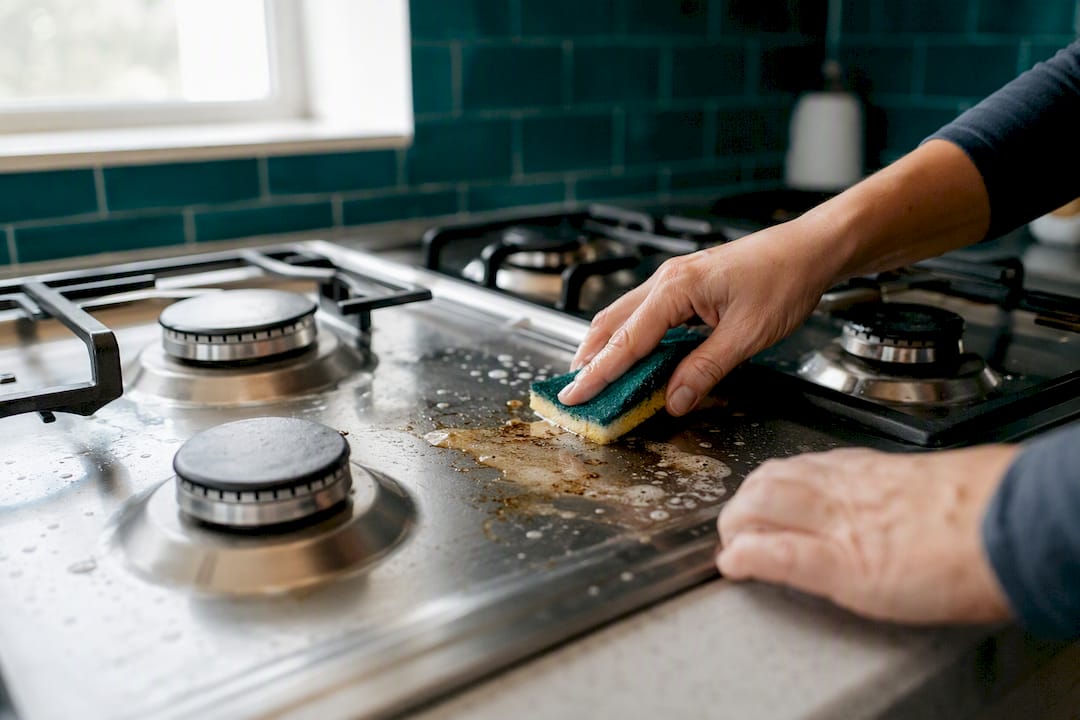
Wipe and disinfect every countertop, then degrease the stovetop and vent hood, both of which trap grease invisibly between deep cleans. Open the microwave and check for splatter; a 30-second wipe now saves a guest complaint later. Peek inside the oven too. It doesn't need a full turnover clean every time, but a visibly dirty oven window is an easy one-star trigger.
Empty the refrigerator completely and wipe down every shelf. Leftover food from a previous guest, even something small like a half-used condiment, reads as a hygiene failure to the next arrival. Run the dishwasher if there's any question about whether it's clean, and always empty it before you leave.
Restocking matters as much as scrubbing. Dish soap, dishwasher pods, a fresh sponge, and a roll of paper towels should be waiting on the counter. If you leave guest-facing condiments like coffee pods or spices, check expiration dates on your way through, since an expired item sitting in a listing photo undercuts the whole presentation.
Pro Tip: Photograph the inside of the fridge and oven at the end of every clean. It takes ten seconds and settles any dispute about what condition the kitchen was left in.
Bathroom Checklist: The Highest-Scrutiny Room in the House
Bathrooms get inspected harder than any other room, and grout, grime, or a hair in the drain does more damage to your rating than almost anything else on this list.
- Scrub and disinfect the toilet bowl, seat, and base, including the often-skipped area where the base meets the floor.
- Clean the shower or tub, tile, and grout lines, checking the drain for hair buildup before you move on.
- Polish fixtures, faucets, and the mirror until there's no water spotting visible under bathroom lighting.
- Set out two visible rolls of toilet paper per bathroom and fold or fan fresh towels so the presentation matches your listing photos.
- Inspect every towel and washcloth for stains or thinning fabric, and pull any that don't pass before the guest sees them.
Restock shampoo, conditioner, body wash, and hand soap to full or near-full levels. If grout is visibly discolored or you spot early mildew along the caulk line, that's a signal to escalate to a deep clean rather than trying to scrub it out during a standard turnover. This aligns with Airbnb's five-step enhanced cleaning process, which treats disinfection of high-touch bathroom surfaces as the 2026 baseline, not an upgrade.
Bedrooms: Matching the Listing Photos
Bedrooms need to look exactly like the photos that sold the booking, and any gap between the two shows up in reviews about "not as pictured."
- Strip every bed completely and check the mattress protector for stains before putting on fresh linens.
- Keep at least three linen sets per bed in rotation where your budget allows, so a stained set never means a delayed turnover.
- Vacuum under the bed and behind the headboard, two spots that collect dust and stray items guests leave behind.
- Replace any linen with visible stains or tears rather than trying to spot-clean it between guests.
- Use reference photos from your listing to match pillow arrangement and bed styling exactly, especially for higher-end properties.
Anything left behind by a previous guest goes into a labeled lost-and-found bag with the date and unit noted, not into a drawer where it'll surprise the next arrival.
Laundry, Windows, and Outdoor Spaces
These areas get skipped more than any other part of the checklist, mostly because they're easy to forget when the clock is running.
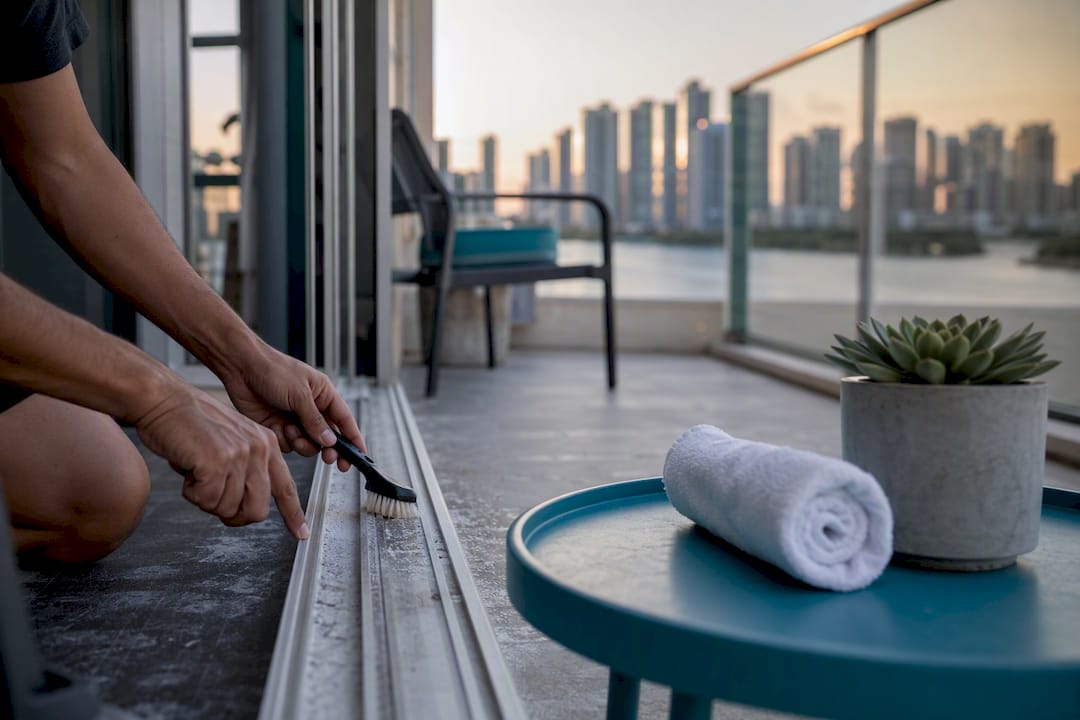
Check the washer and dryer for leftover items or lint buildup, and have a clear rule for handling guest laundry left behind, whether that's washing it, bagging it, or logging it as lost property. Clean window tracks and screens, which trap dust and salt residue faster than the glass itself, and wipe down entry doors and handles on your way out. Test exterior lighting and check outdoor furniture for wear or debris.
Properties with a hot tub, grill, or pool need their own dedicated checklist entries rather than a generic "check outdoor area" line, since those items carry real safety and maintenance requirements. The Florida Cleaning Crew's vacation rental checklist is a useful reference for handling coastal-specific concerns like salt residue and humidity on outdoor furniture.
How Do You Enforce a Cleaning Checklist That Actually Gets Followed?
A checklist nobody verifies isn't a standard, it's a suggestion, and quality drifts the moment nobody's watching. That drift is the single biggest reason turnover quality declines over a cleaner's tenure, not laziness or bad training.
- Require photo proof for key tasks (bathroom, kitchen, bed-making) so managers can review remotely instead of driving to every unit.
- Onboard new cleaners with an in-person, first-turnover walkthrough and reference photos showing exactly how each room should look.
- Spot-check the first month of a new cleaner's work closely, then shift to random audits once quality stabilizes.
- Build a clear rework rule: if a photo shows a missed task, the cleaner fixes it before the shift closes, not after the guest complains.
Photo-verified systems don't just catch problems. They cut manager review time significantly because someone can approve a turnover from their phone instead of visiting the property, and they create a documented record if a guest ever disputes cleanliness. Properties using structured photo-verified workflows report faster turnaround between checkout and check-in approval.
Pro Tip: Have new cleaners photograph their own reference shots during onboarding, then compare against yours. The gap tells you exactly where their standards differ from what guests expect.
The Final Walkthrough: Checking Your Property Like a Guest
The last five minutes before you lock up matter more than the two hours before it, because this is the pass that catches what routine cleaning missed.
- Walk the property as if you're arriving as a guest. Check that lights work, water runs hot and cold, and the thermostat is set to a comfortable temperature.
- Smell each room. Lingering cleaning chemical odor or a musty bathroom smell is a red flag that something wasn't fully aired out.
- Restock every consumable: toilet paper, paper towels, hand soap, shampoo and conditioner, coffee or tea basics, and spare trash bags under each bin.
- Test smart locks and confirm all windows and doors lock properly before leaving.
- Leave welcome materials, a house manual or a printed note, exactly where returning guests expect to find it.
What Cleaning.Miami's Turnover Process Looks Like in Practice
Cleaning.Miami runs Airbnb turnovers with background-checked, insured teams and eco-friendly products suited to South Florida's humidity and salt air, both of which accelerate mildew and fixture corrosion faster than in drier climates.
A typical Cleaning.Miami turnover follows the same sequence outlined above: pre-clean inventory check, room-by-room work from dry to wet, restocking, and a final guest-perspective walkthrough before the cleaner submits photo verification.
What Most Hosts Get Wrong About Cleaning Checklists
The conventional advice treats a cleaning checklist as a document you write once and hand off. That's backwards. A checklist is only as good as its enforcement, and most hosts skip the enforcement layer entirely because it feels like extra work on top of an already long list.
Here's what the evidence actually supports: photo verification isn't a nice add-on, it's the mechanism that keeps a checklist from decaying into a suggestion after the third or fourth turnover. Hosts who skip it tend to notice quality slipping only after a guest complains, which is the most expensive way to find out.
The overrated piece of advice is the checklist length itself. Hosts obsess over adding more line items when the real gap is almost always the last step: no one is confirming the work happened. Prioritize the walkthrough and photo proof before you add a single new task. A shorter checklist that's actually verified beats a 200-item document nobody checks.
— Erik
Why Hiring Cleaning.Miami Beats Managing the Checklist Yourself
Running this checklist perfectly, turnover after turnover, is a full-time discipline most hosts don't have room for between guest messages and pricing. Cleaning.Miami is the alternative to managing that whole process yourself: insured, background-checked teams handle the room-by-room work, restocking, and final walkthrough using eco-friendly products built for Miami's humidity and salt air, and you can book a turnover in under 60 seconds instead of coordinating a cleaner's schedule around your check-in times.
That matters most if you're running tight same-day turnovers, managing more than one listing, or you've been burned by inconsistent quality from a solo cleaner. The 100% satisfaction guarantee means a missed spot gets fixed, not argued about. If you're not sure whether outsourcing makes financial sense yet, this breakdown of the actual math walks through it plainly. Ready to hand off your next turnover? Book your Airbnb cleaning and get a scheduled slot before your next guest checks in.
Templates and Guides to Build Your Own Checklist
For a downloadable starting point, the Lodgify turnover checklist template covers room-by-room tasks in a printable format. Pair it with Properly's enforcement guide for the photo-verification workflow that keeps standards from slipping over time.
Sources
- Vacation Rental Cleaning Checklist Template (2026) — Lodgify
- The Complete Airbnb Cleaning Checklist (Free Template + How to Enforce It) — Properly